A science video arrives on YouTube under a familiar name: Veritasium. Behind it may sit two to six months of work. In a December 2025 reflection, Electrify co-CEO Owen Maher described a creative operation involving more than 30 people, from researchers and writers to animators and production managers. The face on screen remains recognisable. The business behind the screen has become considerably more crowded.
That is the territory Electrify occupies. It buys stakes in established creator businesses and supplies people, capital and commercial expertise. Its portfolio includes science channel Veritasium, aviation specialist Mentour Pilot, coding channel Fireship and documentary brand fern. These are businesses built around explaining things. Electrify wants to make the explaining less dependent on one exhausted person.
The appeal is easy to understand. A creator can accumulate millions of subscribers and still be personally responsible for the script, the thumbnail, the hiring and the sponsor email. Success adds tasks. Electrify offers to turn that workload into an organisation, in exchange for a substantial share of the business. The interesting question is what survives the transition: the curiosity, the voice, and the audience’s reason for coming back.
A bigger business behind the familiar face
Ian Shepherd’s interest in creators had a domestic prompt. Around 2015, his eldest daughter was watching YouTube while he was working in the media industry. In an interview on Electrify’s website, he recalls noticing talented creators with too little support behind them. His earlier company helped creators develop consumer products. Electrify extended the idea into the operation of the media business itself.
Shepherd founded Electrify with Owen Maher and Justin Reizes in 2021. Capital D’s investment announcement identifies all three founders; Shepherd and Maher run the company as co-CEOs. Their proposition sits at the intersection of media production and business acquisition. The company needs to understand both what an audience enjoys and what a profitable production operation requires.
“It feels much more like joining forces than being ‘managed’.”
Ian Shepherd, co-founder and co-CEO
The first constraint Electrify describes is human capacity. In a June 2025 interview with Net Influencer, Shepherd gave the example of an unnamed creator whose workload fell from 80 hours a week to 80 hours a month after a larger team was assembled. Treat that as a company-reported example, rather than a promise to every partner. It nevertheless captures the product more clearly than a dashboard screenshot could.
The practical lesson is available to creators of any size: list the jobs that require your judgement and the jobs that merely require your attention. Research coordination, scheduling and commercial administration need owners. When all of them belong to the presenter, a popular channel can become a queue with one person at the front.
The price includes ownership
Electrify’s standard business partnership involves buying 50% or more of the company. The creator keeps a stake and remains creatively involved. Valuation considers present performance and expected future profit. This is a consequential choice: the creator receives liquidity and support while sharing future earnings and ownership with another party.
Compare that with Spotter’s revenue-share licensing, which provides upfront capital in return for an agreed portion of long-form YouTube advertising revenue. Spotter says the creator retains ownership. The comparison is useful because a funding decision is also an operating decision. A creator who wants cash and intends to build the team independently has a different need from one seeking a partner to run substantial parts of the business.
Shared ownership + operating team
Creator retains ownership
Different structures for different founder needs. Descriptions reflect each company’s published offering.
The distinction also separates Electrify from hiring a talent agent or a production contractor. Those relationships can solve specific tasks. An equity partner becomes part of the enduring ownership structure. The sensible starting point is the problem the creator needs solved, rather than the biggest cheque available.
Read the small print on $85 million
Electrify’s financing deserves the same care. Its March 2023 announcement described up to $50 million of financing led by MEP Capital, including a $50 million loan facility. The company said its founders had initially funded the business themselves before bringing in private investors. Expansion required a larger pool of acquisition capital.
That September, Capital D became its first institutional equity investor, taking a significant minority stake. The announcement’s wording matters: new equity together with the existing debt facility enabled Electrify to deploy up to $85 million. Adding the two headline figures would count overlapping financing as though it were entirely separate money.
New equity + existing debt
Debt brings its own timetable. A May 2023 stock-exchange notice for Electrify Video Partners Ops Limited specified up to $50 million of senior secured notes with a 14% rate, due in 2027. That historical instrument should not be mistaken for today’s total borrowing. It does show why production economics matter: capital has a cost while a difficult video is still being researched.
Curiosity is the editorial category
The portfolio’s subjects look eclectic. Astrum explains space. SpitBrix examines LEGO. Mentour Pilot draws on aviation expertise. Fireship packages coding knowledge with humour. The shared attraction is subject matter that can hold an audience beyond the news cycle. A useful explanation can keep finding viewers after its publication week.
Veritasium demonstrates the production ambition. Maher recalls first speaking with Derek Muller in December 2022 after an introduction from former YouTube partner manager Sanoop Luke. Electrify invested in 2023. By late 2025, Maher was describing a multidisciplinary team and lengthy production schedules. More capacity creates room for complicated work, although the audience still judges the resulting video one click at a time.
Other investments broadened the editorial range. In January 2025, Electrify announced a partnership with fern, Simplicissimus and the Unfassbar podcast. The latter two brought its first German-language expansion. Their founders, David and Jonas, were offered production resources and help reaching additional platforms. Documentary storytelling also makes editorial judgement especially valuable: more output only helps if the reporting and explanation remain worth watching.
The advertiser wants a reliable neighbour
Creators are Electrify’s investment partners. Advertisers and agencies are commercial customers. Its brand partnerships team sells integrations and campaigns across the portfolio, with public testimonials from NordVPN, Odoo and CodeRabbit. A sponsor is buying access to an audience that already cares about a subject, alongside the work required to make a campaign happen.
Electrify reports that more than 75% of its sponsored segments in 2025 came from repeat partners. That is a useful sign of repeat business, with a precise denominator: sponsored segments, not advertisers or revenue. Its published offer includes packages spanning long and short formats. Campaign pricing is tailored to the brief.
For a brand, the practical benefit is coordination: creative development, approvals and delivery through a team familiar with the channel. For the viewer, the test is less administrative. Does the sponsorship sit comfortably beside the programme they chose? A trusted educational audience is valuable precisely because its attention cannot be assumed.
The next audience may be listening - or reading
Electrify has already tested travel between formats. In February 2025, it reported that an Astrum podcast episode briefly reached the top of the UK chart across all categories. It also described a Veritasium partnership with Spotify after the programme reached the UK Science chart’s top spot. These are company-reported chart snapshots, rather than permanent rankings.
The June 2026 partnership with The Rundown widened the thesis further. Rowan Cheung’s business had grown from a daily AI newsletter into a group reaching more than two million subscribers across AI, technology and robotics. Electrify’s announcement said Cheung and his team would continue directing editorial work, supported by shared resources for expansion into more formats and products.
The change is visible in the portfolio: video is now one way of delivering knowledge among several. The copyable idea is to identify what the audience comes to understand, then test another format against that need. An astronomy narrative may work in audio; a coding demonstration may need its screen. Republishing alone does not settle the question.
Building a team that can keep the promise
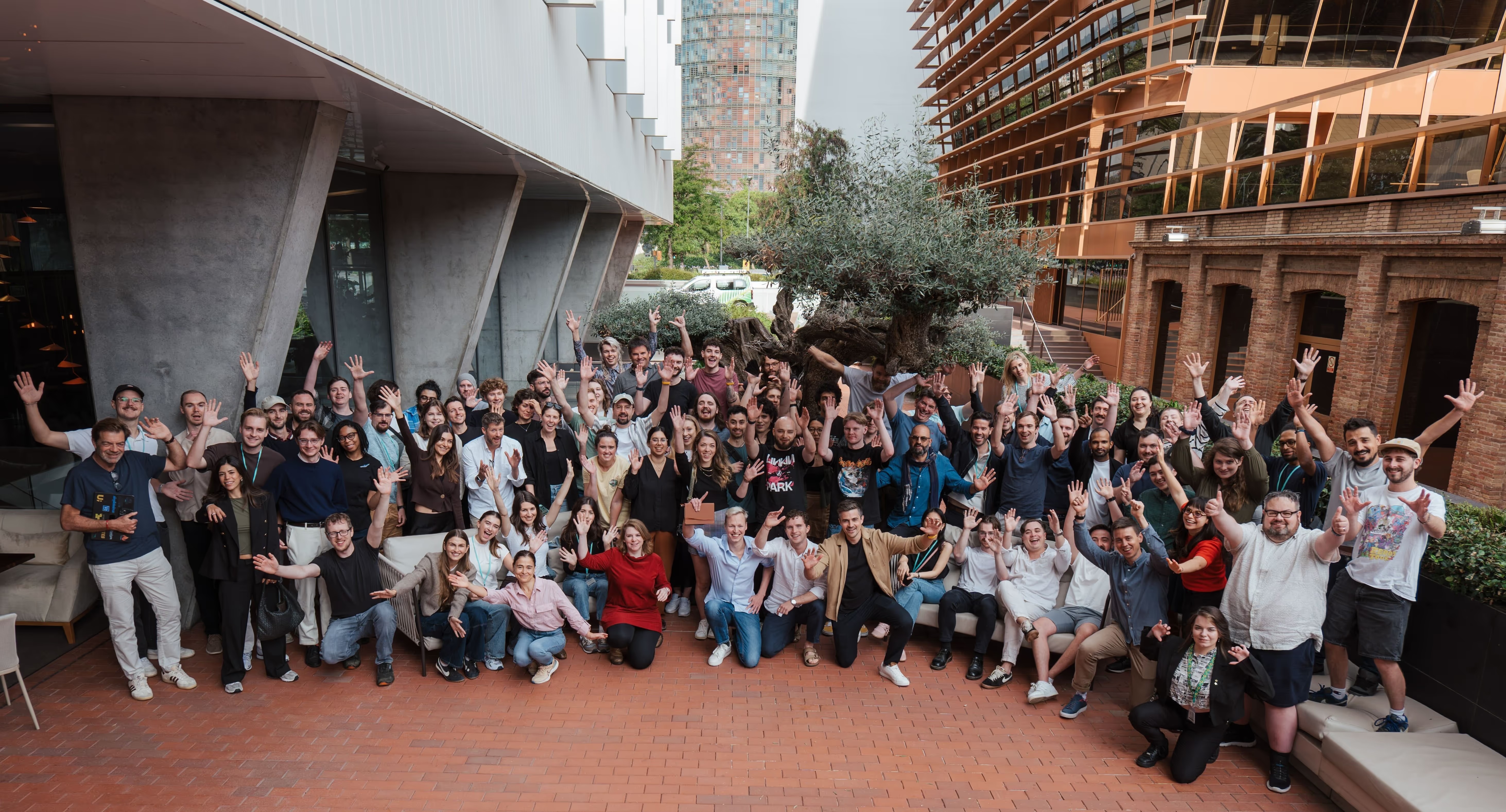
Electrify’s operating culture has to work across separate brands. Its Barcelona offsite in 2025 brought more than 100 colleagues together to discuss performance and exchange lessons between production, commercial and central teams. Much of the year is spent working remotely. Budapest hosted the eighth company offsite in March 2026, with time devoted to new hires and evolving content formats.
Leadership also changed as the group expanded. In May 2025, Electrify announced Tim Shey as chair, succeeding Reizes, who remained a director. Shey brought experience from YouTube, Next New Networks and Duolingo. That background fits a company trying to connect editorial craft, audience development and repeatable production.
Its support for smaller creators takes a different form. The 2025 accelerator, run with Changer Studios and YouTube, involved 24 creators over 20 weeks. Electrify reported 149,000 additional subscribers across the cohort. Those participants were learning to build their channels; the core investment business targets creators who already have an established operation.
The ownership model therefore has clear conditions. It needs an audience worth serving, content that other talented people can help produce, and a founder comfortable sharing the business. If the audience relationship depends on work nobody else can do, adding staff may leave the central constraint untouched. Electrify’s most persuasive promise is room to create. Keeping that promise requires an organisation capable of earning its place behind the camera.