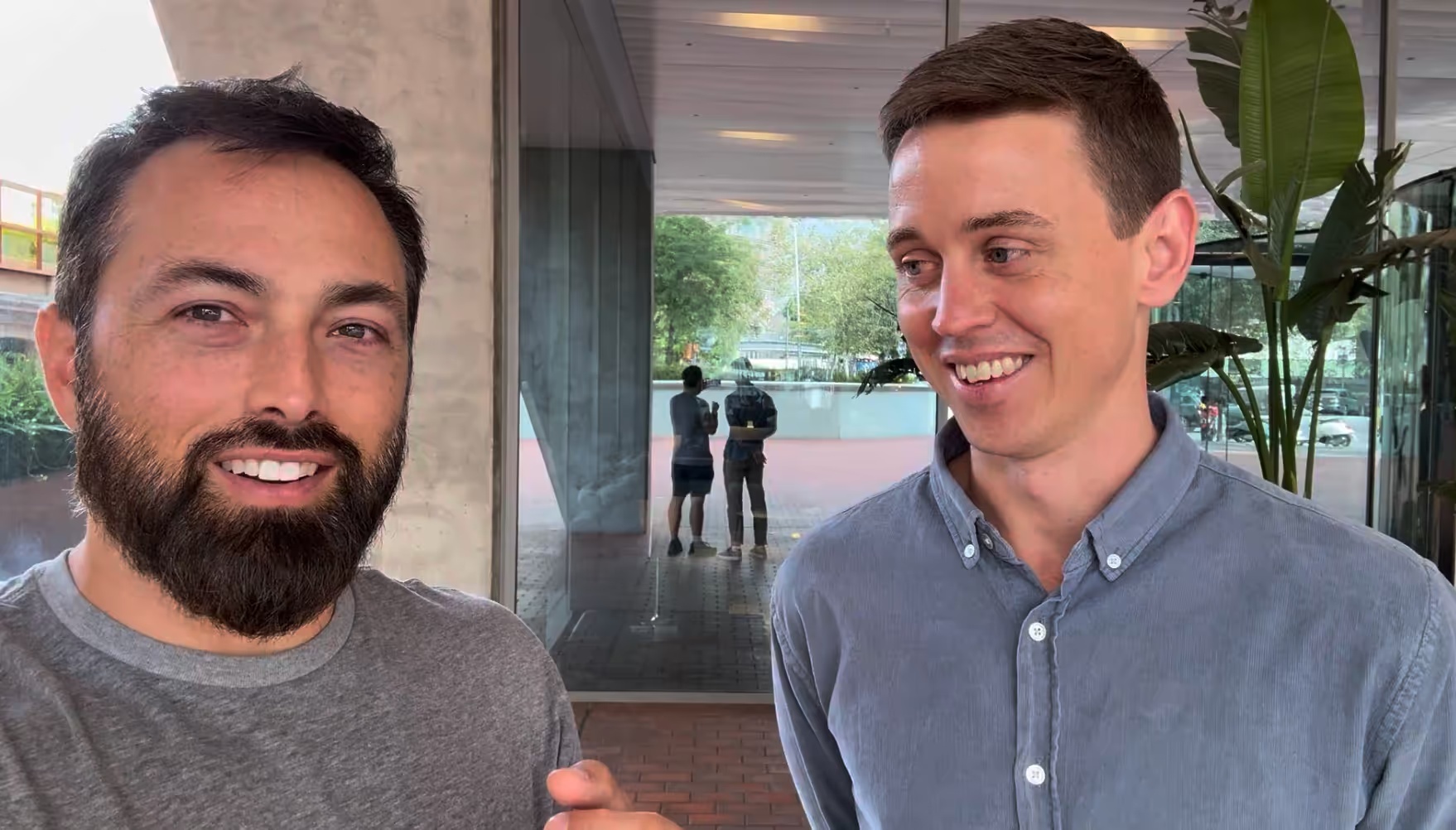
In December 2022, Owen Maher had a conversation worth being nervous about. He and his co-founder Ian Shepherd were speaking to Derek Muller, the creator of Veritasium. Former YouTube partner manager Sanoop Luke had made the introduction. Their company, Electrify, was still young. Across the call was a science channel they already watched and admired. A business proposition had acquired the slightly awkward thrill of meeting someone whose work you know.
Maher’s career had prepared him for investments and organisations. He had been a principal at KKR and a senior executive at Findex. Yet the appeal of this particular conversation was also personal: the chance to work with a channel that made difficult ideas comprehensible. A spreadsheet could help assess the business. It could hardly reproduce the pleasure of finally understanding the thing.
Electrify invested in Veritasium in 2023. That partnership places Maher in an unusual position in contemporary media. He helps run the organisation behind people whose audience often knows them by face and voice. His contribution sits among the decisions that precede the finished film: who gets hired, what resources are available and how a promising creative business can keep working as its ambitions grow.
Veritasium’s production operation, as Maher described it in December 2025. A short encounter with an idea can have a long preparation.
A financier learns the value of a good question
The earlier career has its own recognisable logic. Maher studied commerce at UNSW. He was a university medallist in finance in the 2007 academic results. His working life took him through Credit Suisse and KKR, then into Findex, the Australasian financial services business. In 2015, he moved from KKR to become Findex’s head of strategic projects.
Later came executive managing partner responsibilities, including strategy. These were jobs concerned with the machinery of an organisation: how different activities fit together, where resources go and what a business needs in order to function. In a July 2019 announcement about Crowe’s expanded trade and customs partnership, Maher discussed combining expertise and networks to help clients operating internationally. The vocabulary belonged to professional services. The underlying problem was coordination.
By 2021, he was applying that experience in a different setting. He founded Electrify with Shepherd and Justin Reizes, another former KKR executive. Shepherd brought a media career that included Disney and the creator licensing business The Social Store. Their backgrounds gave the venture both investment experience and knowledge of the businesses forming around online audiences.
The company’s offer is quite concrete. Established creators can bring in a partner with money and operational support; Electrify receives an ownership interest. A channel can acquire colleagues, business infrastructure and ways of reaching additional audiences. The bargain asks a delicate question of everyone involved: how do you add an organisation around a voice that people already choose to hear?
The useful line in the credits
There is a pleasingly specific place where Maher’s two working worlds meet. In February 2024, Veritasium published The Trillion Dollar Equation, a film about the Black-Scholes/Merton equation and its connection to physics and finance. Among the people thanked in the accompanying acknowledgements is Owen Maher of Electrify Video Partners.
The credit establishes a connection without turning the executive into the author of the film. That distinction matters. The list also thanks academics, including MIT’s Andrew Lo and the University of Leeds’s Amanda Turner. A finished explanation can draw on people with very different kinds of knowledge. Maher’s finance background appears beside a production whose subject makes that background relevant.
For a former investor, it is a rather neat career footnote: an equation from the world of markets becomes a subject for the world of educational video, and his name travels between them. It also gives the abstract phrase “operational expertise” a little texture. A useful colleague may bring a network, subject familiarity or a judgement that helps a team ask a better question.
Maher has retained the habits of a viewer, too. His favourite earlier Veritasium selections include a jetpack and rocket video, complete with a fire-extinguisher-on-a-skateboard experiment. He has also singled out a musical treatment of gravity for its Sydney scenery. Learning, apparently, can accommodate both a finance equation and the indignity of an uncooperative demonstration.
Capital has a job to do
Electrify’s financing explains the scale of the business Maher was helping assemble. A March 2023 announcement described funding led by MEP Capital, including a $50 million loan facility for investments in additional channels. The founders had initially funded the company themselves before bringing in other private investors. Borrowing introduced another means of supporting its expansion.
Then, in September, Capital D became its first institutional equity investor, acquiring a significant minority stake. The transaction gave Electrify the ability to deploy up to $85 million across the new equity commitment and its existing debt facility. Those components belong together. Adding $50 million and $85 million as though they were separate new pots would make the arithmetic more exciting and the account less accurate.
The practical ambition was to invest in more creator businesses and develop the capabilities inside the company. Capital D’s announcement pointed towards long-form factual content and wider distribution. This is a business in which the cost arrives before the audience does: people must do the work before a video has earned its first view. Financing helps provide that room; the film still has to justify the viewer’s time.
A schematic of the business logic, not a measured production funnel.
A company without a commute
Maher describes his job in terms of putting people, tools and technology in place. The company works remotely. He has moved between London and Sydney twice since it started, and his public professional profile places him in Sydney. Location is part of how the organisation works, rather than a requirement that everybody report to the same building.
That arrangement does not eliminate the desire to gather. In September 2026, more than 130 people came together in Lisbon for Electrify’s ninth company offsite. Guests included people from Complexly, Kurzgesagt, Mark Rober’s team and Create on Purpose. The room brought together colleagues and fellow practitioners from several corners of educational media.
For someone responsible for the foundations of a creative operation, those meetings have a practical purpose. A researcher, an animator and a business colleague bring different problems to the same project. Getting to know one another can make the next exchange easier. Even a company without an office occasionally needs a table large enough for the conversation.
His public support for creators extends to people earlier in their careers. On LinkedIn, Maher shared the call for applicants to Electrify’s 2025 Edu-Tuber Accelerator. The programme, developed with Changer and supported by YouTube, was designed to give emerging and under-represented educational creators resources and support. It addresses a different stage from the established businesses Electrify invests in. For someone starting out, access to advice and a community can be part of learning how to run the work as well as make it. Maher’s invitation directed those prospective applicants towards a practical opportunity to develop their channels.
His advice to people trying to enter the creator economy starts with the content they enjoy and the persistence to keep approaching opportunities. He finishes by asking them to remember their audience. It is a useful instruction to carry into a meeting about resources. The people watching have their own plans for the afternoon.
“And don’t forget to put the audience first!”
Owen Maher
Room for the questions that did not fit
The organisation has since begun giving some ideas new addresses. In September 2026, people from Veritasium and Electrify launched InGenius. The new channel grew from pitches about economics, geopolitics and social science that interested the Veritasium team but sat outside its focus on science and engineering. After more than a year of development, those subjects had a home of their own.
Its opening film examined how a shipping-container lock helped change global trade. For Maher’s business, the launch illustrates a particular kind of expansion: allowing an established team’s curiosity to produce a separate editorial identity. The investment is in the capacity to make something new. Having that capacity does not settle what the new audience will think.
The company’s range also widened through its June 2026 partnership with Rowan Cheung’s The Rundown. The newsletter business covers artificial intelligence, technology and robotics. Under the announced arrangement, Cheung and his team continue to lead editorial direction while Electrify supplies operational support and shared resources. A company associated with YouTube is applying its model to another route into people’s daily attention.
October brought two senior appointments: former YouTube and Facebook executive Patrick Walker as chief strategy officer, and former VICE Studios executive Al Brown to lead creative and editorial work. Their responsibilities include new partnerships, distribution relationships, shows and formats. The larger organisation now has more decisions to make about what can travel beyond the channel where it began.
of Electrify’s YouTube watch time took place on television screens, approximately, from October 2025 to September 2026.
One figure makes that work tangible. In the appointments announcement, Electrify put television viewing at around 36 percent of its YouTube watch time over the preceding twelve months. A creator’s programme can already occupy the screen across the living room. A company built around online channels has to think about the habits of people sitting on the sofa.
Maher’s story returns, finally, to that first conversation with Muller. The nerves belonged to the prospect of working with a creator he admired. The years since have filled the space behind that prospect with colleagues, capital and production decisions. His part of the work helps make the next explanation possible. When it arrives, the viewer gets the welcome luxury of simply being curious.
Follow the questions
Work, writing and videos connected with Owen Maher.