A power plant earns its place in a portfolio partly through a promise: when needed, it can produce. On August 26, 2026, Hull Street Energy completed the purchase of two more such promises. Lee County Generating Station in Illinois and Tait Electric Generating Station in Ohio brought a combined 1,263 megawatts into Milepost Power, the thermal generation platform led by Edward Quinn. The acquisition made an old question newly substantial. What does it take to keep a business ready?
Quinn’s working life offers an unusually physical answer. His career has crossed packaging, electricity and building materials, industries in which a contract eventually encounters something tangible. A production line. A delivery. A generating unit. The financial proposition can be elegant; the practical obligation tends to arrive wearing work boots.
Today, Hull Street’s team lists him as chief executive officer of PCOM, its portfolio company operations management team. Milepost lists him as CEO. The distinction matters: his seat is close to the business of running assets, while Hull Street supplies the investment setting. Sarah Wright is Hull Street’s founder and managing partner. Quinn’s story belongs inside that organization, with its own particular responsibilities.
A career with things attached
Quinn’s earlier work included managing operations at an International Paper packaging plant and working in Enron’s pulp and paper business. He holds a BA from Boston College and an MBA from Duke’s Fuqua School of Business. Manufacturing gave his career a setting before the electricity-market roles that would later define much of it.
Packaging and power look distant on an industry chart. In both, however, a commercial decision has operational consequences. Price, timing and availability have to agree with what a facility can actually do. Reading Quinn’s career through that relationship makes the changes of industry easier to follow. This is an interpretation of his work, rather than a claim about a private master plan.
A factory is a useful place to begin this story because it puts a limit on abstraction. An operating business cannot settle everything with a persuasive presentation. It must make something, handle something or deliver something. That simple requirement remains visible throughout Quinn’s later assignments, even as the organizations and transactions become more complicated.
The merger had to become a working business
Quinn worked at Constellation from 2001 through 2015. In December 2011, as Exelon and Constellation prepared to combine, he was named to the planned senior commercial team. Already a co-head of commodities, he was slated to become senior vice president for wholesale trading and origination, with portfolio operations also in his remit.
The organization announced around him was revealing. Mark Huston would lead retail; Joseph Nigro would handle portfolio strategy; Max Duckworth would lead proprietary trading and fuels. Quinn’s wholesale group would connect regional trading, deal origination and the operating portfolio. A merger can be described with one purchase price. Making the combined commercial business function requires a much longer set of verbs.
Those verbs included trading, scheduling and dispatch. His announced reporting structure put Michael Cocco and Walter Kuhn over wholesale trading regions, Joseph Liberatore and Greg Monaco over origination regions, and Steve Wofford over portfolio operations. It was a map of responsibilities extending across U.S. markets and into Canada, rather than a single undifferentiated trading desk.
The practical lesson of that organization is coordination. Each function has information the others need, and each makes decisions with consequences beyond its own desk. Commercial integration, which Quinn also led for Constellation during the merger, is therefore a substantial operating assignment. The transaction changes ownership; integration changes how people and systems work together afterward.
A simplified view of the responsibilities that recur in Quinn’s energy career.
A detour through the lumberyard
After Constellation came a different kind of inventory. Quinn spent five years as CFO and a partner at TW Perry, the Mid-Atlantic building-materials supplier, and negotiated its sale to BMC in 2020. Here, commercial performance was attached to the materials used by builders and remodelers rather than the output of a generation fleet.
When BMC announced the agreement that November, TW Perry had nearly $200 million in sales over the preceding twelve months. Its business included six lumberyards, stores, a design studio, custom millwork and truss manufacturing. Founded in 1911, the company served Northern Virginia, Maryland, Washington, D.C., and surrounding areas.
That assortment gives the financial role some texture. This was a supplier with both distribution and production activities, serving professionals with different material needs. The sale involved an operating network, a customer base and a product mix. BMC’s interest included TW Perry’s remodeling business and its value-added products, a reminder that an acquisition buyer purchases commercial relationships alongside facilities.
The episode also gives Quinn’s chronology a useful interruption. His career was not confined to one energy-company hierarchy. He moved into a regional materials business, worked on its profitability and productivity, and helped bring about a change of ownership. The recurrence is the operating problem: how the business works, what its assets contribute and how a transaction changes its future.
Texas, and the value of readiness
By May 2023, Quinn was speaking publicly as CEO of Milepost Power. Hull Street had agreed to buy the Bastrop and Paris energy centers in Texas from an Atlas Holdings affiliate. Together, the facilities provided 855 megawatts. In his comments, Quinn emphasized winterization and working with employees and regional stakeholders as renewable generation expanded.
“enhance the resiliency and reliability of power service for regional customers”Edward Quinn, on the Texas acquisition, May 2023
The phrase is worth lingering over. Reliability gives the investment an operating purpose beyond ownership. Winterization is similarly concrete: it directs attention to whether a plant can perform under the conditions in which customers may need it. Quinn’s acquisition comments tied the existing workforce and the regional electricity system to the commercial transaction.
Later that year, Hull Street closed a $160 million financing for the Mesquite Generation portfolio, which comprised the two Texas plants. The stated uses included reserves, expenses and investor distributions. The plant story had acquired a capital structure, bringing the financial side of the business back into view.
These are related responsibilities, but they measure different things. Financing describes how capital is arranged. Megawatts describe generating capacity. Operations determine how equipment performs. Keeping the distinctions clear helps explain why Quinn’s experience in both commercial management and physical businesses is relevant to this role. A portfolio needs all three conversations to happen.
California adds a smaller piece
In December 2023, Hull Street acquired EF Oxnard, a nominal 48-megawatt gas-fired facility in California. It joined a California portfolio that included Crockett and Sunrise. Quinn’s public comments welcomed the plant and its team, placing both within the same account of the acquisition.
The scale provides an instructive contrast with Texas. Forty-eight megawatts is a smaller number than 855, yet the facility still had a defined place in a regional portfolio. A fleet is an assortment of individual plants, each with a location, technology and operating context. The total helps describe the business; it cannot explain every asset within it.
At the time of the Oxnard closing, Hull Street reported approximately 2,350 megawatts of gas-fired and dual-fuel generation capacity across its affiliates. Its stated intention in California was to support grid operations as the region decarbonized. The commercial argument connected thermal generation with the changing electricity system around it.
For Quinn, that is the contemporary setting of a long-running professional theme. Operating assets have to be understood in relation to the markets and customers they serve. Buying a plant is one decision. Establishing its role within a changing portfolio is an ongoing task, involving the equipment and the people who run it.
A growing fleet, measured carefully
The expansion continued. In June 2025, Hull Street acquired generating assets near Joliet, Illinois, from Elwood Energy, a J-Power USA subsidiary. It then reported nearly 3,500 megawatts within Milepost’s fleet. The August 2026 GridFlex closing brought Lee County and Tait into the platform, taking the announced total to nearly 5,000 megawatts.
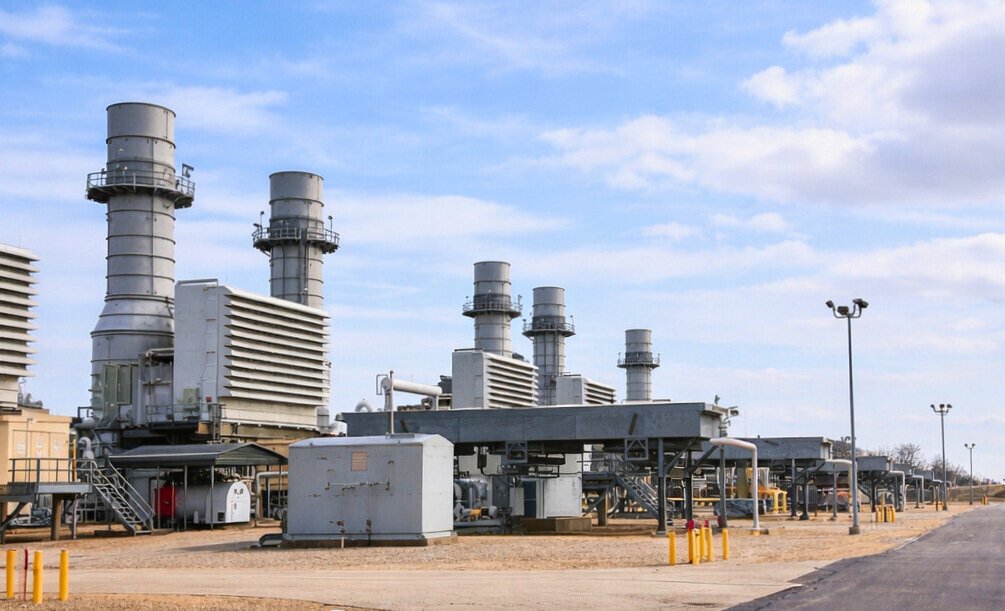
Lee County contributed 677 megawatts of natural-gas turbine capacity; Tait contributed 586 megawatts of dual-fuel capacity. Both operate in PJM. The acquisition was funded with equity from Hull Street-managed funds and committed senior secured debt. These were additions to Milepost’s business, rather than personal assets belonging to its CEO.
Dated company announcements. Capacity measures the fleet’s generating capability, rather than electricity produced or investment returns.
The numbers show an expanding operating assignment. They do not, on their own, demonstrate performance. A larger fleet means more assets within the platform; evaluating those assets still requires attention to their individual operations and commercial arrangements. The appeal of one grand total is understandable. The work underneath it remains plural.
Quinn’s career is interesting for that reason. It repeatedly brings financial and operational responsibilities into contact, across industries and changes of ownership. The packaging plant, the combined commercial business, the building-materials supplier and the generation fleet occupy different markets. In each chapter, a decision on paper has to survive contact with an operating business.
Readiness is a modest word for that obligation. It carries none of the ceremony of an acquisition announcement, yet it is what gives the announcement a practical future. Quinn now leads a platform with more places where that obligation must be met. The fleet total is the visible headline. The daily business takes place plant by plant.