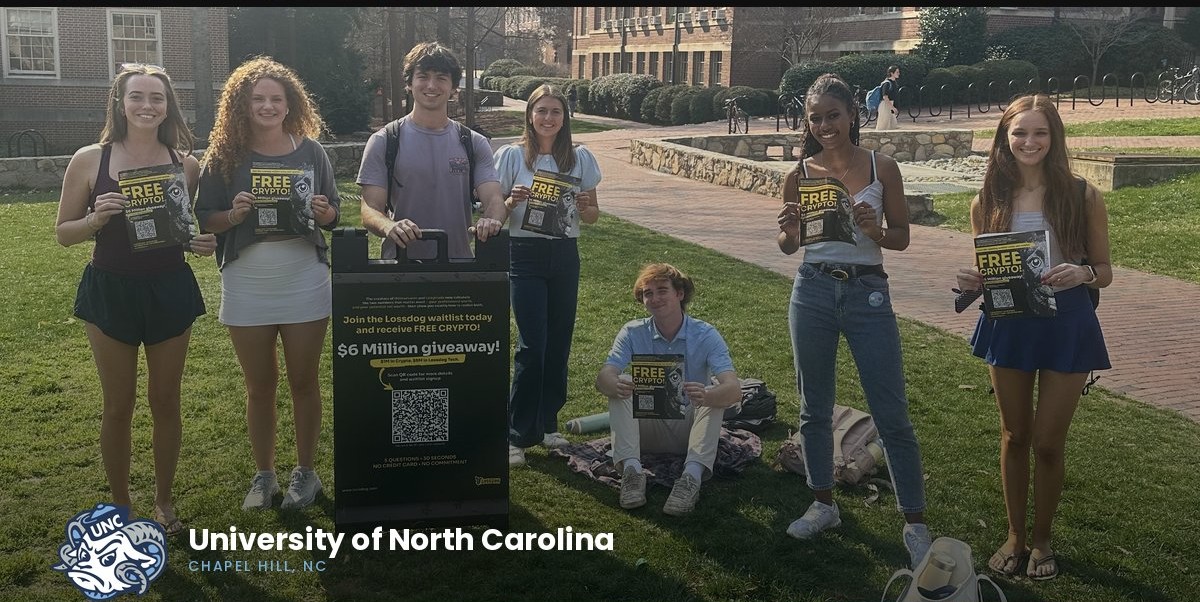
At a folding table on the campus of the University of North Carolina, the advertisement had a face. It could answer a question. It could wait while somebody found a phone, aimed it at a QR code, and completed five questions. The whole exchange took about 30 seconds. This is a very old sort of marketing - one person persuading another - fitted with a very new insistence on attribution.
MarkitAds, a marketing company based in Bethesda with an office in Chapel Hill, calls the system MarkitU. The company says its network now includes more than 1,000 trained student ambassadors across more than 50 American universities. A brand chooses campuses and a target action. Students run tables, events, and peer demonstrations. A dashboard reports the verified results.
The useful idea is not that college students can sell things to other college students. Anyone who has watched a fraternity fundraiser knows this. The useful idea is that a conversation on the quad can be put on the same scoreboard as paid search.
The agency that learned to count
Justin Sonnenreich says he started MarkitAds at 16, at a small desk in his parents' Bethesda home. The early business took on the usual neighboring jobs: press outreach, social growth, lead generation, reputation work. Its current menu still looks broad - PR, SEO, paid ads, design, creator campaigns, conversion funnels, and crisis management. Public case studies name Kylie Cosmetics, URBNmarket, Community Musician, KORR Value, UNC, and Lossdog.
Broad agencies encounter a predictable problem. They can always do one more thing. Sonnenreich's own account of the early years mentions scope creep and promises about outcomes he could not control. The first thing to fail, in other words, was not effort. It was definition. A press placement depends on an editor. A reputation campaign depends on search behavior. A vague growth brief can expand until it has eaten the calendar.
What survived was documentation. Each engagement became a checklist; each checklist made the next job less heroic. The habit explains the appeal of campus acquisition. Before launch, define the action: a verified wait-list signup, a completed KYC check, an activated subscription. After launch, reconcile the brand's numbers with the campaign dashboard. Investigate anomalies. Invoice what survives.
“Communication and execution were terrific! We will certainly work with you again.”Jeff Joseph, Chief Strategist at Lossdog
Six thousand two hundred small acts of trust
Lossdog supplied the cleanest public test. The compensation and wealth platform needed people before its launch - specifically, people approaching their first serious salary negotiation. MarkitAds sent ambassadors to UNC, UCLA, the University of Maryland, NC State, and the University of Florida. The offer was conspicuous: join a wait list and receive free crypto as part of a $6 million giveaway. The form asked five questions, required no card, and took roughly half a minute.
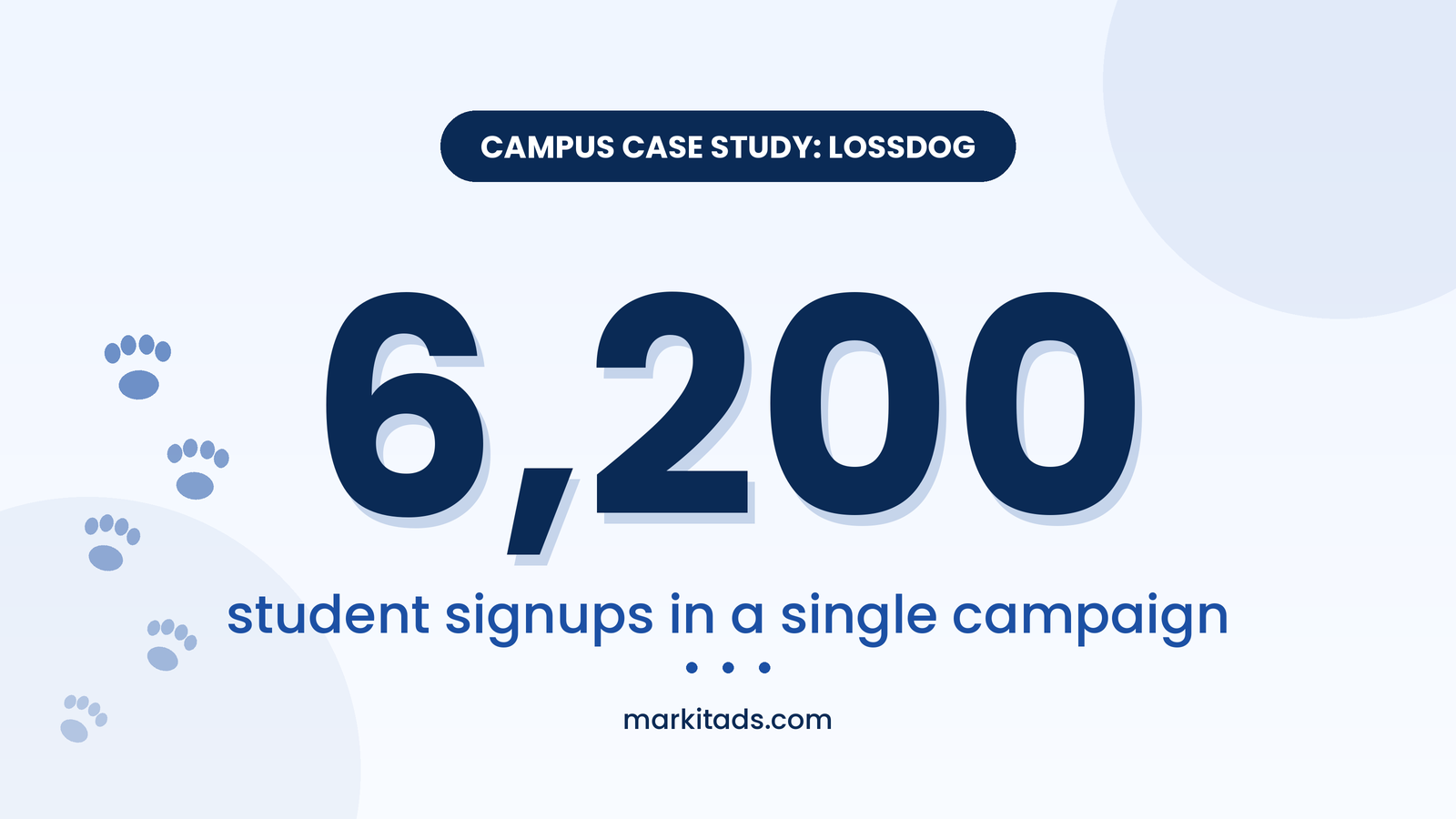
MarkitAds reports 6,200 verified signups. The figure matters because it is modest in the right way. It is not an estimate of how many people might have glanced at a logo. Each record belonged to a campus and an ambassador. A human watched the act occur. The agency could tell Lossdog what happened rather than what probably happened.
There is a catch hidden inside the triumph. A signup is not a customer. MarkitAds' own account makes the distinction: the ladder runs from install to signup to funded account to active user to retained user. Campus deserves to compete with paid social only if the 30-, 60-, and 90-day cohorts behave well. The dashboard makes the comparison possible. It does not predetermine the winner.
The change of mind happened before the software
The intellectual turn appears to have begun with Mission: Mentor, a free college-guidance project Sonnenreich co-founded while running the agency. His account says it reached more than 10,000 students before an acquisition in 2022. With little advertising money, its information traveled through counselors, seniors, clubs, and group chats. A school, he learned, is not a mass of interchangeable 18-year-olds. It is a graph of trusted people.
That observation changed the hiring question. The best campus operator is not necessarily the student with the largest following. It is the resident assistant who knows everybody on the floor, the club president whose recommendation enters six group chats, or the classmate who can explain an unfamiliar product without sounding like a commercial.
MarkitU is the productized version of that insight. MarkitAds remains the full-service shop for positioning, strategy, and campaign design. MarkitU packages the repeatable layer - ambassadors, campus selection, execution, live reporting, and exports - for growth teams that want a channel rather than an agency relationship. The company says a campaign can launch in as little as 24 hours and requires no long-term commitment. Pricing is custom, consistent with a business that scopes work through a conversation rather than a rate card.
A service company with a network hiding inside it
Marketing firms usually differentiate themselves with taste, specialization, or a famous client list. Those advantages are real but portable: another agency can hire a good art director or write “Gen Z” on its homepage. A distributed corps of trained operators is slower to copy. It requires recruiting, campus logistics, quality control, and enough paid work to keep students interested.
Where the model earns its keep
The same human machinery also creates limits. The model fits products a student can understand quickly, offers worth stopping for, and outcomes that can be verified on a phone. It is weaker when the sale requires a long procurement cycle, the offer raises immediate suspicion, or the useful audience is too sparse on any one campus. MarkitAds also says it will not run campus campaigns for gambling, alcohol, or nicotine brands. Trust is the inventory; some advertisers are not worth renting it to.
The part worth stealing
- Start with one campus, not a national map.
- Define the valuable action before anybody prints a flyer.
- Give the operator a sentence a skeptical person can understand.
- Attribute every result to the campus, date, and ambassador.
- Judge the cohort later. A cheap signup that vanishes is expensive.
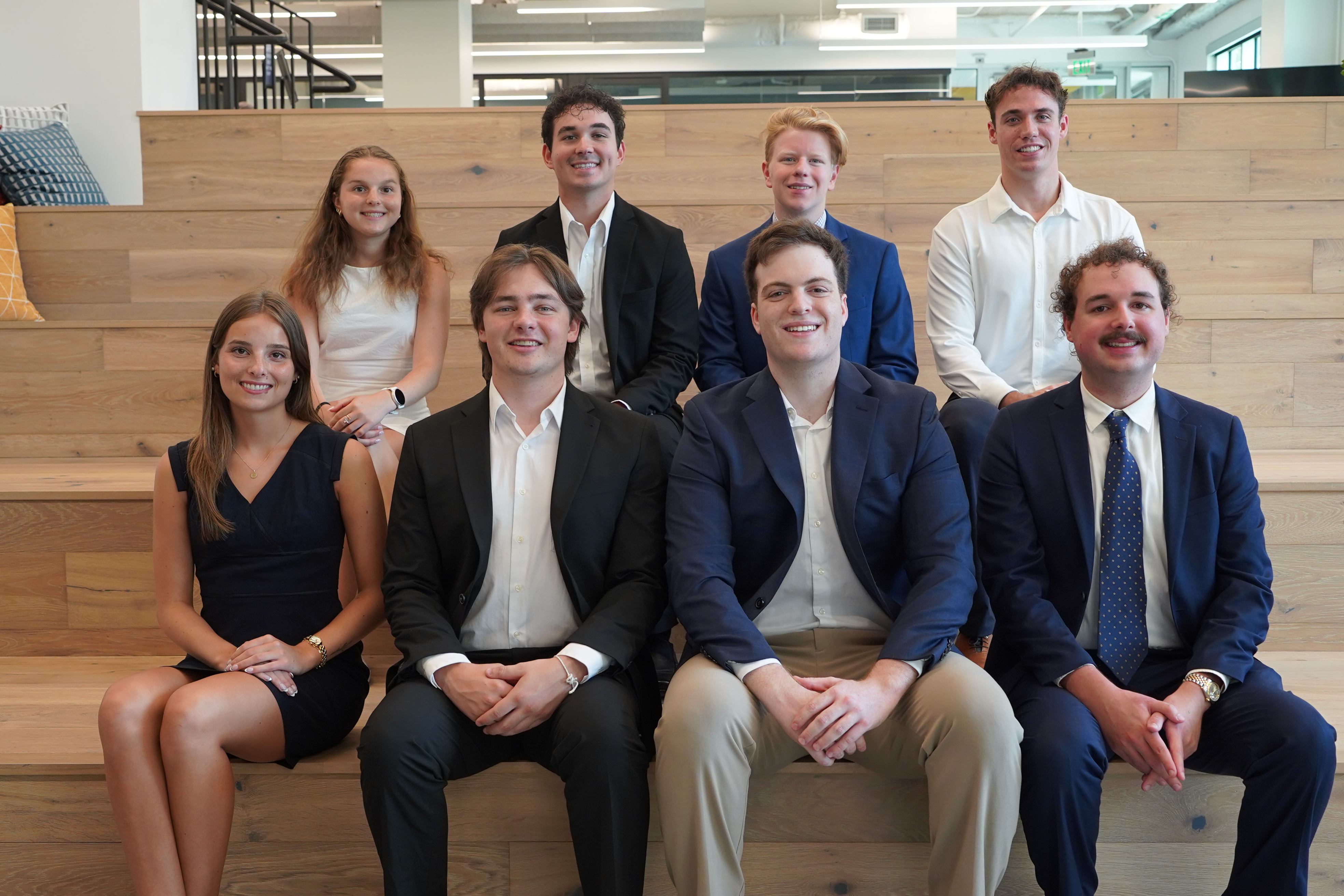
The company around this idea is still small. Its official team page lists a dozen core employees and two advisors; LinkedIn puts it in the 11-50 band. Its website reports more than a billion client impressions, 650 deliverables, and $250 million in managed client budgets - company figures, not audited disclosures. There is no announced institutional funding, valuation, or revenue figure.
What MarkitAds has is more interesting than another pile of impressions. It has a theory about where attention becomes believable. The internet made distribution cheap and skepticism abundant. On a campus lawn, attention becomes expensive again: it needs a person, a place, a reason to stop, and perhaps an extension cord. That expense is precisely why it can work.