When Nathan Li sent his daughter Nancy to childcare in 2009, the promised account of her days was a scrapbook, delivered every couple of months. He and his wife felt disconnected. The arrangement had a peculiar flaw: by the time the evidence arrived, the moment to respond might have passed. Li wanted to see what she was doing today. Educa began with that impatience.
- Make learning visible. Turn observations into stories with photos, video and a teacher’s interpretation.
- Give families a part. Invite responses and learning stories from home.
- Connect the paperwork. Link stories to curriculum, planning and assessment.
01A photograph needs an interpreter
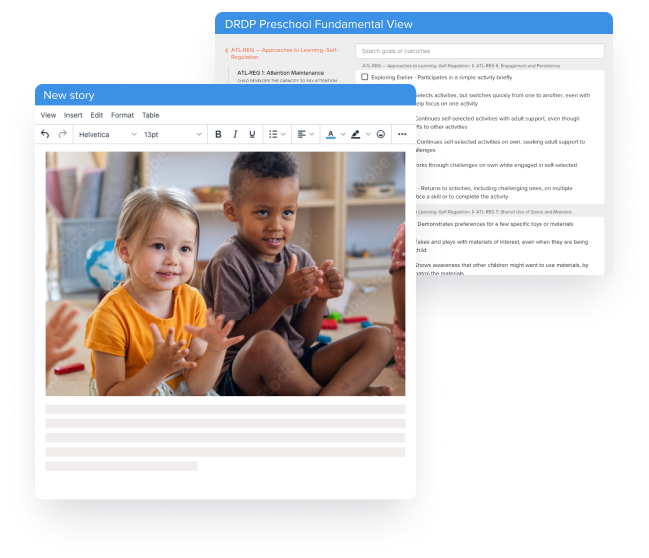
The company, founded in 2010, makes software for a surprisingly demanding little unit of work: the learning story. A teacher records an experience, reflects on the learning, and connects it to a framework or plan. The child has a portfolio. The family has something to discuss. The educator has evidence that can inform what happens next. A photograph supplies the scene; the teacher supplies the meaning.
That distinction explains Educa’s place in educational technology. Its emphasis is the work around early learning: documentation, communication, planning and assessment. Teachers can create individual or group stories, add media and connect observations to curriculum outcomes. The group format addresses an ordinary classroom problem: several children can share an activity while learning different things from it.
02The reply belongs in the record
Consider Pipitea Childcare in New Zealand. Its public communication guide describes teachers posting learning documentation, photos and videos through Educa. Families comment and can write stories about activities at home or on holiday. The centre promises one individual story each month, alongside group stories and snapshots. Its list of activities includes French, Little Dribblers and Zumba. Childhood, apparently, keeps a busy calendar.
The useful detail is the return journey. Information travels home, then comes back with another observer’s account. A parent may know an interest’s history; a teacher sees how it develops among other children. That makes family participation part of the evidence available for planning. Educa’s customer base includes education services in New Zealand, Australia and the United States. In February 2024, it reported a presence in more than ten countries.
Learning-story workflow, illustrated. No performance claim implied.
03The unglamorous part earns its keep
Behind the family conversation sits a less photogenic customer: the person responsible for reporting. Educa offers planning, forms, teacher portfolios and curriculum connections. Its knowledge base describes reports that track stories, framework use and parent engagement. For a service leader, these tools can reveal gaps in documentation. A missing record, however, should prompt a question about what was observed, rather than an automatic conclusion about what a child can do.
In North America, Educa supports assessment workflows involving California’s Desired Results Developmental Profile, or DRDP. Its January 2026 instructions describe exporting ratings to a spreadsheet for upload into DRDP Online. They also say the direct API connection is unsupported. Agency names, classroom names and required child information must match. Here is a practical limit to the tidy software diagram: an inconsistent name can stop the handoff.
This is where a trial should get specific. Take one recent observation through the entire reporting path. Check who can see it, which outcomes it supports, and what survives the export. A demonstration with sample children can hide the naming conventions and permissions that make a real service complicated. The better test uses the service’s own workflow.
04Small prices, real habits
The business model is a per-child subscription purchased by the education service. The public pricing page displays Basic at $1.29 a month per child and Advanced at $1.59, or $1.39 with annual prepayment. Both have a 15-child minimum. Services above 200 children are directed to sales. Ratings and a multi-site Hub appear as add-ons. Buyers should confirm currency, taxes and the features included in their quote before calculating a budget.
The price of the habit matters too. Someone must notice, write, review and invite a response. Educa Academy supplies courses and resources on learning stories and related practice. Software adoption here involves learning how to describe learning. Storypark offers overlapping capabilities, including stories, family contributions and curriculum tags. Educa’s case therefore depends on the fit of its connected workflow, especially the planning and reporting a particular service needs.
“Why can’t I see what my daughter is doing today?”
Nathan Li · Educa’s founding question

05A little help with the words
Educa has also moved into AI writing support. Its August 2025 guide describes Assist tools for spelling, grammar, tone, translation and emojis. Teachers select text, request a suggestion, then choose whether to insert it. Site administrators control availability. That arrangement leaves a useful boundary: polishing a description does not establish that the described learning occurred. The educator remains responsible for reviewing the account before publishing.
Educa says the AI workflow sends text rather than stored media or child identifiers, and that its providers do not use the content to train public models. These are company commitments to examine alongside a service’s own policies. Translation may help a conversation cross languages; a fluent sentence still needs a reliable observation underneath it. The professional skill is knowing what deserves a sentence in the first place.
The Academy addresses a different kind of assistance. Its self-paced learning, workshops and downloadable resources cover assessment, planning, behaviour and family engagement. Some courses offer completion certificates. For a leader introducing the platform, that creates a practical pairing: teach the team how to operate the editor, then help them decide what makes an observation worth sharing. Those are separate skills, and buying access only supplies the opportunity to develop them.
06Close the loop
Privacy belongs to the everyday workflow as well. Educa describes controls for teacher access, story approval and image restrictions. Its October 2026 guidance distinguishes a private learning portfolio from public promotion and says story photographs stay out of notification emails. Families return to the platform to see them. Access decisions still require attention from the service: a private system needs people who keep its permissions current.
The copyable idea is modest. Record something specific. Explain why it matters. Ask the family what they see. Use the response when deciding what to offer next. This approach depends on teachers having time to reflect and families having a workable way to participate. If documentation simply accumulates, the loop stays open. Educa’s founding question remains a useful test for any such system: does the record arrive while someone can still do something with it?