The most revealing artifact inside a large company may be the ticket that should never have happened. A laptop disappears at an airport. A customer finds an edge case the help center forgot. An experienced employee fixes the problem, adds a terse note, and moves on. The official manual remains spotless and wrong. The company, meanwhile, keeps running on a private collection of memories, favors and workarounds.
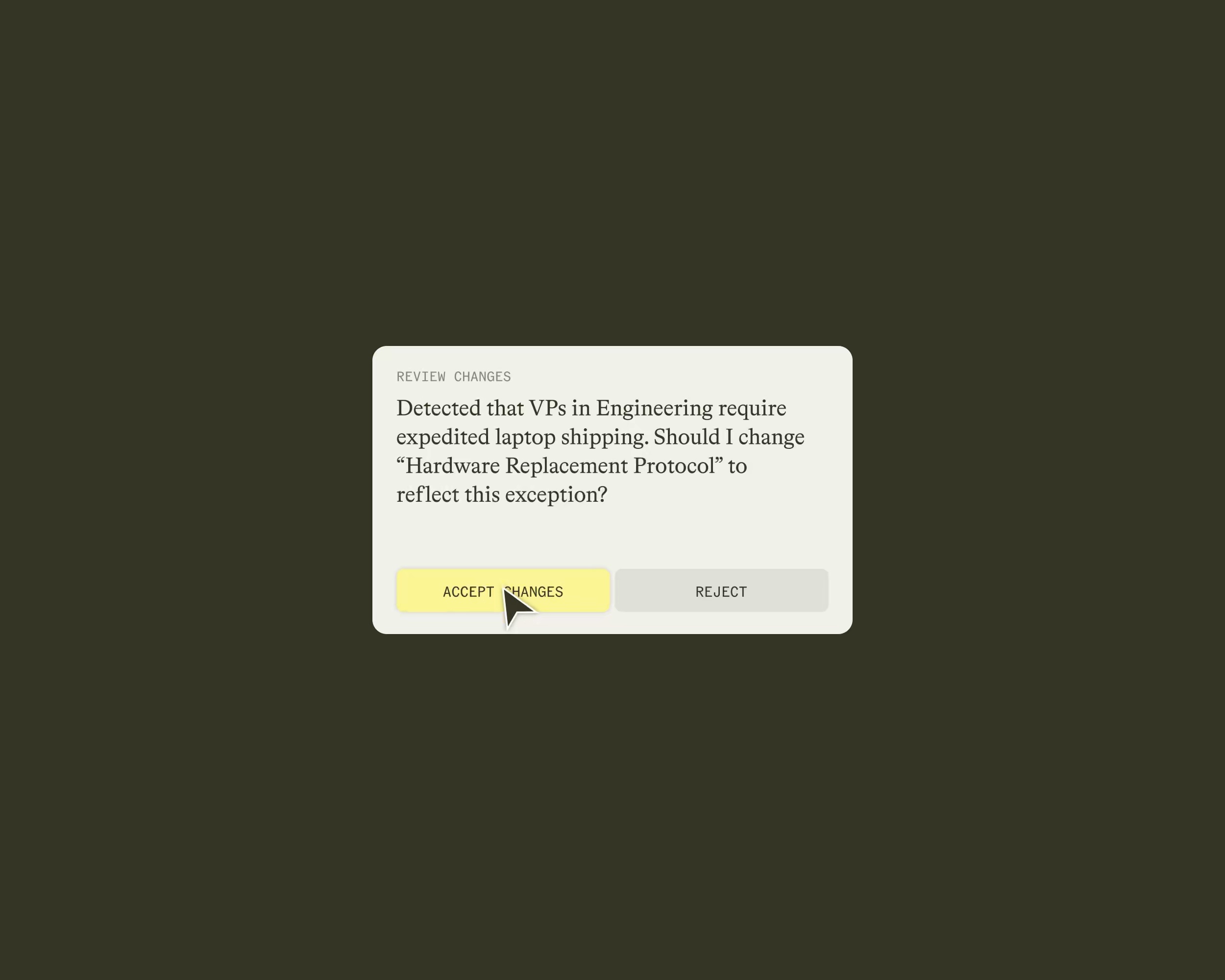
Edra wants to make that shadow manual visible. The New York startup connects to the systems where work leaves a trail - ServiceNow, Jira, Zendesk, Salesforce, Outlook, logs and messages - and reconstructs the process behind the activity. It organizes what it finds into a library of plain-English rules that people can inspect and AI agents can execute. When work changes, Edra proposes an update with the evidence attached. A human can approve it, edit it or reject it.
This sounds less cinematic than an all-knowing digital employee. That is the point. Founders Eugen Alpeza and Yannis Karamanlakis spent years at Palantir deploying AI inside complicated organizations. They came away convinced that the glamorous part - choosing a model and orchestrating an agent - was not the stubborn bottleneck. The costly part was teaching software how this particular business handles this particular mess.
“The hardest part of automation was never orchestrating the agent. It was capturing the knowledge on how a process runs in the first place.”Eugen Alpeza, co-founder and CEO
A manual written by the work itself
Alpeza and Karamanlakis met while studying artificial intelligence at the University of Edinburgh, then later helped build and lead Palantir’s forward-deployed AI engineering function. That job puts technical people close to customers, where the distance between a clean demo and an operating business becomes difficult to ignore. An agent may understand language, but it does not know that executives receive expedited laptops, a certain refund needs an extra approval, or a billing exception lives in a six-month-old comment.
Edra’s product starts with those traces. Its “zero-setup discovery” reads historical activity and existing documentation, looking for repeated resolutions, contradictions and missing topics. It turns the result into what the company calls executable knowledge: structured instructions detailed enough for an agent but readable enough for an employee. The distinction matters. Retrieval systems can find a relevant paragraph. Edra is trying to state what happens next, under which condition, and why.
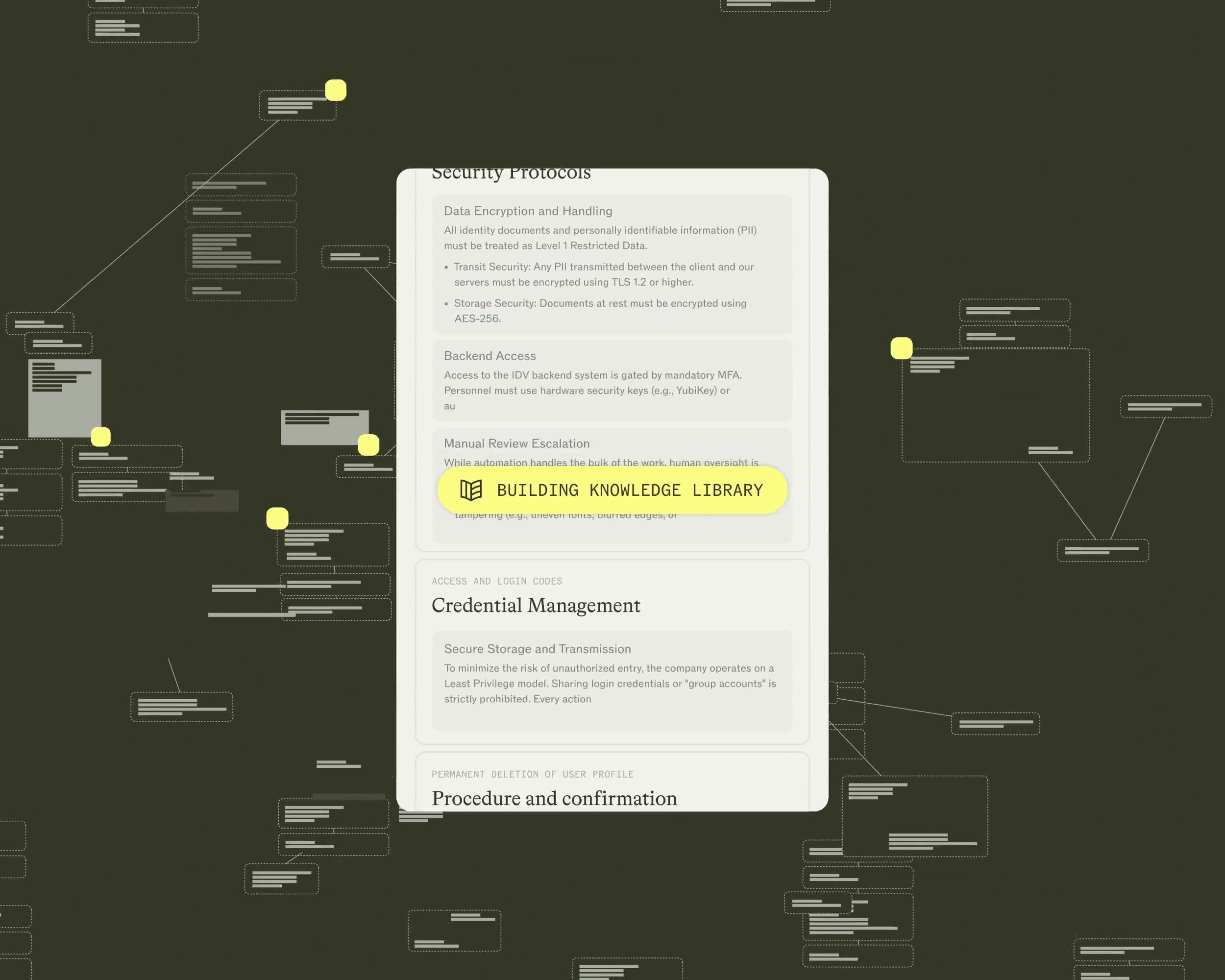
The Edra loop
- Connect tickets, messages, logs and existing articles.
- Infer processes, exceptions and missing knowledge.
- Let people review the evidence and edit the playbook.
- Give agents approved instructions and keep learning.
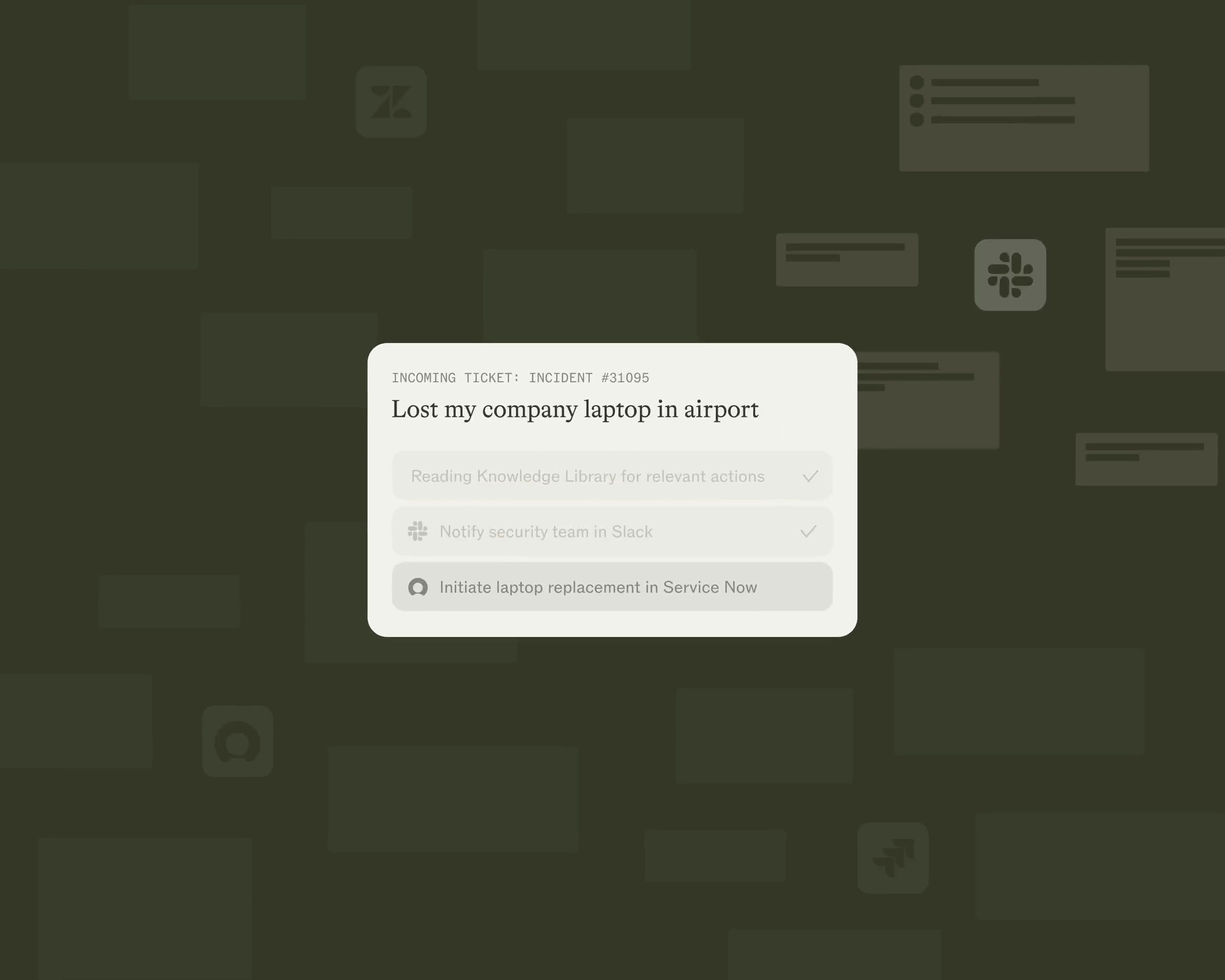
The wedge is IT service management and technical support. That is a shrewd place to begin: tickets are plentiful, outcomes are legible and bad automation becomes obvious quickly. The same qualities also impose discipline. A wrong answer about a lost laptop can create a security incident. Edra’s white-box pitch is designed for the buyer who has already watched a chatbot improvise with great confidence.
The ASOS numbers are the story
ASOS offers the clearest public look at what Edra actually did. The retailer’s IT service desk handles thousands of tickets a month and had a library of roughly 400 knowledge articles. Much of the useful problem-solving was elsewhere: resolution notes, recurring patterns and employee memory. Edra analyzed the ticket history beside the formal library. Within days, it identified suggested improvements across about half the articles and found hundreds of topics that had never been documented.
A further roughly 30 percent of inbound questions were described as ready for automation once system-level actions are enabled. The rest can be routed to the right team without manual triage. This is not a claim that every ticket vanished. It is more useful: a customer published where automation works now, where it could work next, and where a person still belongs.
HubSpot supplies another proof point and another relationship. Its venture arm joined Edra’s funding round, while its customer-support organization uses the product on agent logs and escalation data. HubSpot says the analysis exposed recurring patterns and tacit knowledge that had never been documented, then suggested edits and new articles for review. Reporting around the launch put the corpus at 150,000 support conversations, with more than 600 suggested knowledge-base updates and a 12 percent reduction in human handoffs.
What $30 million is buying
Edra was founded in 2024 and operated with customers before announcing itself broadly. An early $6.5 million seed was led by 8VC and A*. In March 2026, it emerged from stealth with a $23.8 million Series A led by Sequoia Capital, with participation from 8VC, A* and HubSpot Ventures, taking total backing above $30 million. Its public sales motion is a demo followed by a deliberately concrete offer: provide a slice of data and see an initial process view in one week.
That money funds a sales-heavy enterprise journey as much as a research problem. Edra works in New York and London and lists a team in the 11-to-50 range; LinkedIn showed 31 employees in August. Recruiting material emphasizes AI engineers, software engineers and strategists, with in-person offices and a taste for “rigorous debate.” The founders call themselves friends first, founders second. Their early London hires included engineers they had already worked with, a clue that trust is part of the hiring system as well as the product.
The customer list is compact but serious: ASOS, HubSpot, Cushman & Wakefield and Ergeon have been named publicly. Edra says it is in production at dozens of enterprises. Its integrations place it beside enormous incumbents without necessarily replacing them. ServiceNow or Salesforce remains the system of record; Edra wants to be the context layer that explains how an agent should act across those systems.
Different from search, harder than a wiki
The alternatives arrive from several directions. Glean and Guru help employees find company knowledge. Celonis mines processes. ServiceNow, Salesforce and UiPath automate work. Internal teams can assemble retrieval, agents and a heroic group of implementation engineers. Edra’s differentiator is the combination: learn rules from operational evidence, make the rules inspectable, deploy agents against them, then maintain the rules as behavior changes.
That also names the risk. Operational exhaust is not truth. A ticket archive can contain shortcuts, bias, obsolete policy and the residue of bad incentives. A process repeated 500 times may still be wrong. Edra’s answer is provenance and review, not blind imitation. Every proposed rule can be traced to evidence, and employees remain editors. The product works when a company has enough digital history, reasonably observable outcomes and owners willing to adjudicate contradictions.
The part worth copying
Teams do not need to buy Edra to borrow its sequence. First, choose one workflow with abundant evidence and a measurable result. Second, compare the official procedure with what successful operators actually did. Third, turn the gap into explicit instructions with links back to the evidence. Fourth, put a person in charge of accepting changes. Automate only after the manual becomes inspectable. The useful metric is not how many documents were ingested; it is how much work the approved knowledge covers.
This order is less thrilling than attaching an agent to the company drive. It is also a credible response to what failed first across the market: chatbots and retrieval projects that found text but could not reliably handle exceptions. Edra’s customers often arrive after those attempts. What changed the founders’ minds at Palantir was repeated field experience - the model could perform, while the company’s unwritten context had to be reconstructed by people each time.
Edra still has to prove that its learning loop travels beyond support-rich domains. Sales enablement, logistics and other operations may leave usable traces, but some judgment is political, tacit or simply too rare to infer safely. The horizontal vision becomes plausible only if the product resists treating frequency as correctness and customers keep doing the editorial labor.
For now, the company occupies a useful middle layer: above the systems that record work, below the agents that perform it. Its wager is almost conservative. Do not ask AI to know the business by magic. Give it a current manual, show the receipts, and let the people who run the place keep a red pen.