An enzyme is an odd thing to put on the door of an investment firm. EcoR1 Capital takes its name from a restriction enzyme, a tool associated with the advance of molecular biology. The choice is revealing. Before this San Francisco firm can decide what a biotechnology company is worth, it has to understand something about what happens inside a cell. Then it has to understand the company’s cash. Those are different kinds of literacy. EcoR1’s business depends on bringing them into the same room.
- EcoR1 invests in biotechnology across private and public markets.
- Its stated filters combine management, science and financing.
- Its funds are the advisory clients; drug developers receive the investment.
A laboratory name on a financial business
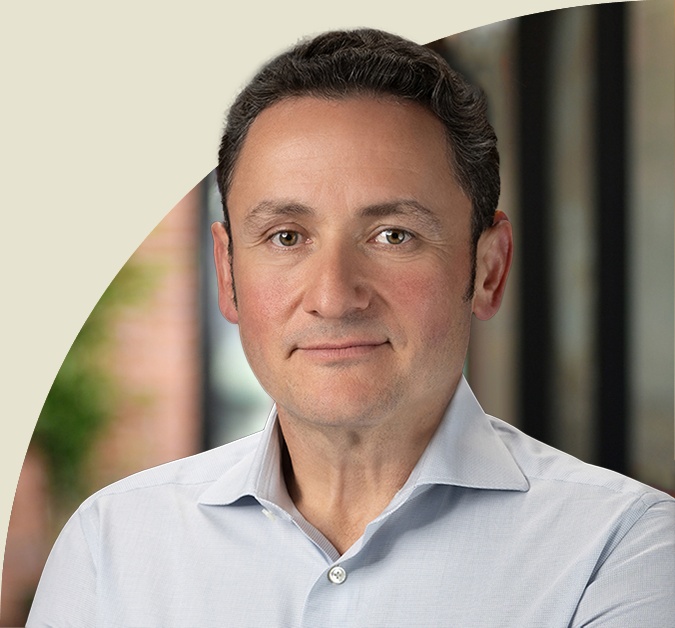
Oleg Nodelman previously managed investments at BVF Partners, an early specialist in biotechnology hedge funds. EcoR1’s legal roots date to 2012; his official biography dates the investment firm’s establishment to 2013. He brought an unconventional credential to the task: a Georgetown degree in Foreign Service, concentrating on science and technology. The founder’s job was to assess research, management and investment opportunity together.
EcoR1 invests across stages of research and development. Its public filings disclose equity positions, while its website presents a venture portfolio. That puts it in the specialist territory occupied by firms such as BVF, rather than among general-purpose startup investors. For a founder, the attraction is capital from someone accustomed to biotechnology’s questions. For a fund investor, the proposition is delegated judgment about those questions and the prices attached to them.
Two customers, one balance sheet
Consider the distinction between the people supplying money and the companies receiving it. EcoR1’s March 2026 Form ADV lists five pooled investment vehicles in its advisory-client category, with approximately $3.42 billion in discretionary regulatory assets under management. Those vehicles are its direct clients. Biotechnology companies are investment holdings and working relationships. Patients sit farther downstream, where a successful development program might eventually produce a treatment.
The business earns asset-based and performance-linked compensation. An SEC ownership filing describes fees and allocations linked to assets and realized and unrealized gains. Its economic incentive is therefore tied to managing capital and investment outcomes. The number on a fund’s asset statement is money under management; it should never be mistaken for the adviser’s sales.
“We start by vetting for exceptional management, strong science, and rational financing strategies, and then we dig deep.”
EcoR1 Capital / its stated investment ethos
Follow the money to the next experiment
Scorpion Therapeutics makes the mechanism concrete. In July 2024, it raised a $150 million Series C, with EcoR1 participating as an existing investor. The financing supported its precision-oncology pipeline, including STX-478. In January 2025, Lilly announced a deal centered on that program, with potential payments to Scorpion shareholders of up to $2.5 billion. That ceiling included later regulatory and sales milestones. It describes a transaction, not an EcoR1 return.
The scientific problem was selectivity. Lilly described STX-478 as targeting mutant PI3Kα, with the aim of attacking cancerous cells while sparing healthy ones. Earlier approaches to that pathway faced limitations from effects on normal tissue. Here, the proposed improvement was specific enough to test: could a more selective molecule improve the clinical trade-off? Investors were financing the work needed to answer.
Each figure is the entire financing round. EcoR1 was one participant.
Diagonal Therapeutics offers a newer example. EcoR1 joined its $125 million Series B in January 2026. The company planned to advance DIAG723, a clustering antibody designed to address impaired signaling in serious vascular diseases. In July, Diagonal announced the first patient dosed in its Phase 1/2 DIAMOND trial for hereditary hemorrhagic telangiectasia. A financing announcement had become a human experiment, with the outcome still open.
Attovia’s April 2025 round was $90 million, again with EcoR1 among the participants. The announced purpose included clinical proof-of-concept work on therapies for chronic itching and atopic dermatitis. Across these examples, capital purchases the opportunity to generate evidence. The round size alone cannot tell you whether the evidence will be favorable.
The people between the disciplines
Look at the biographies. Partner Caroline Stout joined in 2014 after investment banking at Credit Suisse; her economics degree included a pre-medical concentration. Analyst Nima Emami arrived in 2024 after leading a venture-backed biotech, with a UCSF doctorate and Berkeley training spanning bioengineering and computing. These backgrounds help explain the firm’s ability to discuss a development program and its financing in one conversation.

The team page also gives Nodelman’s Portuguese Water Dog, Leviathan Sunflower Nodelman, the title Consigliere. It is an amusing flourish in a business whose substantive conversations include boardrooms: Zymeworks announced Nodelman’s board appointment in February 2025. Engagement can extend beyond buying a security.
Conviction has an operating cost
There is a harder part of the record. In December 2024, France’s AMF imposed a €7 million fine on EcoR1 and €3 million on Nodelman. It found price manipulation connected with Innate Pharma’s 2019 Nasdaq listing and ownership-reporting failures by EcoR1. The AMF said sales during five Paris trading sessions depressed closing prices used in the American offering’s pricing. EcoR1 and Nodelman appealed; Galapagos reported that they disagreed with the ruling and filed their appeal in February 2025.
The investment approach also faces an ordinary, unforgiving constraint: development requires money before results are known. Scientific promise cannot guarantee clinical success, and a company may need another financing before it has decisive evidence. Concentration makes adverse outcomes more consequential. Familiarity with a mechanism does not remove those uncertainties.
Copy the questions
For a reader outside biotechnology, the useful takeaway is a discipline: evaluate the evidence, the people and the financing together. Ask what the next experiment will establish, what it costs to reach it, and what happens if it disappoints. These questions follow from EcoR1’s stated filters. They are available to anyone considering an uncertain project, even without a fund, a laboratory or an enzyme on the door.