A promising medicine does not become a different molecule when its maker lists on a stock exchange. The trial continues. Patients still need recruiting. The cash keeps leaving. Yet the investor willing to finance that company before its IPO may operate under quite different rules from the investor who buys its shares afterward. TCGX built a business around crossing that line.
- Invest in private and public biotech, wherever the opportunity makes sense.
- Use closed-end funds to reduce pressure from investor withdrawals.
- Add scientific judgment and operating help to the capital.
That sounds like common sense. In finance, common sense sometimes requires permission in the paperwork. TCGX’s mandate provides it. The firm can back a private drug developer, participate in a listed company’s financing, or invest in public shares. Its underlying subject stays medicine. The route to owning a piece of it can change.
The fund arrived. The market turned.
Chen Yu founded TCGX in 2021 after sixteen years as a managing partner at Vivo Capital. He had also been an operator: chief operating officer at Sagent Pharmaceuticals and chief business officer at China KangHui. Both companies went public and were later acquired. He had watched companies travel through the stages that investors often divide into separate territories.
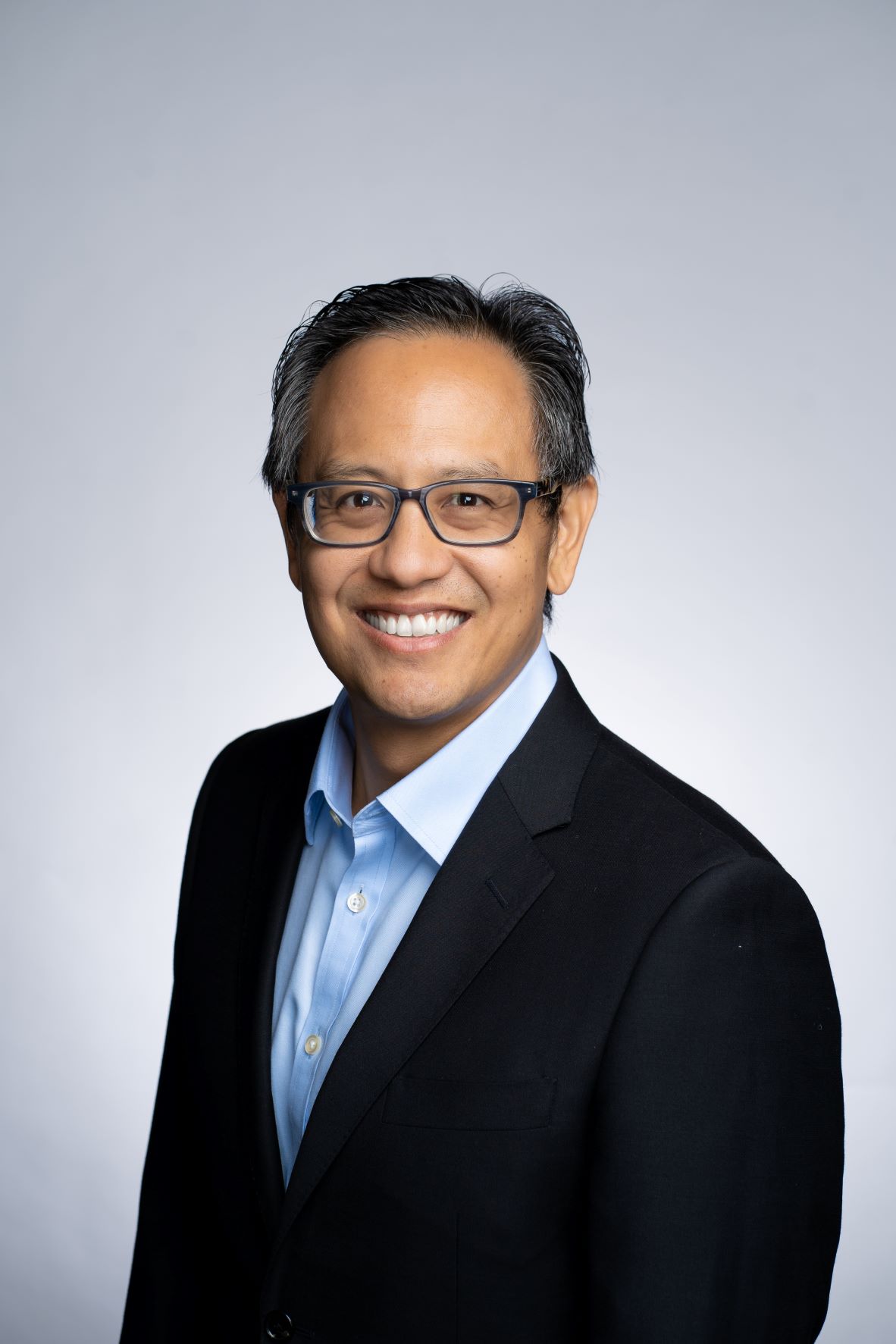
The inaugural fund launched in February 2021; its $824 million close was announced in April. The timing supplied an immediate test. In a 2024 BiotechTV interview, Yu described the launch as occurring at biotech’s market peak. Public investments were expensive. Later, as markets fell, private investing became harder. The point of flexibility was the ability to reconsider where value sat.
The shift in prices tested an existing design. TCGX had launched with public and private investing in its mandate. The Column Group connection added access to a company-building ecosystem, while contemporary reporting described separate governance and investment decisions. The crossover firm could complement early venture investing without inheriting every early venture bet.
Flexibility did not prevent losses. A May 2023 Cliffwater review recorded eleven realized public investments from Fund I that collectively returned 0.81 times invested capital before fees, with an average holding period of 1.2 years. That was a subset of the portfolio, not the whole fund’s result. Still, it punctures any tidy story in which a clever structure makes stock selection easy.
“We represent patient capital”
TCGX’s description of its fund structure
Patience has a price tag
TCGX invests through closed-end funds. Its explanation is practical: investors cannot demand redemptions that force portfolio sales, and the firm need not sell one holding simply to finance another. For drug developers, that arrangement can make a shareholder a more dependable companion through an awkward financing season. It gives the investment team breathing room.
Someone pays for that room. Rhode Island’s May 2023 review of Fund II described an annual management fee of 2.5% of committed capital during its four-year investment period, falling afterward, with provisions for earlier reductions following a successor fund. On a hypothetical $10 million commitment, 2.5% means $250,000 a year before other costs. Those are historical Fund II terms.
The same review described carried interest starting at 20%, stepping up to 25% after specified distribution and catch-up conditions. This is an asset-management business: limited partners supply capital, and the manager earns fees and a share of profits. The Texas County & District Retirement System, for example, disclosed a $30 million Fund II commitment. The customer behind the biotech check can be a pension.
More capital. Same ability to move.
Fund II closed at $1 billion in January 2024. Fund III followed with $1.3 billion in October 2025, lifting announced capital raised above $3.1 billion at that point. Raising money establishes that investors accepted the proposition. It does not, by itself, establish what their eventual returns will be.
A scientist, an operator, a shareholder
The companies receiving that money need more than a sympathetic timetable. TCGX describes helping them assess new pipeline opportunities, navigate capital markets and expand geographically. Its network brings scientists and operating executives into the conversation. The useful question for a founder becomes specific: can this investor help judge the next development decision as well as finance it?
Abivax supplies a concrete example. In February 2023, TCGX led a €130 million financing alongside other specialist investors. Abivax said the proceeds would support its ongoing global Phase 3 program for obefazimod in ulcerative colitis. This is what crossover capital can buy: the resources to keep testing a candidate through a consequential stretch of development.
There is a useful distinction here between buying shares already circulating and putting new money into a company. Cliffwater’s 2023 review expected public investments to concentrate on negotiated financings, including IPOs, private investments in public equity and registered direct offerings. The company receives capital; the investor negotiates its entry. To a management team trying to reach its next clinical milestone, the transaction’s structure can matter as much as the market’s daily opinion.
The people reading the science have their own unusual combinations. Managing partner Cariad Chester studied neuroscience and comparative religious studies, then researched tumor-immune interactions at Stanford before investing professionally. Giuliano Marostica trained in biomedical engineering and worked in healthcare investment banking. Those backgrounds suggest the breadth of the job: understand a biological claim, interrogate a development plan, and decide what ownership should cost. None of those tasks can safely substitute for the others.
TCGX fits among specialist healthcare investors competing to evaluate science and finance its progress. Its combination of market flexibility, scientific advice and closed-end funding defines its pitch. These capabilities require judgment to be useful. An ineffective medicine remains ineffective regardless of how patiently its investors wait.
One more border to cross
On October 7, 2026, TCGX announced a separate $600 million Asia Life Sciences Fund I and offices in Shanghai and Hong Kong. The flagship funds focus on the United States and Europe; the new vehicle targets Asia-based biotechnology companies across development stages. Regional focus now gets its own fund and team, alongside the broader firm’s resources.
The transferable lesson is organizational. Match the terms of the money to the time the work requires, then preserve room to respond when conditions change. That demands investors who can accept illiquidity and managers who can distinguish a cheaper opportunity from deteriorating science. A founder seeking immediate liquidity, or a saver expecting ready withdrawals, needs a different arrangement. TCGX’s proposition starts with agreeing to stay awhile.