In 2013, Aragon Pharmaceuticals reached an unusual fork in the road. Johnson & Johnson agreed to buy the company for $650 million upfront, with another $350 million possible in milestones. But part of Aragon would travel elsewhere. Before the sale closed, its breast-cancer research would become a separate business, Seragon. One company had contained two different futures. The transaction gave each a different home.
- TCG creates and finances drug-discovery companies.
- Its help extends to recruiting, leadership and operations.
- Labs Soleil puts separate assets around a shared research engine.
- Capital buys experiments. Clinical results decide what follows.
The Column Group, whose founder Peter Svennilson chaired Aragon and Seragon, works in this territory between discovery and organization. A scientific idea needs a suitable corporate shape, enough money and people who can turn a hypothesis into evidence. TCG makes those arrangements part of the investment. The interesting question is how much company a discovery actually needs.
The company is part of the experiment
Svennilson founded TCG in 2007. Today, the firm reports having started or invested in 55 companies, with 18 exits and $4 billion in returns for its partners and portfolio. Those are its own cumulative figures. They describe financial and organizational outcomes; they should never be mistaken for a count of approved medicines.
TCG belongs to the specialist biotech company-building market. Third Rock Ventures also creates companies and puts experienced operators into early leadership roles. Scientific founders have choices. TCG’s particular proposition combines concentrated platform investing, later financing and an affiliated research organization that can support individual drug assets.
Its users sit on several sides of the table. Scientists and entrepreneurs need funding and operating help. Fund investors want investment returns. Pharmaceutical companies may eventually license a program or acquire a business. Patients are the intended beneficiaries of successful development, further along a path that can still end in failure.
TCG’s stated pace makes its company-building approach deliberately selective.
The business model rests on ownership. Capital goes into companies whose value may grow as their research advances; a sale or public-market outcome can provide a route to realizing that value. For a founder, the exchange therefore includes a financial relationship as well as access to expertise. The size of a fund describes money available for investment. It says little by itself about the operating revenue of the firm managing it.
The cheque comes with colleagues
TCG’s platform funds describe portfolios averaging 10 to 12 companies, with $50 million to $60 million or more typically invested in each. That is a commitment across a company’s development, rather than a quoted admission price for founders. Opportunity funds provide additional flexibility for selected businesses as they mature.
The work includes details that rarely make acquisition headlines. TCG lists professionals who help young companies establish accounting operations and recruit scientific teams. Someone has to hire the researcher, organize the budget and make sure an experiment can happen next month. These jobs help explain what company creation means in practice.
“Members of their leadership team would come to our office weekly, and we talked every day.”Cory Nicholas, Neurona co-founder and CEO
Tim Kutzkey, now a managing partner, served as founding CEO of Peloton Therapeutics, Neurona and Surrozen. An investor who has occupied the chief executive’s chair can contribute direct operating experience. TCG also runs the one-year Swanson Fellowship, named for Genentech co-founder Robert Swanson, with company creation and mentorship at its center.
Keep the lab. Change the wrapper.
In February 2024, TCG Labs Soleil announced an inaugural fund of more than $400 million. Its structure paired a dedicated venture fund with Soleil, an enduring research and development organization. Independent portfolio companies would each hold a single-asset program. A common scientific operation would help advance them toward clinical proof of concept.
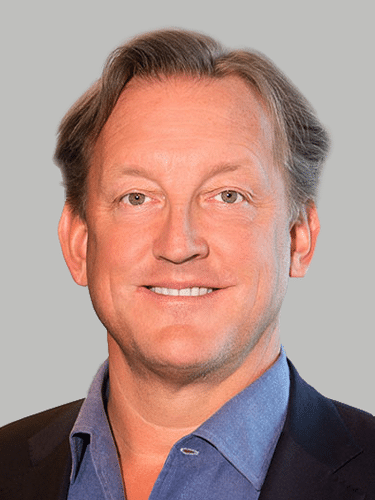
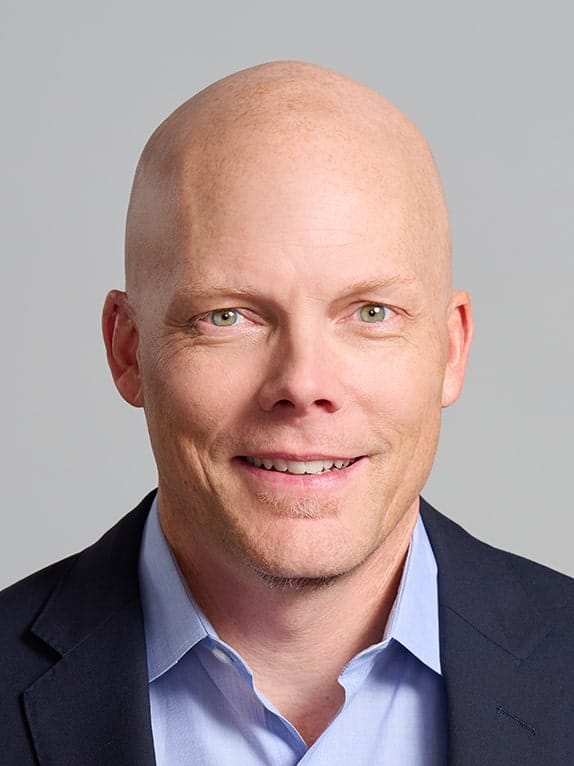
Jin-Long Chen became Soleil’s CEO and a managing partner of TCG Labs alongside Svennilson and Kutzkey. The premise was concrete: retain research expertise across projects rather than reconstruct an entire organization around every asset. The 2024 launch emphasized biologics. Its design also anticipated strategic transactions once programs had generated human evidence.
By July 2025, Labs Soleil reported more than ten portfolio companies, another $400 million raised and a Shanghai presence alongside its South San Francisco research capabilities. The announcement also described sourcing external assets. Capital raised establishes capacity to do the work. It does not establish that sharing the work has already improved clinical success rates.
There is also a useful distinction between sharing people and sharing scientific risk. Several programs can draw on the same laboratory expertise while each still depends on a different biological hypothesis. An efficient organization might reach an answer with fewer administrative interruptions. That answer can still be no. A founder evaluating this arrangement should ask who chooses the experiments, who allocates scarce research time and what evidence will trigger the next investment decision.
Biology gets a vote
NGM provides a useful check on the story. In May 2021, its aldafermin trial in patients with certain stages of liver fibrosis missed its primary endpoint. NGM suspended further development in that population and reallocated resources. In October 2022, its NGM621 eye-disease study also missed its primary endpoint. Earlier promise had not produced the required clinical result.
These were portfolio-company setbacks, not evidence that every TCG investment followed the same path. They show what changed the development decisions: trial data. In April 2024, TCG affiliates completed NGM’s take-private transaction. Changing ownership could change financing and priorities; it could not retrospectively turn a failed endpoint into a successful one.
The financing network has continued to evolve. TCGX, launched in 2021, invests in later-stage private and public companies and is operationally independent of TCG. In October 2026, TriGemX Bio and TCGX Acquisition Corp. announced a proposed business combination. The agreement offered another possible financing route, subject to closing conditions.
What a founder can borrow
The transferable idea is organizational: decide which capabilities must belong to an individual company and which can serve several projects. Make recruitment, scientific judgment and financing responsibilities explicit. For a scientific founder, TCG offers a potential partner for those decisions. Job seekers can explore its portfolio roles; aspiring company builders can examine the fellowship.
The fit has limits. A founder seeking complete operational independence may find close investor involvement uncomfortable. A shared research team needs capabilities relevant to its assets and enough capacity to serve them. Those are implications of the structure, rather than published performance findings. Aragon’s fork still makes the point: good science creates possibilities. Building a company means deciding how to pursue them.