In May 2023, Larkspur Biosciences introduced itself with $35.5 million and a deliberately narrow starting point: a subtype of colorectal cancer. The relevant patients already had T cells at their tumors. A biopsy could identify them. The question was why those immune cells were failing to do their job. For a young cancer company, that specificity mattered. It gave an ambitious scientific idea a patient population and a possible test.
- The work: finance biotech, medical technology and the overlap between biology and computing.
- The approach: combine scientific judgment, syndicate financing and company support.
- The catch: an elegant mechanism still has to survive a clinical trial.
3E Bioventures co-led Larkspur’s combined seed and Series A financing with Polaris Innovation Fund and Takeda Ventures. Frank Yan, representing 3E, joined the board. Those details put some weight behind the language of venture capital. Here was money committed alongside other specialists, plus a seat at the table where the next decisions would be made.
The patient comes before the platform
The firm calls its approach science-driven and entrepreneur-friendly. Its chosen territory includes new drugs, new treatment modalities and platforms for discovering medicines. It also invests in TechBio, where biology meets technology. The portfolio makes that broad term more tangible: DNA synthesis at Twist Bioscience, flow cytometry at Cytek, and imaging software at Subtle Medical.
These companies solve different problems. A scientist needs better tools to measure cells. A hospital needs more capacity from an existing scanner. A drug developer needs a way to reach a difficult disease target. 3E’s place in this market is to finance the businesses attempting those jobs and help them develop. The products belong to its portfolio companies.
An immunologist on both sides of the table
Founding partner Karen Liu brings an unusual sequence of experiences to that work. She earned a PhD in immunology at Harvard, worked at McKinsey, and was an entrepreneur and senior team member at the internet-search company 3721, sold to Yahoo in 2004. Healthcare investment roles at CRCI Capital and Kaiwu Capital preceded 3E.
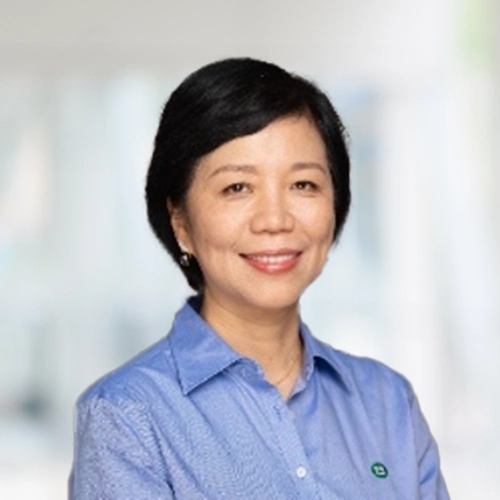
3E’s description of its team emphasizes biomedical training alongside industry and entrepreneurial experience. Its stated investment footprint covers China and the United States, with both RMB and dollar funds. For founders, that suggests a particular kind of fit: a business whose scientific detail merits sustained attention and whose development can benefit from investors familiar with those markets.
A volume knob for RNA
Consider Arnatar Therapeutics. RNA medicines are often discussed as tools for silencing a harmful biological instruction. Arnatar also develops antisense oligonucleotides intended to increase production of a needed protein. Its platform therefore works in two directions: suppress a disease driver or restore something missing. The investment case begins with understanding which direction a particular disease requires.
Eight Roads and 3E co-led Arnatar’s $52 million Series A, which closed in 2024 and was announced when the company emerged from stealth in August 2025. By July 2026, Arnatar had announced Chinese regulatory clearance to start human testing of ART5, its candidate for autosomal dominant polycystic kidney disease. Permission to run a trial marks a development step; efficacy remains a question for testing.
Rapafusyn offers another route into difficult biology. Its RapaGlue platform develops non-degrading molecular glues, seeking to affect targets that conventional drug approaches struggle to address. A September 2025 announcement put its total Series A at $44 million and named 3E among the investors. Karen Liu highlighted the opportunity to move beyond conventional small molecules.
“I am excited about the platform’s ability to expand beyond traditional small molecules”
Karen Liu · Rapafusyn financing announcement · September 2025
The other clock in the portfolio
Subtle Medical supplies a different measure of progress. 3E led its $12.2 million Series A in November 2020, when the company reported adoption at more than 50 sites. Its software improves medical images and supports faster scanning on existing equipment. The buyer can connect the technology to a familiar operational problem: getting patients through the scanner.
In June 2026, Subtle announced $33 million in growth capital and said its technology was deployed on more than 1,300 scanners globally. Sites and scanners are different units, so those figures cannot produce a tidy growth multiple. They do show commercial adoption alongside the therapeutic research in 3E’s portfolio. An imaging company can demonstrate usage while a drug company is still collecting early human evidence.
The experiment gets the last word
Aravive supplies the harder lesson. Listed in 3E’s portfolio, it reported in August 2023 that its Phase 3 ovarian cancer trial of batiraxcept missed its primary endpoint. Its subsequent quarterly filing connected the result and its cash position to the termination of clinical trials and a workforce reduction of approximately 70 percent.
The failed test changed Aravive’s operating decisions. Scientific expertise could help investors evaluate the original proposition; the trial result determined what the company could justify next. For anyone studying 3E, that case belongs beside the financing announcements. A portfolio containing promising mechanisms also contains the possibility that patients will receive no demonstrated benefit.
What a founder can borrow
The economics sit in the background. Fund III reported $146.7 million of interests sold to 29 investors in a January 2023 filing. It provides for a management fee and performance allocation. Limited partners supply capital; founders receive investment and support; successful company outcomes are the intended route to returns.
A practical lesson from these cases is to define the next decisive test. Larkspur started with identifiable patients. Arnatar tied its platform to particular protein deficiencies. Subtle connected software to scanner capacity. Founders approaching a specialist investor can borrow that discipline: explain the problem, identify the evidence, and show what the financing will let the team learn. The experiment needs a budget as much as the company needs a story.