A biotech founder can spend years learning how a molecule behaves. H7 BioCapital wants another question on the agenda early: who might want to license it? The San Francisco venture company makes prospective pharmaceutical and medtech buyers part of its investment logic. Before the celebratory funding announcement, before the conference photograph, there is the less photogenic work of finding a commercial fit.
That emphasis gives H7 a recognizable position in healthcare’s crowded support economy. It combines venture investment, business development and licensing with an accelerator. Around those activities sit an angel syndicate, workshops, conferences and an investment fellowship. Founders bring companies; investors bring capital and judgment; industry specialists bring the questions a pitch deck would sometimes prefer to skip.
The buyer enters the room early
H7’s venture criteria favor therapeutics approaching clinical development or already in it, alongside medtech businesses with revenue or clinical validation. Its stated approach considers the licensing and acquisition priorities of multinational pharmaceutical and medical-technology companies. The possible destination of an asset influences how H7 assesses the journey.
“Investing with the Insight from the Buy Side.”
H7 Venture’s stated investment approach
The phrase has practical consequences. H7 asks about scientific evidence, measurable milestones, strategic fit and realistic adoption or reimbursement potential. An interesting mechanism needs a credible development plan. A device needs a reason for clinicians, patients and payers to care. The firm explicitly considers licensing, co-development and acquisition scenarios from the outset.
Read as a working method, that means founders should connect the next experiment to the next commercial conversation. Which result would make a potential partner pay attention? Which weakness would stop diligence? Those are useful editorial questions to take from H7’s criteria, even for a company that never submits a deck.
A research background, then a venture platform
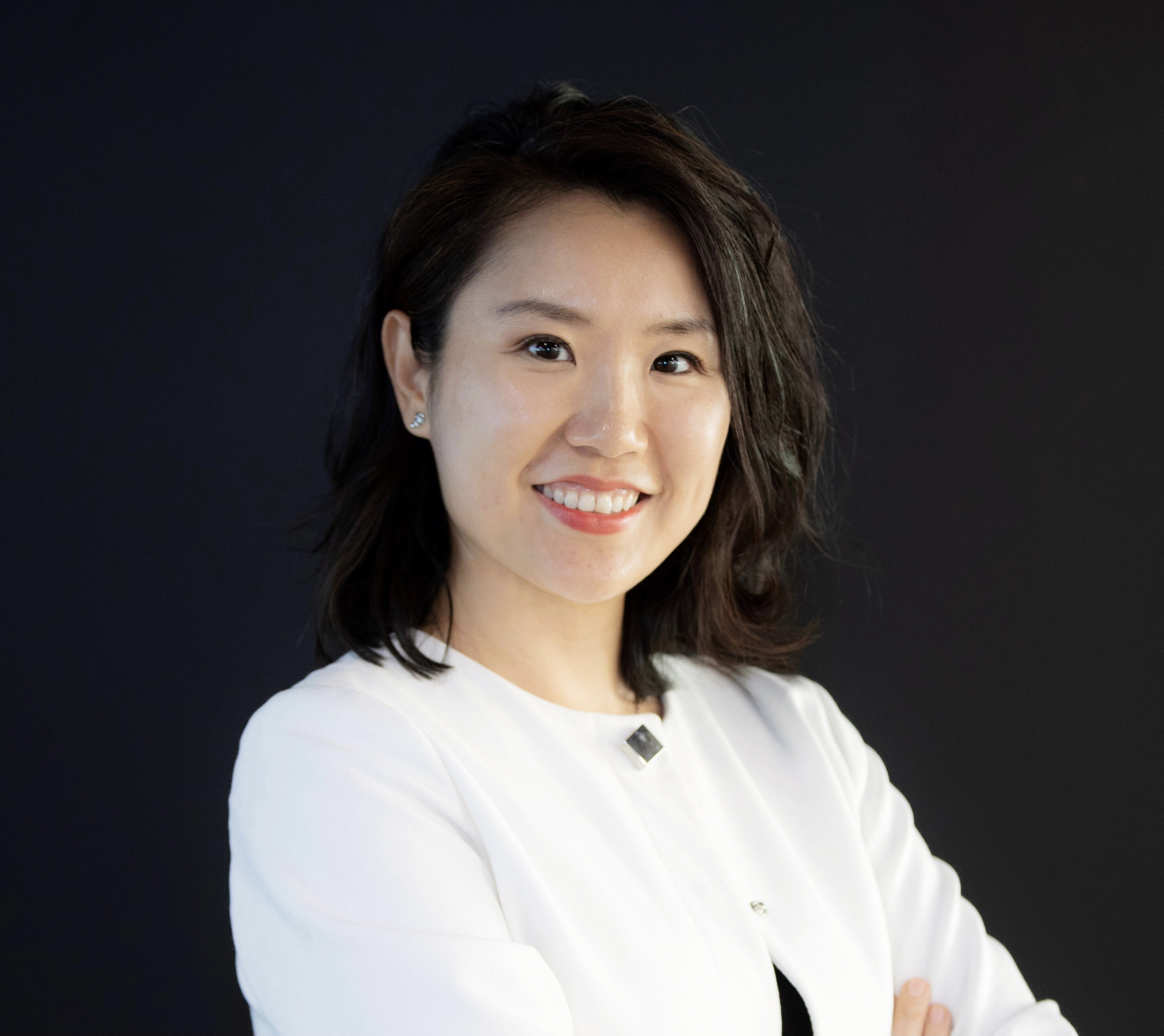
Founder Ella Li’s biography crosses the two worlds H7 tries to connect. A 2024 Chinese Bioscience Association conference biography describes doctoral training at the University of Texas Health Science Center, postdoctoral work at Harvard Medical School, and undergraduate and master’s degrees from Peking University. It also records leadership roles at ZGC Capital and Hanhai BioLabs, alongside advisory work with Pegasus Tech Ventures and a venture-partner role at Network VC.
That combination helps explain the company’s choice of terrain. Scientific training can inform the reading of experimental evidence; investment experience brings questions about teams, financing and who might eventually transact. H7 places both kinds of expertise inside a service built for healthcare founders.
H7’s March 2023 launch announcement introduced three parts: H7 Accelerator, H7 Venture and H7 Café. It proposed a first H7 cohort of 10 to 15 companies and described a network of more than 80 professionals. The website now puts investment, business development and licensing, and acceleration at the center. The change in emphasis is visible in the language: partnership work has a more explicit place in the company’s public identity.
Twelve weeks, two different problems
The accelerator makes H7’s offer tangible. Its main program page describes an annual, three-month virtual cohort for healthcare companies around seed to Series A, with weekly individual mentor meetings and opportunities to pitch online and in person. H7 advertises more than 100 advisors and more than 80 venture-capital partners. Those numbers describe its stated network, rather than employees or investors committed to every startup.
The Life Science track concentrates on development planning, clinical-trial design, fundraising and licensing. Its scope includes drug-delivery platforms, precision medicine, RNA therapies, and cell and gene therapies. It also offers help identifying pharmaceutical partners and recruiting executives, including specialists in chemistry, manufacturing and controls. These are attempts to address the organizational work surrounding a scientific asset.
The Medtech track focuses on companies commercializing or expanding in the United States. Pricing, customer acquisition, clinician input and commercial strategy sit alongside fundraising. The split makes sense: a therapeutic pipeline and a medical device can both need money while requiring very different conversations before anyone writes a check.
The workshop archive supplies the texture. Sessions cover term sheets, intellectual property, licensing, reimbursement, board-building and clinical development. Named offerings include tax planning with Skylar Shi of Moss Adams and a session on data-enabled medtech products with lawyer Can Cui. The calendar suggests an accelerator concerned with the paperwork and decisions that surround invention. A founder’s week can contain both a scientific milestone and a tax question.
Equity-free has a price tag
H7’s published accelerator FAQ lists a $7,490 early-bird program fee and says accepted companies give up no equity. The offer includes participation in specified H7 forums, demo days, private investor meetings and partner events. Applicants should confirm the terms attached to their particular cohort; an early-bird offer is a specific price, not an all-purpose quote.
Cash tuition · No accelerator equity taken
Investment considered separately
An older page, titled “2022 H7 Entrepreneur Workshop,” describes a different exchange: no cash payment, with a warrant for up to 2 percent equity, capped at $100,000. Put beside the later fee, it shows a change in published program economics. It does not, by itself, establish that the earlier approach failed.
For a founder, the trade-off is plain. Cash tuition uses money available today; equity-based compensation gives someone a claim on future value. The sensible comparison is the specific help a team needs, the people it can realistically meet, and the work it can complete during the program. H7’s package sells structured access and preparation. Investment remains a separate selection decision.
Nine companies make the pitch concrete
The 2024 accelerator announcement offers a manageable picture of H7’s customers. It named nine companies selected from what H7 described as hundreds of applications: two in biotech, three in digital medicine and four in medical devices. Five were at seed stage, three at pre-seed and one at Series A. Eight were based in the United States and one in Germany.
Auctus Surgical illustrates the device side, with a flexible tether system being developed for pediatric scoliosis that can be adjusted magnetically as a child grows. Cellentia illustrates another corner: tumor-cell-derived organoids for drug screening and oncology research. These are the participants’ development propositions as presented by H7, not claims that the accelerator established clinical success.
The breadth matters. It explains why the company needs a network spanning clinical, commercial and investment disciplines. An advisor useful to a surgical-device team may answer a different set of questions from one working with an oncology platform.
The conference is part of the machinery
H7 gives that network physical meeting points. In October 2023, it co-hosted a healthcare innovation summit with Plug and Play as part of Chinese Tech Network. Its recap names accelerator companies Cellicure, QuanMol Tech and Novall among the presenters, alongside venture portfolio company Vista Robotics. This is a concrete partnership, with an event and participating companies attached.
In January 2025, the setting was the Klamath Ferry at San Francisco’s Pier 9. H7 says its investment forum and China Night reception attracted more than 1,000 attendees and 15,000 livestream viewers. Five members of the nine-company 2024 cohort presented. A ferry is a memorable place to pitch a healthcare company; the operational point is gathering founders and potential counterparties during J.P. Morgan Week.
The circuit continued in January 2026. H7’s public recap reported more than 1,000 attendees and 16,000 livestream viewers for its fourth Life Science Investment Forum and reception. These are company-reported audience figures. They show convening activity, while a financing or licensing agreement still requires its own negotiation.
A separate door for investors
H7’s angel syndicate serves qualified investors through deal-specific special-purpose vehicles, or SPVs. The published minimum is $50,000. Its investment team says it completes diligence and prepares an investment memo before presenting an opportunity; members then decide individually whether to participate. Its stated range extends from seed to pre-IPO.
The membership mix includes family offices, venture professionals, physicians, scientists, engineers and entrepreneurs. For H7, this adds another route between healthcare expertise and capital. For participants, the unit of choice is the individual deal. The accelerator’s tuition and a syndicate investment are different transactions, with different purposes.
There is also a route for people learning the work. As of September 2026, H7 advertises its second investment fellowship cohort of the year. The six-month program covers diligence, investment-thesis development, mentorship and business-development exposure. Its eligibility page calls for a Ph.D., M.D. or Pharm.D., with biotech or pharmaceutical industry experience strongly preferred.
The introduction still needs somewhere to go
H7 sits among several kinds of alternative. MedTech Innovator offers medical-device, diagnostics and digital-health acceleration through a nonprofit model. SOSV’s former IndieBio programs, renamed SOSV SF and SOSV NY in 2026, combine investment with facilities and company-building support. A founder might also assemble specialist investors, advisors and licensing help independently.
H7’s particular proposition is the combination: commercial-buyer awareness, healthcare mentorship, pitching opportunities and investment channels in one network. It fits a team able to turn an introduction into a substantive discussion. A company still defining its core technology may need more discovery work first; one seeking guaranteed financing would be asking the accelerator to deliver something its selection process does not promise.
The useful habit to copy is simple enough to put into the next internal meeting. Name the prospective partner, state the evidence that partner would need, and decide which milestone comes next. H7 has built a business around bringing people into those conversations. Founders still have to arrive with something worth discussing.
Meet the people. See the work.
Explore H7 BioCapital, the accelerator, angel syndicate and investment fellowship.
Follow on LinkedIn and Instagram. Browse company news, workshops and H7’s YouTube channel. Watch the 2025 forum video or the cohort interviews on the accelerator page.