Consider the appointment that has already finished. The patient has gone home. Yet somewhere inside the clinic, the visit is still happening: a note awaits completion, a laboratory request needs processing, somebody needs to collect a payment. The doctor’s calendar measures one encounter. The office experiences several. This ordinary mismatch is a useful way into eClinicalWorks India Pvt and the healthcare software business it belongs to.
- For clinics: OPRA combines outpatient records and practice management.
- For hospitals: HMIS connects clinical and administrative departments.
- For buyers: Indian pricing requires a quote; global figures describe the wider group.
The gap is the business
Paperlessness sounds like a destination. In healthcare, it is closer to a starting condition. A digital note that cannot reach the next person still creates work. eClinicalWorks’ original ambition, dating to the US parent’s founding in 1999, was to remove paper and connect doctors with pharmacies, laboratories and suppliers. Its present product catalogue follows those connections well beyond the consulting room.
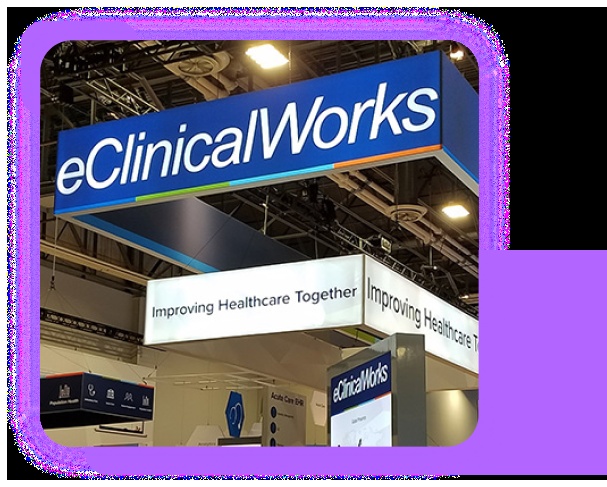
The Indian legal entity was incorporated in October 2006. It is based in Ahmedabad, with regional offices also listed in Mumbai and Bengaluru. Westborough, Massachusetts, is the parent’s headquarters. These distinctions matter: the company’s India website reports 550 hospitals using its systems, while the familiar figures of more than 180,000 physicians and nurse practitioners and 850,000 healthcare professionals describe worldwide use.
This is also a substantial Indian business in its own right. Its annual return for the year ended March 2025 lists approximately ₹833.09 crore in turnover and identifies eClinicalWorks LLC, USA, as its holding company. That number belongs to the Indian entity. It should not be swapped for a headline about the group’s revenue.
The Indian operation also has a people story. Great Place to Work has published a certification profile for it, while university recruiting material describes technical training, transport, subsidized meals and insurance. Those details fit a business in which support staff need to understand both software and the work of a medical office. A product demonstration lasts minutes. Helping a customer use the product is a continuing relationship.
One patient, several systems
For an independent doctor or outpatient clinic, the relevant product is OPRA, short for Outpatient Records Application. It combines documentation, practice management and analytics. The appeal is practical: keep the clinical record close to the administrative work surrounding it, so an encounter can move toward completion without becoming a scavenger hunt through separate applications.
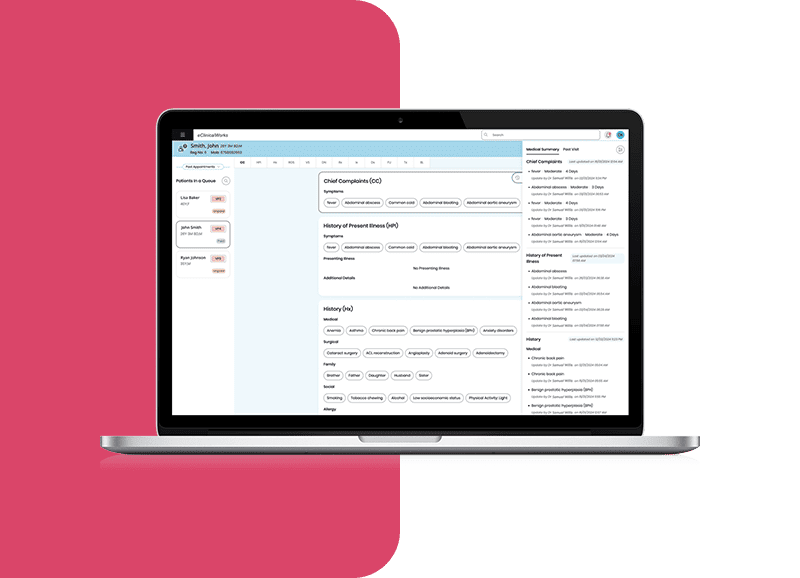
A hospital poses a different problem. Its patient journey runs through registration, wards, diagnostics, operating theaters and billing. eClinicalWorks’ HMIS offers more than 35 modules, including materials management. A missing item in the supply chain can matter to care just as surely as a missing entry in a chart.
- 01Register
- 02Document
- 03Coordinate
- 04Settle
Each transition is a place to look for repeated work.
The Indian hospital offering supports ABHA identification workflows and describes compatibility with the Ayushman Bharat Digital Mission. Its specification includes FHIR and clinical terminology standards. Those details are less glamorous than an AI demonstration, but they explain the work: software must fit the institution and the health information networks around it.
Compatibility alone cannot settle the competition. Practo Ray also offers Indian clinics records, appointments and ABDM-related capabilities. In the US ambulatory market, athenaOne combines records with operational tools. eClinicalWorks’ case rests on the particular combination it can deliver across clinic, hospital and patient workflows. Buyers still have to test how that combination behaves in their own setting.
The appointment booked at eight
A small episode from a Texas customer makes the patient side concrete. In an October 2026 company-published account, DFW Pulmonary and Sleep Clinic described someone booking online around 8 p.m. for the next morning. No receptionist needed to be at a desk to accept that booking.
The same account reports that Sunoh.ai, an integrated ambient medical scribe, helped providers save two to three hours daily and complete notes on the day of the visit. These are customer-reported results presented by the vendor, rather than an independent trial. They illustrate where the product seeks value: less unfinished work at the end of the day.
“With Sunoh.ai, our provider can now complete and lock notes the same day”Gloria Adekola, practice manager, DFW Pulmonary and Sleep Clinic · October 2026
Sunoh.ai turns consultation conversations into clinical documentation. The clinician’s review remains consequential. Faster drafting helps only when the resulting record accurately represents the encounter. Patient tools such as healow address another part of the workload: scheduling, check-in and payments. The benefit comes from completing the surrounding steps as well as recording the conversation.
The price of joining things up
In India, clinics and hospitals are directed to request tailored quotations. The parent’s public US list provides a different reference: $499 per provider monthly for EHR, $599 with practice management, and an RCM service at 2.9% of collections. Those are US terms, with implementation and transaction qualifications. They are not an Indian price list.
The distinction reveals the business model: healthcare organizations pay for software and associated services, with different packages covering different amounts of operational work. A sensible comparison follows the complete workflow and its commercial terms, including training, migration, interfaces and recurring charges.
A record has to earn trust
The parent’s history supplies a serious counterweight to the convenience argument. In 2017, the US Justice Department announced a $155 million settlement involving eClinicalWorks and certain employees. It resolved allegations about certification, software capabilities and kickbacks. The claims were allegations, with no determination of liability. The settlement included a five-year corporate integrity agreement, independent oversight and customer data-transfer protections. It concerned the US vendor, not a finding against the Indian subsidiary.
By October 2026, the group was announcing an AI Workbench and agentic operational tools. Those announcements describe its direction; they do not establish availability in every Indian deployment. The lesson a reader can copy is more immediate. Follow one patient through the office. Count the repeated entries and unfinished handoffs. Then ask a vendor to demonstrate those exact steps. Where connectivity is unreliable, staff cannot adopt the workflow, or records cannot move accurately, the promise loses its foundation. The appointment ends only when the work does.