The revealing detail in Plum Dental’s software story is the server. In CareStack’s account of the group’s transition, the trouble came as offices multiplied: local infrastructure needed attention, and management struggled to see performance across the business. A practice could know its patients while the organization struggled to know itself. Growth had made ordinary administrative work harder.
- CareStack joins the clinical record to the business of running a dental office.
- Its strongest argument is fewer handoffs across tools and locations.
- The subscription buys software. A successful switch also takes staff time.
That is a useful way into CareStack, because dental software is easily mistaken for an electronic appointment book. The appointment is only the beginning. Someone checks insurance, collects a history, records treatment, submits a claim and pursues payment. Each step belongs to a different person. Each person needs the previous person’s information. There are plenty of places for a small delay to become everybody’s problem.
The dentist who wanted fewer moving parts
CareStack’s origin pairs two kinds of expertise. Dr. Mark Huzyak was running three dental groups in central Florida. Abilash Krishna, known professionally as Abhi, was a technologist. According to the company’s history, they tested existing practice software and found limitations in supporting a busy operation. They founded CareStack in 2015; the platform launched commercially in late 2017.
The resulting business sits in a specific corner of healthcare technology: the software a dental practice uses to run its working day. Its users include independent offices, specialists, mobile providers and dental support organizations. The company now reports more than 3,000 practices. What links those customers is an administrative problem that grows with the number of people touching a patient record.

Follow the patient. Then follow the money.
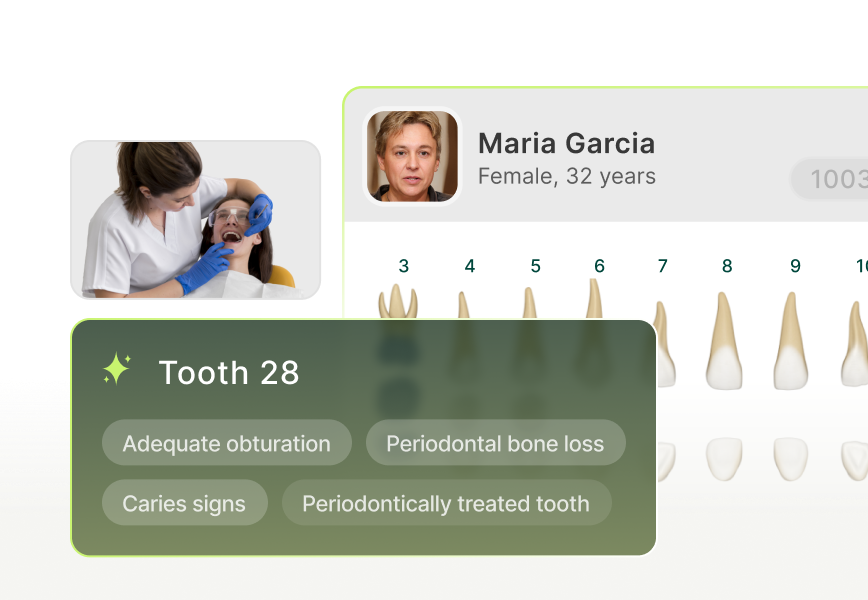
CareStack brings scheduling, charting, treatment planning, patient forms, communication, claims and reporting into a cloud platform. A patient can book online and complete forms before arriving. The clinical team can work with digital records and imaging. Billing staff can track claims and payments. Group managers can compare offices without assembling an entirely separate view of each one.
- 01BookSchedule + forms
- 02TreatChart + plan
- 03ClaimVerify + submit
- 04CollectPay + reconcile
Shared practice data connects the work.
The company also sells help around that core. CareRevenue provides managed revenue-cycle services, including billing and receivables work. VirtualAssistant offers remote front-office support. CS Pay handles integrated payments; CS Membership supports membership plans. These products reveal something about the customer: buying software does not necessarily give an office enough people to operate it.
Its competitive pitch is consolidation. Dentrix, Eaglesoft, Open Dental and cloud alternatives such as Curve Dental occupy the same buying conversation. CareStack’s case is strongest when the buyer wants clinical and financial work coordinated across a group. The comparison belongs at the workflow level: ask each vendor to demonstrate what happens from booking through reconciliation, including the awkward exceptions.
The migration has a human price
Plum Dental’s account offers a concrete example. The group wanted reporting across offices and relief from managing servers. In the vendor-published case study, CEO Dan Katz describes a desire to leave server ownership and maintenance behind.
“We did not want to own or manage the servers ourselves.”Dan Katz, CEO, Plum Dental Group
The transition involved internal champions, cleaning old fee schedules and inactive plans, testing migrated data, and training different departments. Those are useful details to copy. Appoint people who can answer colleagues’ questions. Rehearse with real workflows. Check the numbers before switching. CareStack reports that Plum’s accounts-receivable days fell from 20 to 12, but that customer result cannot establish what another practice will achieve.
A second case, D. Brian Williams’ North Carolina practice, describes growth from three operatories to six and frustration with paperwork and fragmented tools. Its move included department-specific training and trial environments before going live in March 2019. The interesting purchase was the combination of software and preparation. The team had to learn a different way to work.
$829/moEssentials
$1,299/moIntelligence
The published starting prices are $829 monthly for Essentials and $1,299 for Intelligence. Actual quotes depend on factors including locations, chairs and providers; implementation fees can apply. A buyer should compare the subscription with existing software bills, then budget the staff hours needed for conversion. A practice unable to spare time for training should take that constraint seriously. The same applies to a group that wants every office to keep its own incompatible routines. Consolidated reporting becomes less useful when the underlying work is recorded differently at each location. Agreeing on definitions belongs in the project plan alongside moving the records.
Even connected tools can feel disconnected
CareStack’s July 2026 account of its partner ecosystem describes another lesson from customers. Access to data was useful, but integrations could still leave people changing screens and searching for the same patient again. Its response includes an App Tray that opens partner applications inside CareStack with patient context. The distinction matters: moving data successfully and making work easier are separate achievements.
Partnerships extend the platform’s reach. Straumann announced a strategic investment and commercial partnership in 2022. CareStack and Overjet announced their Smart Dental Platform in March 2025, combining practice management with imaging and clinical AI. VoiceStack addresses phone workflows through transcription and call analysis. The current homepage also lists Connie for appointment confirmations and Colby for patient collections as available AI coordinators.
For a buyer, the sensible experiment is small: choose one troublesome handoff, establish its current performance, and test whether the new workflow improves it. A shared platform can expose an overdue balance or an unused appointment. People still decide how to respond. CareStack’s appeal rests on giving those people a clearer view of the same practice, at the moment they need it.