A business can change hands in an afternoon. Earning the confidence of the people inside it takes rather longer. Earl Johnson IV has made that difference central to Collision Partners, the collision-repair company he co-founded with William Nicholson. The acquisitions bring new ownership. The familiar shop names stay. For a customer returning with a damaged car, the sign above the entrance is a useful place to begin understanding the bargain.
Johnson arrived in collision repair after leading global equity trading at D1 Capital Partners. Before that came Raymond James and Citadel. It is a career that could make a body-shop owner expect a conversation conducted entirely in multiples. Yet another part of his biography belongs closer to the equipment yard: ten summers working in his family’s industrial construction, crane and rigging business across the South.
That family enterprise exposed him to running operations, leading people and planning succession, through to the business’s eventual sale. It gives his current work a particular context. The owner considering a transaction has employees to think about and a history attached to the company. Johnson has seen a family business reach that threshold from inside the family. A purchase price can settle the ownership question while leaving the human questions very much awake.
His route offers a useful way to read the decisions that followed. Financial experience helps a buyer assess a business. Experience around a family enterprise makes it harder to treat the seller’s attachment as a decorative complication. Collision Partners is attempting to accommodate both. Whether it succeeds will depend on how much of the promise survives the ordinary decisions that follow closing day.
Inside the family industrial business, before a career buying businesses.
A different kind of position to hold
Johnson studied Management and Society at the University of North Carolina at Chapel Hill. His subsequent trading career took him through established financial institutions and into the launch of D1. At Collision Partners, founded in 2025, his responsibilities cover strategy, expansion and company culture. He lives in Miami; the repair platform describes itself as based in Raleigh, North Carolina.
The shift changes what ownership demands. A market position can be expressed in a price. A repair business also contains people who know its customers, routines developed through practice and relationships that cannot simply be assigned to a replacement employee. Those things help explain why Johnson’s acquisition announcements spend so much time on who will keep working, and with what authority.
Consider the distinction between buying a shop and persuading its founder to help build a group. The first delivers a business. The second may also deliver someone capable of teaching the next location what the first one learned. Johnson’s early transactions suggest that the second proposition is the one he wants. Experienced operators appear repeatedly in the company’s ownership and leadership arrangements.
There is an obligation hidden in that choice. Invite a seller to remain an owner and the seller retains an interest in what happens elsewhere in the group. Give that person an operating role and the acquisition becomes an ongoing working relationship. The cheerful photograph at closing is then merely the first meeting with better lighting. The consequential meetings come afterward.
January: buy the business, keep the judgment
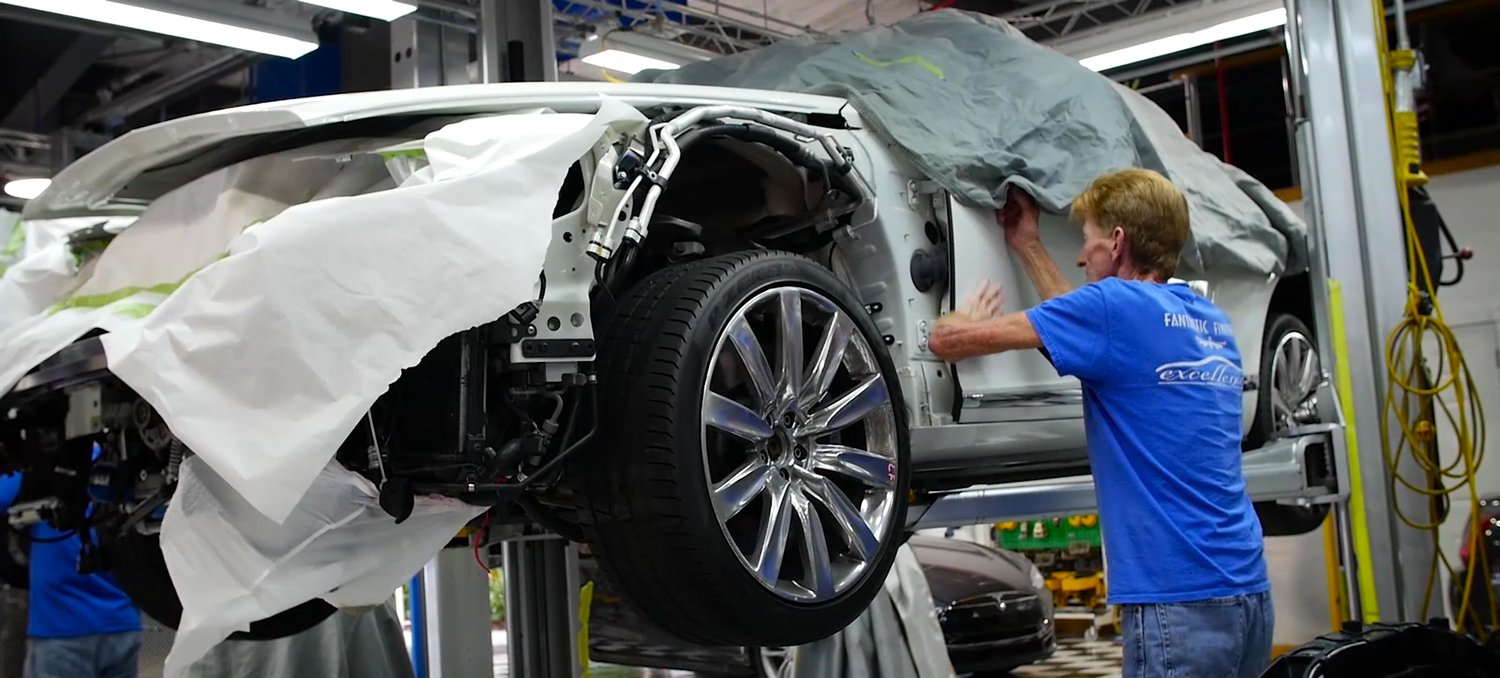
In January 2026, Collision Partners announced its first two acquisitions: Fantastic Finishes in West Palm Beach and Chassis Master in Miramar, Florida. Trade coverage recorded the same starting pair. Rather than presenting the purchases solely as additional locations, the company introduced people who would help shape the wider operation.
Fantastic Finishes founder Russ Swift became director of strategic operations and an equity partner. Scott Woodard joined as vice president of integrations, bringing 41 years in collision repair. Those appointments are the practical content of Johnson’s partnership language. An acquired founder received work beyond his original shop; integration went to someone with a long career in the trade.
Johnson described the approach as preserving reputation and relationships while adding resources. The emphasis matters because an acquirer can be careless about the very qualities it has paid to own. A local reputation comes attached to people and their conduct. Keep the name but lose their confidence, and the sign becomes an expensive souvenir.
The businesses also gave the new platform a particular direction. These were operations with experience in demanding repairs and manufacturer relationships. Focus Advisors later identified a pattern in Collision Partners’ choices: highly certified shops with strong dealership and automaker connections. Its reading placed Johnson’s company within a crowded acquisition market while distinguishing the kind of business it was choosing to buy.
July: a family joins the ownership table
The next announced transaction made the family-business connection harder to miss. On July 13, 2026, Collision Partners acquired K&M Collision in Hickory, North Carolina. Kevin and Meredith Bradshaw founded K&M in 1991. Their family continued building it, and the transaction made the Bradshaws significant shareholders in the acquiring company.
Michael Bradshaw became executive vice president of collision operations and joined the board. Kyle Bradshaw became K&M’s general manager. The arrangement placed operating experience at two levels: within the local business and across the platform. It also gave the family a continuing stake in the larger organization whose decisions would affect their shop.
Johnson’s language about that deal emphasized giving the K&M team a role in shaping the platform. That is a more demanding offer than an assurance that everything will feel familiar on Monday morning. Shaping a company implies influence over its future. A board seat and an executive appointment make the promise easier to examine than an agreeable adjective in an announcement.
The purchase also brought a business holding more than 30 manufacturer certifications. In the context of Johnson’s strategy, those credentials help describe the expertise he is trying to gather. The challenge is to make knowledge useful beyond its original address while respecting the people who developed it. Buying the business opens that possibility. It does not complete the transfer of experience.
“That is exactly the type of leadership we want shaping Collision Partners.”Earl Johnson IV, on the K&M partnership · July 2026
The less glamorous test arrived in August
Acquisitions are easy to put on a timeline. Repair planning is less photogenic. On August 17, 2026, Cody Rinaudo began as Collision Partners’ director of estimating and repair planning. The appointment gave a concrete shape to the question that follows Johnson’s early deals: what will these separate shops do consistently?
Rinaudo’s remit includes shared planning processes, centralized review, training and documentation of manufacturer requirements. The details extend to structural work, measurements, calibrations, corrosion protection and parts that must be replaced after one use. They are specific enough to make the operating ambition legible. Consistency means knowing what a repair requires before production begins, then making that knowledge usable by the people doing it.
The job also reveals the boundary Johnson has to manage. A local brand can remain distinct while its team uses common research and planning standards. Customers need not know who designed a review process for that process to help them. At the same time, a process gains little from being centrally designed if the people using it cannot make it work in their shops.
Rinaudo described building the approach with the teams already doing the work. That collaborative intention fits the company’s broader ownership choices. In one case, an experienced seller receives equity and responsibility. In the other, existing shop teams are part of developing common practice. The repeated idea is to bring operating knowledge into the company’s decisions, rather than leave it sitting politely outside the meeting room.
What the name above the door asks of him
Collision Partners calls its model “Local at Scale.” Its stated commitments include keeping established brands, investing in employees and allowing selected operators to retain ownership. Johnson’s task is to turn those commitments into a company that can repeat its work across locations. Each acquisition adds another relationship to maintain, alongside another set of accounts to oversee.
A familiar name creates a useful discipline for the buyer. When the business keeps its identity, its previous reputation remains available for comparison. The people who knew it before the transaction can judge what changed. Continuity becomes something an employee or returning customer can assess, rather than a sentiment confined to the sale agreement.
There is a similar discipline in Johnson’s choice of colleagues. Swift’s strategic role, Bradshaw’s operating remit and Rinaudo’s planning responsibilities put identifiable people beside the promises. They give the company places where accountability can sit. The relevant measure will be whether their experience improves daily decisions as the organization grows. An impressive list of names has to become a useful working arrangement.
Johnson’s ambitions include making the platform a sought-after employer and delivering repairs to exacting standards. Those ambitions meet in the shop: training, equipment and a workable plan all require people who can use them. For a founder whose earlier career centered on financial markets, that makes the operating team an especially consequential investment.
The family business offers an apt place to leave his story for now. Johnson once watched ownership, leadership and succession intersect in an enterprise his family had built. He is now arranging a version of that passage for other owners. The outcome will be written in the businesses after the sale: who stays, whose judgment matters, and whether the name above the door continues to mean what customers remember.