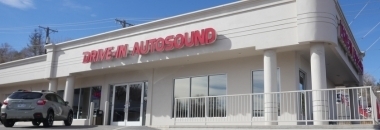
In 1962, a Colorado Springs shop opened to do something that sounds almost quaint now: fix the radios that came bolted into new cars. Factory head units failed, and somebody had to pull them, test them, and put them back. That shop was Drive-In Autosound. Six decades later it does not repair many OEM radios - almost nobody does - but it is still open, still family-owned, and still selling the same underlying thing it sold on day one. Not the box. The hands that install the box.
That distinction is the whole story. Drive-In Autosound sits in a category that the internet was supposed to flatten. Car stereos, amplifiers, subwoofers, dash cameras, remote starters - all of it ships in a day from a dozen websites, usually cheaper than a local shop can match. And yet the company runs four locations across Colorado Springs and Pueblo, employs roughly 25 people, and pulls an estimated $5.7 million a year. The reason is not nostalgia. It is that a subwoofer in a cardboard box on your porch is not the same as bass that actually works in your specific car, wired without a rattle, warrantied for as long as you own it.
What they actually sell
A hardware store for everything your car forgot
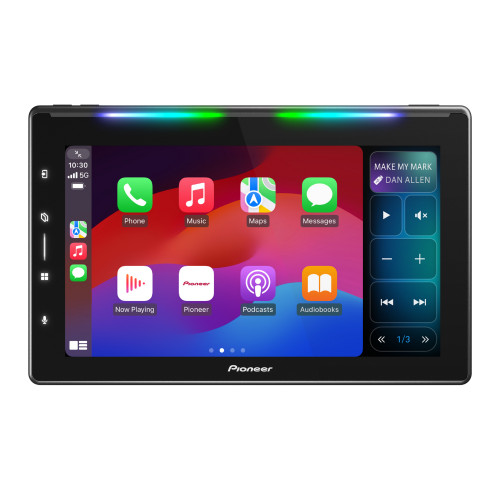
Ask what Drive-In Autosound does and the honest answer is a list, because the store has kept adding to it for sixty years. The core is still car audio: digital multimedia receivers, in-dash units with Apple CarPlay and Android Auto, speakers, amplifiers, and custom subwoofer enclosures fabricated to fit one make and model. Around that core sits everything else a driver bolts on after they leave the dealership - window tint and ceramic coating, Clear Bra paint film, remote start and security systems, backup and dash cameras, off-road lifts, custom wheels, light bars, truck bed covers, and a deep bench of Jeep accessories.
Then the map widens past the road entirely. The shop wires marine stereo systems for boats, sound for motorcycles, and audio for ATVs and UTVs. If it has an engine and a place to mount a speaker, Drive-In Autosound has probably done one. That range is not scatter - it is the same skill, fitment and clean installation, pointed at every vehicle a Colorado household might own.
Who buys it
The customer is anyone tired of the factory sound
Drive-In Autosound is a straightforward business-to-consumer operation, and its customers cluster into a few clear tribes. There are the audio people, who want the factory speakers gone and real bass in. There is the off-road and Jeep crowd - Colorado has no shortage - who come for lifts, wheels, lighting, and the sound system that survives a trail. There are truck owners after bed covers and cameras, and there are ordinary commuters who just want remote start before the first hard freeze and tint before the summer sun. Increasingly there are boat and powersports owners too.
What unites them is a job they cannot comfortably do in their own garage. Pulling a modern dashboard without cracking a trim panel, integrating a new head unit with a car's steering-wheel controls and backup camera, splicing a remote starter into a keyless ignition - these are the tasks that send people to a shop that has done it ten thousand times. The four physical locations matter here: this is a category where the customer wants to hand over the keys and drive away later with it done.
The problem it solves
Trust, sold with a warranty attached
The problem Drive-In Autosound solves is not "I need a stereo." It is "I bought a stereo and I do not trust myself to install it, and if I pay someone I want it done right and I want a phone number to call if it rattles." The company answers that with a stack of guarantees that read more like a software SLA than a car shop's chalkboard: a same-day install guarantee, a 30-day upgrade guarantee, a clean-car promise, and a lifetime installation warranty on the work. Installations are handled by technicians certified through MECP, the Mobile Electronics Certified Professional program.
Those promises are the product as much as any amplifier is. A lifetime warranty on labor is a bet a shop can only make if it plans to be around for the lifetime - and one it can only afford if the work rarely comes back. It is a quiet signal of both confidence and permanence, and it is very hard for a website with a shopping cart to copy.
Why it survived
Sixty years of never betting on the format
The most interesting thing about Drive-In Autosound is what it did not do. Car audio has cycled through more dead formats than almost any consumer category: AM radio, 8-track, cassette, CD, the aux cord, then Bluetooth, then Apple CarPlay and Android Auto. Each transition wiped out the specific product a car-audio shop had been selling. A store that had staked its identity on, say, the CD changer would have been in trouble by 2010.
Drive-In Autosound sidestepped that trap by selling the installation, not the medium. When the format changed, the company simply changed what it stocked and kept charging for the same expertise. That is why a store named after drive-in theaters - an industry that mostly vanished - is still open long after the theaters closed. The name is a fossil; the business kept evolving underneath it.
How it's built
Local shop, modern back end
For a company founded before color television was common, the operation is not analog. The storefront runs on BigCommerce, with an email and SMS marketing layer through Klaviyo, and a full menu of financing options - Affirm, Afterpay, Katapult and Clyde - that let a customer spread out the cost of a big install. It sells on eBay in addition to its own site. This is the part that is easy to miss: Drive-In Autosound quietly built the e-commerce stack that was supposed to kill it, then used it to funnel customers into the four bays where the actual money is made.

The financing detail is worth sitting with. Offering Affirm and Afterpay on a $2,000 audio-and-lift build is the same move a furniture retailer or a Peloton makes - it turns a once-a-decade purchase into an approachable monthly number, and it widens the pool of people who can say yes. It is a decidedly modern lever on a decidedly old business.
The competition
Everyone sells the box. Few finish the job.
On paper, Drive-In Autosound competes with a brutal field: Amazon and Crutchfield on price, Best Buy and its Geek Squad on scale, and a scattering of local install shops on its home turf. The national players win the click. What they struggle to win is the last mile - the certified technician, the local address you can drive back to, and the labor warranty that outlasts the receipt. A returns portal cannot re-seat a loose harness. That gap is the entire reason a shop like this still exists, and it is why the smart version of the business leans into installation, protection film, and off-road fabrication rather than trying to out-discount the internet on the hardware itself.
The shop opens
Founded in Colorado Springs, originally repairing factory OEM car radios.
The aftermarket boom
Expands into speakers, amplifiers and custom installation as aftermarket audio takes off.
Beyond sound
Adds window tint, Clear Bra and accessories, moving from pure audio to full vehicle upgrades.
Multi-location and online
Grows to multiple shops and launches a BigCommerce storefront with financing.
Four shops, still family-owned
Operates four locations across Colorado Springs and Pueblo with MECP-certified installers.
Where it fits
The local business the internet couldn't delete
Zoom out and Drive-In Autosound is a case study in a specific kind of durability. It is not venture-backed, not a category disruptor, and not chasing a national footprint. It is a regional specialty retailer that picked a service customers genuinely cannot self-perform, did it consistently for six decades, stood behind it with a lifetime warranty, and let the format wars rage around it. There is a lesson in that for anyone building a business next to a giant with a warehouse: find the part of the transaction that cannot be shipped, and own it completely.
None of this is glamorous. There is no funding round, no valuation headline, no app. There is a family that has run a car shop in Colorado Springs since the Kennedy administration, kept it profitable through every technology shift the industry threw at it, and never lost the plot that the install is the product. In a retail landscape littered with brands that burned bright and vanished, a store named after the drive-in is a reminder that boring and warrantied can outlast almost anything.