BioMADE breaks ground on $40M Iowa State pilot facility — Nov 2025 Doug Friedman: "Biology is the best chemist that exists" BioMADE CEO: U.S. must not repeat the semiconductor manufacturing mistake BioMADE facility in Iowa to open 2027 — funded by DOD, Iowa EDA, ISU Friedman: "Someone is going to win biomanufacturing. The U.S. has to act now." Vice Chair, U.S. Manufacturing Innovation Council From Northwestern PhD to White House OSTP to CEO — the Friedman arc BioMADE breaks ground on $40M Iowa State pilot facility — Nov 2025 Doug Friedman: "Biology is the best chemist that exists" BioMADE CEO: U.S. must not repeat the semiconductor manufacturing mistake BioMADE facility in Iowa to open 2027 — funded by DOD, Iowa EDA, ISU Friedman: "Someone is going to win biomanufacturing. The U.S. has to act now." Vice Chair, U.S. Manufacturing Innovation Council From Northwestern PhD to White House OSTP to CEO — the Friedman arc
YesPress Profile  /  Biotechnology & Manufacturing

Douglas
Friedman

Chief Executive Officer, BioMADE

The PhD chemist who decided America's next industrial revolution wouldn't win itself. Building the infrastructure layer that turns brilliant biotech science into actual factory output — before anyone else claims the market.

Biomanufacturing Bioeconomy Policy Manufacturing Innovation National Security Institution Builder
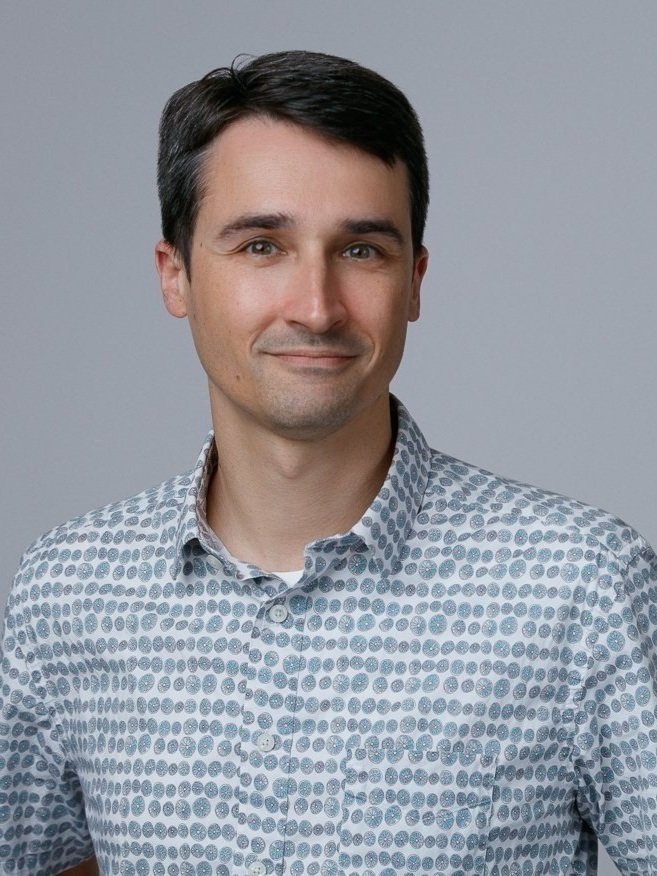
Douglas Friedman, CEO of BioMADE
Douglas Friedman / BioMADE

Running the lab the whole country needs

Somewhere between a fermentation tank and a federal budget line, Douglas Friedman found his calling. Not in a sterile lab coat moment, but in the realization that America had extraordinary biological science and almost no industrial infrastructure to do anything with it. He decided to build that infrastructure himself.

Friedman is CEO of BioMADE — the Bioindustrial Manufacturing Innovation Institute — a DOD-funded nonprofit that launched in April 2021 with a mandate to grow the U.S. industrial biomanufacturing ecosystem. The kind of mandate that sounds like a government press release until you realize what it actually means: turning microbes into factories, biology into supply chains, and research into products that compete with petrochemicals on cost and performance.

He came to this with a Ph.D. in Chemistry from Northwestern, a B.S. in Chemical Biology from UC Berkeley, a management certificate from Kellogg, and a career spent translating scientific complexity into policy language at the National Academies of Sciences. Then he built the Engineering Biology Research Consortium from scratch in 2016, ran it for five years, and used that as a runway to co-found BioMADE.

His argument is both simple and urgent: biology is already the world's most capable chemist. The question is whether the U.S. will build the industrial layer to exploit that, or cede it to China and the EU while congratulating itself on its academic output.

Biology is the best chemist that exists, and chemists make stuff. And making stuff is manufacturing.
- Douglas Friedman, CEO of BioMADE
2021
BioMADE Founded
Launched April 28
$40M
Iowa Facility
Opening 2027
87
Employees
Growing
$65M
Annual Revenue
DOD-backed nonprofit

Mid-stride at the industrial frontier

The semiconductor lesson nobody learned

Friedman has a way of making geopolitical risk feel concrete. He keeps coming back to semiconductors - not the chips themselves, but the manufacturing base. The U.S. invented the transistor, built the industry, led the world. Then, over several decades, it handed off fabrication to Asia and told itself it was fine because American companies still designed the best chips. Then TSMC became load-bearing infrastructure for global civilization, and the U.S. found itself at the mercy of a supply chain it no longer controlled.

His argument is that biomanufacturing is the same movie, playing out in slow motion, right now. "Someone is going to win this," he has said in multiple forums. "Someone is going to capture the relevant market share, and then it becomes awfully hard to catch up." China is investing billions annually in bioindustrial manufacturing. The EU has been funding the bioeconomy for two decades. The U.S., for all its research excellence and venture capital enthusiasm, has been late to build the industrial layer.

BioMADE exists to interrupt that pattern. It is not a research institute. It is not a VC fund. It is a manufacturing innovation institute — the kind of organization that asks not "can biology make this product?" but "can biology make this product at the scale and cost that wins commercial markets?"

"Right now, U.S. companies are going overseas to scale their innovations because we don't have enough pilot manufacturing facilities." — Douglas Friedman

The gap between discovery and factory floor

The problem Friedman is solving has a name in the industry: the valley of death. A research lab can demonstrate that a microbe produces some valuable molecule. A venture-backed startup can get it to a small fermentation tank. But moving from liters to millions of liters — from proof-of-concept to commercial-scale production — requires infrastructure that almost no company can afford to build alone. Pilot plants. Large fermenters. Purification systems. Specialized engineers who have run these processes before.

That infrastructure barely exists in the United States. "We haven't invested enough in large-scale fermentation and purification systems — the backbone of industrial biomanufacturing," Friedman has said. The result: promising U.S. biotech startups license their technology to overseas manufacturers, or relocate operations entirely, because that's where the facilities are.

BioMADE's answer is a network of shared pilot-scale facilities — government-backed, multi-user, accessible to companies that couldn't build their own. The November 2025 groundbreaking at Iowa State University Research Park is the most visible expression of this. A $40 million facility, 15,000 square feet, with food-grade capabilities covering prebiotics, probiotics, sweeteners, and flavors. Funded jointly by BioMADE ($20M), the Iowa Economic Development Authority ($10M), and Iowa State University ($10M). Expected to open in 2027.

No premium for green

One of Friedman's most bracing public positions is his bluntness about sustainability economics. In an industry that often leans on environmental virtue as a selling point, he is direct: "There's no premium for green. Customers won't pay extra for sustainability." Bio-based products have to compete on price and performance — not on moral appeal — or they don't scale.

This isn't cynicism. It's engineering pragmatism applied to market dynamics. If a bio-based plastic or lubricant or surfactant costs more than the petroleum-derived alternative and performs no better, it won't achieve the market penetration needed to matter environmentally. Friedman's argument is that the only way biology actually displaces fossil-based materials is if biomanufacturing becomes genuinely cost-competitive — which requires exactly the kind of infrastructure investment he's building.

Two institutions, one arc

Before BioMADE, Friedman built EBRC — the Engineering Biology Research Consortium — from the ground up starting in 2016. He was its founding Executive Director and President, a role he held until 2021. EBRC is a nonprofit membership organization focused on advancing precompetitive technologies in synthetic biology and engineering biology, with an emphasis on safe, secure, sustainable, and ethical practice.

The move from EBRC to BioMADE tracks a career-long logic: start with the science, understand the policy, then build the institutions that translate one into the other. At the National Academies of Sciences, Engineering, and Medicine, where Friedman served as a study director on the Board on Chemical Sciences and Technology, he learned how to take complex scientific topics and make them legible to policymakers — a skill that runs through everything he's done since.

A stint as a Special Government Employee at the White House Office of Science & Technology Policy gave him direct exposure to how federal priorities get set around biomanufacturing. That experience informed the structure of BioMADE itself — a Manufacturing Innovation Institute model that brings together government funding, academic partnerships, and industry membership to solve problems no single actor could tackle alone.

The feedstock advantage

One of Friedman's recurring arguments is that the United States has an underappreciated structural advantage in the coming bioindustrial competition: agricultural feedstocks. Biomanufacturing runs on sugars, starches, plant-based inputs — the raw material that microbes ferment into products. And no country in the world grows corn at the scale and efficiency that the American Midwest does.

"There's no place better in the world at growing corn than the United States," he has said. "We have a global feedstock advantage, and if we build the right manufacturing infrastructure, we can dominate this industry." The Iowa facility, with its focus on food-grade fermentation ingredients, is one expression of that thesis — situating biomanufacturing capacity in the agricultural heartland that will supply it.

His time horizon on all of this is deliberately long. "Developing a manufacturing sector takes time and long-term dedication to winning," he has said. "This isn't a one-year or one-quarter thing. It's a 50-to-100-year effort." For a sector accustomed to thinking in startup cycles, that's a provocative frame. It's also, arguably, the only frame that makes sense for what he's trying to build.

Developing a manufacturing sector takes time and long-term dedication to winning. This isn't a one-year or one-quarter thing. It's a 50-to-100-year effort.
- Douglas Friedman, BioMADE CEO

From bench to boardroom to battlefield of the bioeconomy

Early career

Conducted research in physical organic chemistry and molecular nanotechnology in academic and industrial settings — laying the scientific foundation that would inform decades of policy and institution-building work.

Pre-2016

Joined the National Academies of Sciences, Engineering, and Medicine as Study Director and Senior Program Officer on the Board on Chemical Sciences and Technology — translating frontier science into policy-legible analysis.

2016

Founded the Engineering Biology Research Consortium (EBRC) as its inaugural Executive Director and President — building from scratch the U.S.'s preeminent nonprofit membership organization for synthetic biology and engineering biology.

2016-2021

Led EBRC for five years, establishing it as the go-to organization for precompetitive technical collaboration, policy engagement, and research roadmapping in engineering biology.

~2020-2021

Served as a Special Government Employee (Consultant) at the White House Office of Science & Technology Policy, advising on domestic biomanufacturing strategy and policy.

April 2021

Co-founded and launched BioMADE — the Bioindustrial Manufacturing Innovation Institute — as CEO. BioMADE launched April 28, 2021, backed by the U.S. Department of Defense.

2021-present

Serves as Vice Chair of the U.S. Manufacturing Innovation Council and member of the Department of Commerce Bureau of Industry & Security Materials and Equipment Technical Advisory Committee (METAC).

November 2025

Broke ground on a $40M pilot-scale biomanufacturing facility at Iowa State University Research Park in Boone, Iowa, alongside Governor Kim Reynolds and ISU President Wendy Wintersteen. Facility expected to open 2027.

Straight from the source

Our job at BioMADE is to turn amazing biological science and engineering into economic output - profitable companies, more manufacturing jobs, and a stronger U.S. industry.

China is investing billions per year in bioindustrial manufacturing. The European Union has been funding the bioeconomy for 20 years. The U.S. is playing catch-up.

There's no place better in the world at growing corn than the United States. We have a global feedstock advantage, and if we build the right manufacturing infrastructure, we can dominate this industry.

There's no premium for green. Customers won't pay extra for sustainability.

The U.S. has the technology, the talent, and the resources to lead. But we have to act now.

We're thrilled to be constructing this critically needed facility in Iowa. This Pilot Plant joins a network of forthcoming facilities that will establish the U.S. as a leader in the global bioeconomy.

Where the science started

University of California, Berkeley
B.S. in Chemical Biology
Undergraduate
Northwestern University
Ph.D. in Chemistry
Focus: Physical Organic Chemistry & Molecular Nanotechnology
Doctorate
Kellogg School of Management
Certificate in Management for Scientists & Engineers
Northwestern University
Executive Education

A career in institution-building

01

Founded BioMADE in 2021 - the U.S. DOD-funded Manufacturing Innovation Institute for industrial biomanufacturing, now operating with 87 employees and ~$65M annual revenue.

02

Inaugural Executive Director and President of EBRC (2016), building it from the ground up into America's premier nonprofit membership organization for engineering biology.

03

Broke ground on the $40M Iowa State University biomanufacturing pilot facility in November 2025 - a landmark in BioMADE's network of shared infrastructure for U.S. biotech companies.

04

Appointed Vice Chair of the U.S. Manufacturing Innovation Council - a seat at the table shaping national manufacturing strategy alongside federal and industry leaders.

05

Served as Special Government Employee at the White House Office of Science & Technology Policy, advising on biomanufacturing policy at the highest level of federal decision-making.

06

Recognized as a leading subject matter expert on emerging biotechnologies, biotechnology policy, biosecurity, and national security - a go-to voice across government, industry, and academia.

Doug Friedman on camera

Doug Friedman, CEO of BioMADE

An interview with Doug Friedman on BioMADE's mission, the U.S. biomanufacturing landscape, and the path to industrial scale.

Details that stick

He has a Ph.D. in Chemistry but runs a $65M manufacturing institute — quite the career pivot from the bench.

BioMADE is headquartered in Saint Paul, Minnesota — on the University of Minnesota campus — with a second office in Emeryville, California.

His LinkedIn handle is 'dcfriedman' — the same initials he uses in his BioMADE email address, dcf@biomade.org. Consistent personal branding, chemist-style.

He earned a management certificate from Kellogg School alongside his scientific credentials — an early signal he intended to build organizations, not just study molecules.

He co-founded two national biotech membership organizations (EBRC in 2016, BioMADE in 2021) — making him arguably the most prolific institution-builder in the U.S. bioeconomy space.

BioMADE's Twitter handle is @TheBioMADE — the "The" doing a lot of rhetorical work for a DOD-funded nonprofit.