Dor Eisner noticed something unsettling about the market for cybercrime: it was beginning to resemble the market for ordinary software. Tools were available to rent. Expertise could be packaged. A criminal no longer needed to build every component of an attack before getting to work. The convenience familiar to any small business buying software had acquired an unpleasant second customer.
That observation helped lead him to Guardz, the cybersecurity company he founded with Alon Lavi in 2022. Eisner had spent years in security, including a business development role at threat intelligence company IntSights. He understood the appeal of sophisticated defenses. He could also see the mismatch between those defenses and the businesses increasingly exposed to attacks.
A small company might depend on email, cloud documents and a handful of employee accounts without employing anyone whose sole job was to protect them. Eisner described criminals using attack tools to reach large numbers of businesses at once. Each target could be modest. The operation around those targets could still make economic sense.
The problem had caught his attention because affordability worked in two directions. Cheaper tools could expand an attacker's reach. Defense, meanwhile, often arrived with costs beyond the subscription: setup, maintenance, investigation and the expertise to decide which warning deserved immediate attention. Someone still had to do the work after the software had been purchased.
Eisner's answer would become a company built around the people who already did much of that work. Managed service providers, usually shortened to MSPs, handle technology for other businesses. They had the customer relationships. He wanted to give them a more manageable way to deliver security.
Eisner’s opening: help the IT provider close the operating gap.
Five years leading a team, then learning the sale
Eisner's cybersecurity career began in Israel's Unit 8200, where he spent five years as a team lead. Later roles took him into the commercial side of security: director of sales at Alarum Technologies and vice president of business development at IntSights, which Rapid7 acquired.
Those jobs matter to the story of Guardz because they combine two kinds of experience. Security work requires understanding what an attacker can do. Business development requires understanding what a customer can actually adopt. A product can satisfy the first test and remain out of reach on the second. Eisner's subsequent company would spend considerable effort on that gap.
At IntSights, his work put him close to threat intelligence and the dark web. He has described that period as formative in understanding how threats were changing. When he began discussing Guardz publicly, his explanation returned to the sale of attack tools and the smaller companies left facing them.
Lavi became Guardz's co-founder and chief technology officer; Eisner took the chief executive role. Their division of titles put technical development and commercial execution alongside one another. The founding proposition joined protection with access to cyber insurance, bringing the aftermath of an incident into the conversation as well as the effort to prevent one.
It was a demanding pitch for a new company: simplify security, help the service provider operate it, and make the resulting protection meaningful to a business owner. The attraction lay in making those concerns fit together. The difficulty would be keeping the product as understandable as the proposition.
“Our mission at Guardz is to help the ‘underdog’.”
Dor Eisner · 2023
An underdog with an IT provider
In 2023, Eisner described the mission in a word: the “underdog.” It is an unusually affectionate way to describe a customer segment. Small businesses feature in plenty of market presentations; the word gives them a part in the story beyond a revenue opportunity. They have something to defend, even if their budgets do not resemble those of a corporate security department.
Guardz emerged publicly in January 2023 with $10 million in seed funding led by Hanaco Ventures. By July, Eisner was discussing a dedicated MSP platform. The emphasis made practical sense: one service provider could bring protection to multiple smaller companies rather than requiring each owner to become a security buyer with specialist knowledge.
By November 2023, he was talking with Dave Sobel after Guardz's first appearance at an MSP trade show. There is something useful about that relatively unglamorous milestone. A company founded around an abstract market gap had arrived among the people expected to use its software. A trade-show booth is where the theory begins meeting other people's schedules.
The MSP relationship also changes what counts as a good product. A provider may oversee many customers, each with its own users and systems. Moving among separate tools creates administrative work as well as security work. Guardz's shared dashboard is intended to let the provider manage those separate environments from one place.
Eisner's choice of customer therefore carries a constraint: helping an individual business is insufficient if delivering that help consumes the provider's available time. His proposition depends on making protection workable across a customer base. The underdog needs a defender who can afford to keep defending.
A budget for the work between the alerts
The funding followed in stages. Guardz announced an $18 million Series A in December 2023. In June 2025, a $56 million Series B led by ClearSky brought the announced total to $84 million. Eisner used the announcement to describe the work the new money would support.
His funding announcement set out deeper automation, integrations, compliance workflows and round-the-clock detection and response. That list describes the labor surrounding a security alert: bringing information together, working out what happened, deciding what to do, and documenting the result. Buying software is one line in the budget. Operating it supplies several more.
Guardz also developed a Growth Hub with marketing materials, customer risk reports, branding options and subscription information for providers. Such features might seem a long way from threat intelligence. For Eisner, they sit beside the same commercial problem. A provider needs to explain a security service, sell it and sustain it, as well as operate it.
The Community Shield plan, introduced in 2024, offered MSPs free licenses for their own internal use. It gave providers a way to use the platform within their businesses. The arrangement connects a practical benefit with the opportunity to become familiar with the product before delivering it elsewhere.
Across these decisions, Eisner's business development background becomes visible. He is building around the service provider's day: its customer conversations, its own security, its recurring administration. A dashboard may earn the demonstration. The less photogenic work around it helps determine whether it earns a place in daily operations.
Round sizes, not revenue. Total announced by June 2025.
The quieter security conversation
Eisner's public conversations have also dealt with how security is sold. In a discussion with Brian Gillette on The MSP Sales Podcast, the subject was explaining security without relying on scare tactics. The emphasis was on changes in the threat environment, delivery costs and the operation of a service.
That emphasis suits a founder whose account of cybercrime begins with economics. If attacking more businesses becomes cheaper, a provider needs to explain the consequences clearly. Alarm alone leaves the customer with the same practical questions: what changes, who handles it, and how will the business know that the work is being done?
In a public LinkedIn post, Eisner recounted speaking with an MSP owner of more than twenty years who found cybersecurity complicated and demanding. Eisner's response was to frame security as a core business service, with results the customer could see and measure. He treated the provider's frustration as a business problem worth solving.
Another account of a conversation with an MSP returned to the burden of managing too many separate products. Read together, these anecdotes suggest the concerns he chooses to bring into public view: limited time, crowded toolsets and the strain of turning technical protection into a dependable service.
They also give his pitch a more recognisable scale. Behind the diagrams and abbreviations is an owner trying to run a business for other owners. Even a carefully prepared security pitch has to survive a conversation about the invoice. Eisner keeps returning to whether the service can justify its place there.
People on both sides of the screen
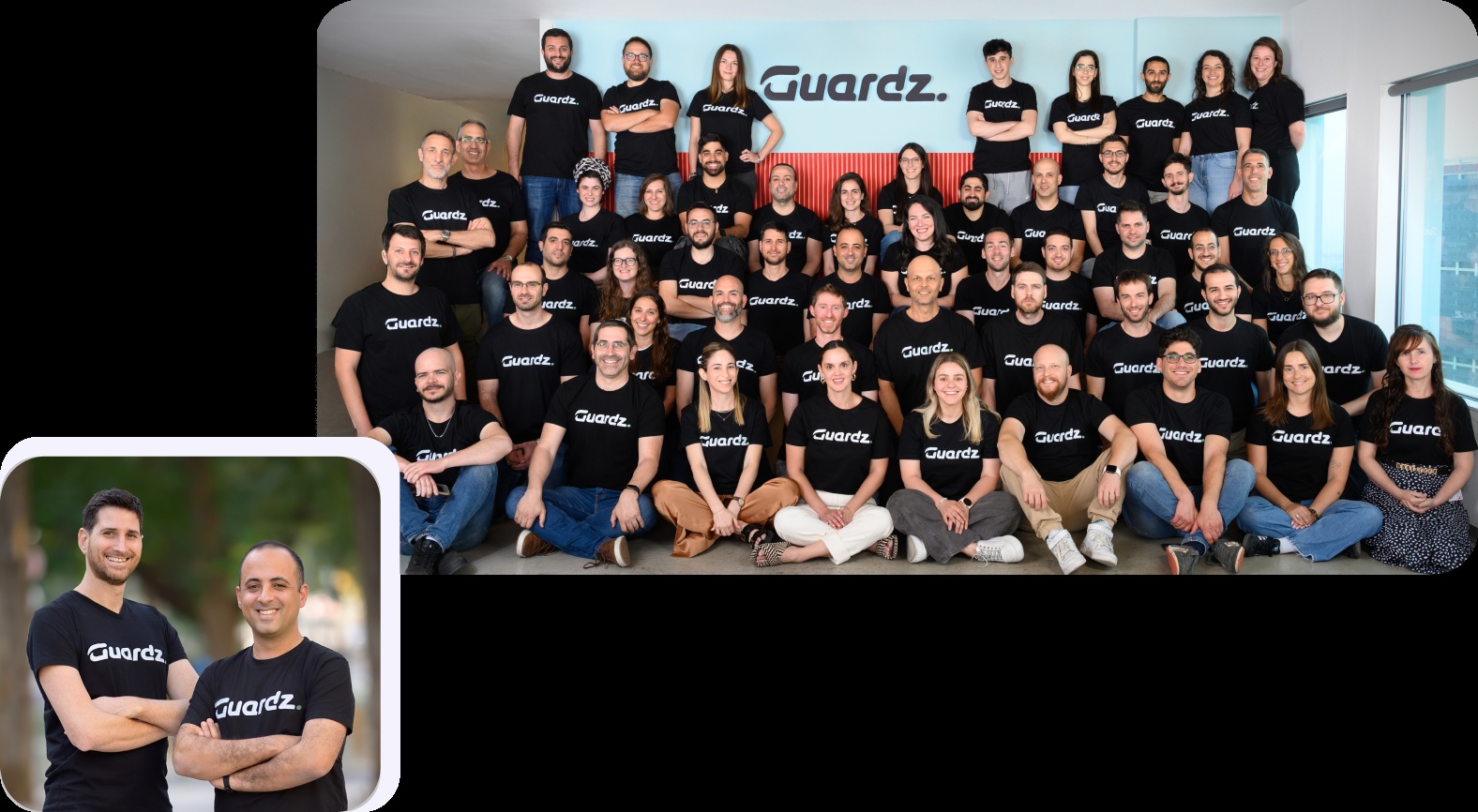
As Guardz grew, Eisner's public posts made room for the people building it. Marking the company's third anniversary in 2025, he described a team of more than eighty and thanked Lavi, employees, investors and the MSP community. The milestone was expressed through relationships as well as company growth.
In Miami, he celebrated colleagues' energy, ideas, work and laughter. His message placed enjoyment beside customer focus and execution. The detail is modest but telling: in his public account of building a company, getting on with the people doing the building has a place alongside the business objectives.
A later account of a Tel Aviv company kickoff described colleagues who usually worked through screens meeting in the same room. Eisner emphasised debate, trust and repeated attention to customers. It offers a glimpse of what he wants to encourage: people able to challenge one another while keeping the service provider's needs in view.
His accounts of these occasions reveal what he chooses to praise. He credits collaboration and ownership, and repeatedly acknowledges his co-founder. The company he presents publicly has a collective cast.
The next customer still has a small budget
By July 2026, Eisner was describing MSPs as the practical security operations center for small businesses. His ambition had expanded toward making Guardz the operating system for their security work. The language had grown with the platform, but the underlying customer remained familiar: a provider serving companies with limited specialist resources.
He argued that connecting information across identities, email, devices and cloud services could help providers investigate and respond with less manual effort. Those are Guardz's stated aims and product claims. The challenge in the ambition is clear enough: adding capabilities must make the provider's work easier to manage, or complexity returns wearing a new logo.
Eisner has identified US expansion, stronger partnerships, deeper automation and threat hunting among the next priorities. Each brings him back to the original question of delivery. A security capability has little reach if the businesses that need it cannot obtain and operate it through someone they trust.
The story began with a market becoming more convenient for attackers. Eisner has spent the years since trying to organise convenience on the other side: fewer handoffs, a clearer service and an IT provider able to support more customers. The small business at the end of that chain still has ordinary work to get through. His company is being built around letting it continue.