Guardz began with a familiar startup mistake: it identified the right pain and picked the wrong person to sell it to. Small businesses were getting phished, ransomed and robbed through misconfigured cloud accounts. They rarely had security staff. So in early 2023, Guardz emerged from stealth with $10 million and an all-in-one product aimed at the small business itself. The need was obvious. The sales motion was not. Direct business, the company later acknowledged, did not take off.
The fix was hiding in plain sight. Small companies already paid managed service providers - MSPs - to keep laptops alive, Microsoft 365 behaving and employees out of digital ditches. Those providers had the passwords, the trust and a monthly invoice. Guardz stopped trying to go around them and made them the customer.
That reversal now explains almost everything about the company. Guardz is not merely a box of phishing, endpoint and identity tools. It is a multi-tenant operating layer through which an MSP can watch many small-business clients, respond to alerts and present the service under its own brand. “It's a blended solution, powered by Guardz but with the logo of the MSP out in front,” co-founder and CEO Dor Eisner said while describing the pivot.
The middleman was the product
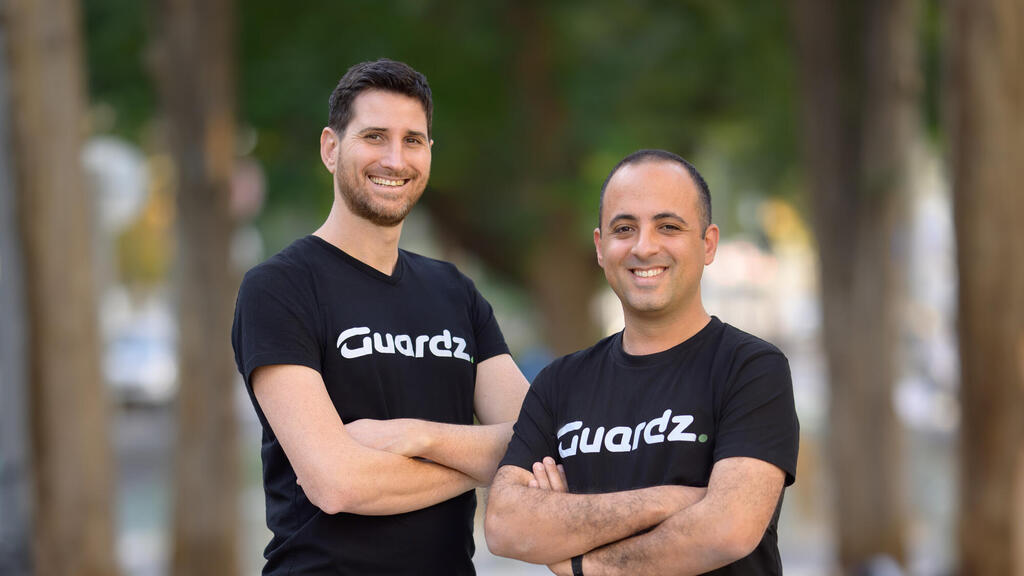
The founders, Eisner and CTO Alon Lavi, started Guardz in 2022 between Tel Aviv and Miami. Eisner came from the Israeli cybersecurity world, including IntSights, which Rapid7 acquired. Their mission remained steady: make sophisticated protection workable for small and medium-sized businesses. What changed was their view of distribution.
By December 2023, after centering the MSP, Guardz said it had roughly 200 service-provider customers covering 3,000 businesses and 36,000 seats, mainly in the United States, United Kingdom and Australia. The company raised an $18 million Series A that month. The numbers were early and company-reported, but the direction was clear enough: one MSP deal could unlock dozens of end customers.
This is the copyable part. When the end market is fragmented, anxious and short on specialists, the better customer may be the expert already aggregating demand. But channel-first is not a magic incantation. The product has to honor the channel's economics. Guardz added partner branding, multi-customer views, reusable licenses, reports meant for client reviews and tools for prospecting. It also avoids publishing current seat prices, saying a public number can interfere with how MSPs package and margin their own services.
The useful Guardz insight is not “sell through partners.” It is “build the software around the partner's working day.”YesPress analysis
One console, fewer scavenger hunts
Attackers do not respect product categories. A phishing message steals a login; the login opens cloud files; a compromised endpoint gives the attacker somewhere to linger. Guardz's platform connects identity, email, endpoints, browsers, cloud data, external exposure and employee awareness. Its identity-centric design tries to tie alerts back to an actual user instead of presenting each signal as an isolated flashing light.
For an MSP technician, the practical promise is fewer portals and less stitching. The console can flag weak multifactor authentication, risky permissions, leaked credentials, suspicious inbox behavior, vulnerable devices and exposed internet assets. It can run phishing simulations and awareness training. Higher plans add endpoint detection from SentinelOne and 24/7 managed detection and response, where Guardz's automation triages activity and human analysts validate incidents and help with response.
The partnerships are part of the architecture and the sales pitch. SentinelOne is both an investor and the endpoint engine inside Guardz's Ultimate plan. Check Point's Harmony Email, formerly Avanan, supplies integrated inbox protection. Pax8 puts Guardz in a marketplace MSPs already use for provisioning and billing. SuperOps links security events to the service desk. Guardz is consolidating the operator experience without pretending to have invented every control underneath it.
That distinction matters. A unified platform can mean one coherent data model, or it can mean several products taped behind a shared invoice. Guardz argues that cross-control context and identity-level correlation make its version more than a bundle. One customer quoted on its platform page said connecting Microsoft 365, Check Point and SentinelOne took 80 percent less implementation time. Another case study, Web Net Com, said its client base grew 20 percent without adding staff. These are selected customer claims, not controlled comparisons, but they reveal what Guardz wants buyers to measure: technician time, clients per operator and visible risk reduction.
What it costs - and what you give up
Guardz sells per user, with endpoint flexibility, volume options and ramp-up support. There is a 14-day trial with no credit card. A legacy plan page advertised Pro at $5 per user per month and a free Community tier for an MSP's internal use. The current pricing page lists Pro, Ultimate and Elite but asks buyers to request exact prices. Ultimate and higher-touch packages bundle more expensive services, including round-the-clock response.
The pricing change tells its own story. Guardz is no longer behaving like a self-serve SMB app with a tidy sticker price. It is selling through businesses that set their own bundles and markups. Private pricing gives the channel room, while making comparison harder for the person actually paying the final bill.
Consolidation also creates dependency. An MSP that prefers separate specialist products may not want one vendor mediating identity, email, endpoint and response. Teams may want direct access to every underlying console, granular policy control or the freedom to swap a single layer without disturbing the rest. Online practitioner discussions show both enthusiasm for the one-roof approach and complaints about migration, billing and feature gaps. That is normal evidence of a platform growing in public, not a verdict either way.
From “AI-powered” to actual agents
The next chapter carries the industry's favorite adjective. Guardz now calls itself an agentic workspace-security company. The useful test is whether the agents remove work rather than decorate it. In June 2026, the company introduced Agentic Reporting, a prompt-driven tool that lets an MSP ask for a tailored client report instead of wrestling with fixed templates. It is modest, legible and tied to a real chore: proving value to a customer who mostly notices security when it fails.
Guardz is also framing AI agents inside customer software as a new class of identity. An accounting bot or Copilot connection has credentials, permissions and access paths, but no manager remembering to offboard it. The company advises MSPs to inventory these non-human identities, narrow their privileges, monitor behavior and package governance as a recurring service. Sensibly, Guardz concedes that no platform makes governance automatic. The MSP still owns the process.
Funding buys time to make that thesis real. ClearSky led a $56 million Series B in June 2025, joined by Phoenix Financial and existing backers including SentinelOne, Glilot, Hanaco, iAngels, GKFF Ventures and Lumir. It brought disclosed funding to $84 million. Guardz said the money would expand US operations, R&D and the next generation of its platform. Its public headcount now sits around 160 to 180 people.
The playbook worth stealing
The Guardz lesson has five parts, none of them exclusive to cybersecurity:
- Follow the trusted relationship. Guardz kept the SMB problem but changed the buyer.
- Give the channel status, not scraps. The MSP keeps its brand and customer ownership.
- Price for resale economics. Flexible seats and private quotes support packaging, even if they reduce transparency.
- Measure operator leverage. Faster setup, fewer consoles and more clients per technician are sharper outcomes than a longer feature list.
- Use partners where depth matters. SentinelOne and Check Point let Guardz broaden coverage without claiming every engine as native.
It will not work everywhere. A weak intermediary cannot rescue weak demand. A channel will not push a product that competes for its customer, wrecks its margins or adds support burden. And one console is valuable only if it preserves enough depth to replace the five consoles it promises to remove.
Guardz's most convincing achievement is therefore not the funding, the AI language or even the security score graphics. It is that the company noticed who small businesses already called when the screen went dark. Then it built for that person.