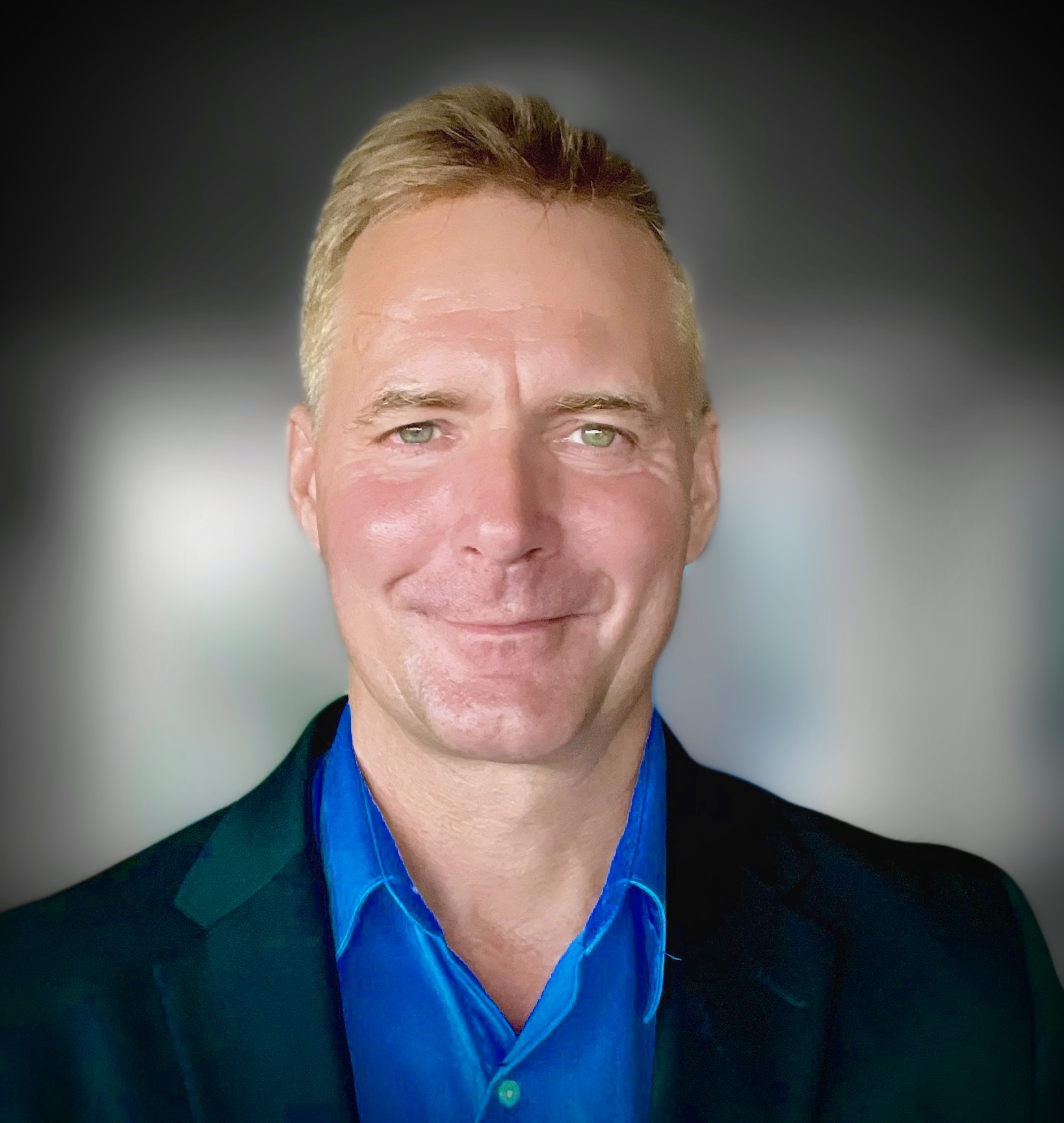
In December 2025, SecureAuth named Geoffrey Mattson as CEO. The timing wasn't incidental. Enterprises were discovering, with uncomfortable frequency, that their AI agents - the automated software acting on behalf of employees, customers, and machines alike - were operating outside expected behavior. Reading files they shouldn't. Initiating transactions without clear authorization. And doing it all in ways that existing identity infrastructure couldn't track.
Mattson had seen this coming for a while. His entire career - from Bell Labs to Nortel to Juniper Networks to two back-to-back security startups - is a sequence of bets placed on where technology is going before the market consensus arrives. The bet at SecureAuth is that identity is no longer primarily about logging humans in. It's about something larger and stranger: defining, delegating, and continuously verifying who or what is acting, what they're allowed to do, and critically, on whose behalf.
That framing - identity as a live, continuously updated map of relationships and authority - is what Mattson means when he says identity is becoming the control plane for how humans, machines, and AI agents collaborate. It's a precise claim, not a marketing line. He holds patents in AI, cybersecurity, and networking. He knows what a control plane does.
"The rise of AI agents is turning identity into a live, continuously updated map of relationships and authority. As enterprises give agents real power to read sensitive data, move money, and change systems, they need a strong identity control plane that can define, delegate, and continuously verify who or what is acting, what they are allowed to do, and on whose behalf."
- Geoffrey Mattson, on joining SecureAuth as CEO, December 2025Mattson grew up professionally across continents. Bell Labs. Nortel. Huawei. Product and engineering leadership stretched across Europe, Asia, and the United States, the kind of ground-level exposure to global enterprise infrastructure that most executives only read about in case studies. At Bay Networks, he spearheaded networking and telecom product initiatives and led architecture, industry standards work, and global go-to-market efforts - during the era when the internet itself was figuring out what it was.
He moved into Juniper Networks next, serving as Vice President of Product Management. Juniper was the company that made Cisco nervous. Working there in both general management and functional leadership roles meant understanding what it meant to scale: not just grow headcount, but accelerate innovation while the market moved.
After Juniper, Mattson led R&D and product organizations at Corona and Caspian, cloud-based security services startups that were testing what was possible before the cloud itself became ubiquitous. This was operator work, not strategist work - the kind where you are accountable for what gets built and whether it ships.
"SecureAuth is already tackling some of the hardest problems in identity and relationship security, helping organizations move faster, deepen digital relationships, and still know exactly who and what they can trust."
- Geoffrey Mattson, SecureAuth CEO announcementThe founding of MistNet.ai changed his trajectory. As co-founder and CEO, Mattson built an AI-driven threat detection platform from scratch. The platform went deep on what would become an industry obsession: using behavioral signals and machine learning to detect anomalies in real time, without relying on signatures or rules that attackers already knew how to defeat. In January 2021, LogRhythm acquired MistNet, backed by Thoma Bravo, one of the most sophisticated private equity firms in enterprise software. An acquisition by Thoma Bravo-backed companies isn't a fire sale. It's a validation.
From there, Mattson took over as CEO of Xage Security. The company operated in OT - operational technology - the infrastructure layer where industrial control systems, energy grids, manufacturing floors, and critical national infrastructure live. Zero trust for OT environments is not a theoretical exercise. It's a field where network architecture is often decades old, where patching is slow, and where a security failure can mean physical consequences. Under Mattson, Xage delivered 420% revenue growth. That number belongs in its own sentence.
What SecureAuth is Actually Building
SecureAuth, founded in 2005, has always been a serious company. It merged with Cloudentity in February 2024, expanding into API access control and dynamic authorization. Its customer list - AARP, American Red Cross, ExxonMobil - suggests the stakes are real. The platform secures more than 50 million identities. But the competitive dynamic has shifted.
The industry statistic that haunts every SecureAuth pitch: enterprises already face a 50-to-1 ratio of non-human identities to human identities. For every employee with a login, there are fifty service accounts, API keys, machine credentials, and now AI agents operating in the background. And 80% of IT leaders report that their agents are behaving in ways they didn't expect. The gap between what agents are authorized to do and what they're actually doing is where the next wave of security failures will happen.
Mattson's argument is that SecureAuth is the platform built to close that gap - not with more rules or more approvals, but with a continuous identity security architecture that can track relationships and authority in real time. Passwordless authentication, zero trust, identity governance, behavioral analytics, agentic AI governance - these aren't separate products bolted together. In the SecureAuth worldview, they're layers of the same control plane.
He is also a mentor at Stanford's Ignite program, working with the next generation of founders building in the space he has spent his career navigating. Someone who mentors tends to have a model in their head of how technology evolves and how companies should be built around that evolution. Mattson's model, tested across Bell Labs, Bay Networks, Juniper, MistNet, Xage, and now SecureAuth, is that identity - who is acting, on whose behalf, with what authority - is the most important unsolved problem in enterprise security. He's betting his third CEO role on it.