A parking ticket is an unusually efficient machine for producing indignation. The amount is large enough to sting, small enough to make hiring help absurd, and attached to a process that expects the recipient to learn its peculiar language. Joshua Browder’s useful observation was that some of that language could be turned into software.
- DoNotPay began by turning parking-ticket questions into appeal letters.
- It sells a subscription for consumer chores: cancellations, refunds, fees and privacy.
- Its planned courtroom experiment was abandoned in 2023.
- A 2025 FTC order requires evidence for claims that it performs like a lawyer.
That observation eventually acquired a much grander costume: the robot lawyer. The costume attracted attention, investors and scrutiny. Today, DoNotPay describes itself as an AI Consumer Champion and explicitly says it is not a law firm. The history between those descriptions is a useful lesson in how far a small, sensible idea can travel when the name becomes more ambitious than the product.
01 / A parking meter was a better starting point
Browder launched DoNotPay in 2015 after encountering parking tickets himself. The early service had a modest mechanism: ask questions, collect the relevant answers and produce an appeal. Ars Technica’s 2016 reporting describes a chat interface and an alternative web form. One asked the questions conversationally; the other dispensed with the performance. Both were trying to reach the same destination: a usable letter.
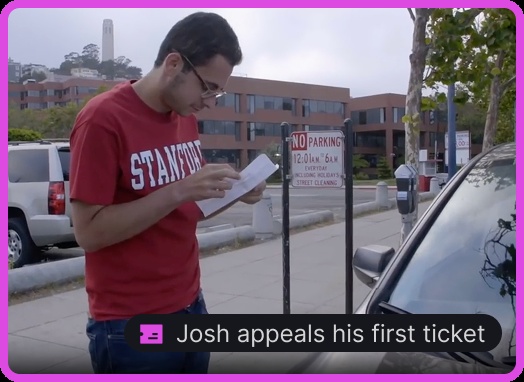
The distinction matters. A parking appeal can contain recurring questions about signs, circumstances and an issuing authority. Software can organize answers without possessing the judgment of a lawyer. The original product made an intimidating chore more approachable. A person who would have surrendered at the first form could at least make the argument.
There was recognition for that approach. In January 2020, the American Bar Association selected DoNotPay for its Louis M. Brown Award for Legal Access. The award recognized efforts to improve access for people of modest means. It was an endorsement of an access initiative, with a defined purpose. It did not establish that a chatbot could handle every task a lawyer performs.
02 / The fee is small. The friction is the business.
DoNotPay’s customer is the person facing an annoyance with an unfavorable exchange rate: a little money at stake, a lot of time required to retrieve it. An unwanted subscription, a denied refund or a fee dispute fits that pattern. The company’s expertise developed around packaging those chores into guided workflows. Its business sells the chance to make persistence less expensive.
The product menu grew accordingly. The company’s catalog includes cancellation help, refunds, warranty requests, temporary phone-number tools and account appeals. These tasks share a family resemblance: identify the institution, collect the information, prepare the request and navigate the channel. The range is broad, but every merchant or agency still has its own requirements.
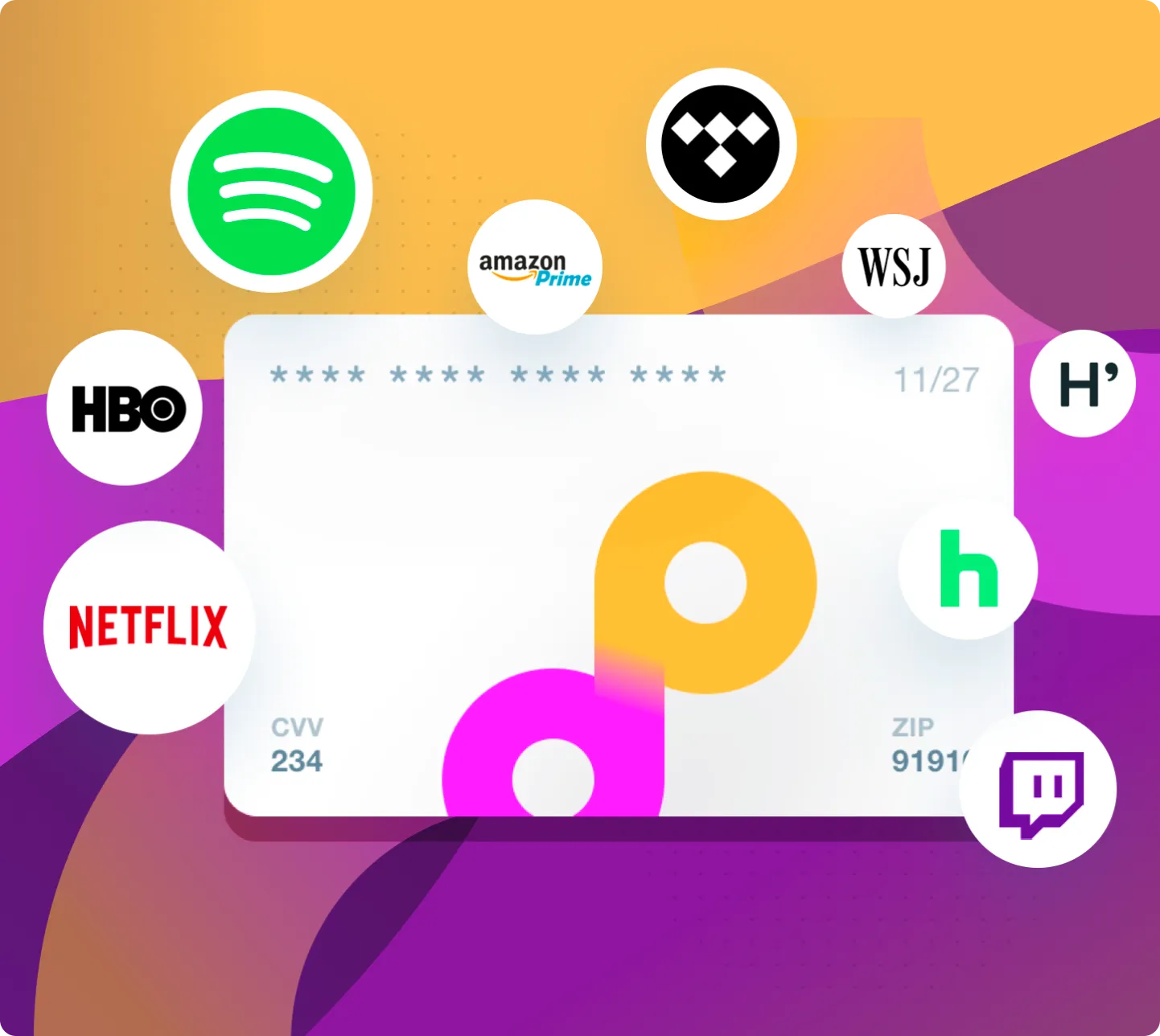
The Free Trial Card is particularly revealing. DoNotPay markets a virtual card that declines charges after a trial. It moves the intervention earlier, before an unwanted payment needs recovering. Rather than persuade a company to return the money, the product aims to prevent the charge. A consumer advocacy business can be built around that kind of unglamorous timing.
The company monetizes the bundle through a recurring subscription. The FTC complaint records historical general membership pricing of $36 every two months, alongside a separate small-business plan priced at $49.99 monthly during the relevant period. Those are historical figures. They explain the business model, rather than promise a price at today’s checkout.
Illustrative annualization of the FTC’s historical rate, assuming six uninterrupted billing periods. Not a current price or a forecast of savings.
The arithmetic is less romantic than the marketing. At that rate, a year costs $216. Recovering one small fee would not cover it; frequent use or meaningful time savings might. A subscription to help cancel subscriptions must earn its place on the very statement it promises to tidy. DoNotPay’s published terms say subscriptions renew automatically and instruct users to cancel at least 48 hours before renewal.
Investors saw scope for a larger business. Bloomberg reported in 2021 that DoNotPay raised $10 million from backers including Andreessen Horowitz, Lux Capital, Tribe Capital, Day One Ventures and Felicis Ventures. Browder put its valuation at about $210 million. That was a financing valuation in a particular year, not a present-day price tag or a verdict on the software’s legal competence.
03 / The robot never got its day in court
In early 2023, the distance between paperwork and professional judgment became difficult to ignore. Browder proposed a live courtroom experiment in which AI would supply responses to a person contesting a traffic ticket. According to NPR’s reporting, the system would listen to proceedings and send suggested arguments to the defendant.
Browder abandoned the plan before the hearing. He told NPR that warnings about possible prosecution had changed his calculation. He did not identify the officials behind the claimed threats. The State Bar of California declined to discuss the specific investigation, while describing its responsibility to investigate possible unauthorized practice. The much-publicized trial therefore supplied no courtroom result to assess.
The subsequent advertising case asked a plainer question: had DoNotPay demonstrated the performance it advertised? In its February 2025 announcement, the FTC said the company had not tested whether its law-related output matched human lawyers and had not retained attorneys to test those features’ quality and accuracy. The finalized settlement required $193,000 in monetary relief and notices to subscribers from 2021 through 2023.
Monetary relief required by the finalized FTC order. This measures the settlement, not total consumer losses.
The order also restricts claims that a service performs like a lawyer unless sufficient evidence supports them. That is the consequential boundary. A letter may be grammatical, emphatic and neatly formatted while overlooking a fact that changes the case. The ability to produce convincing language does not establish that the underlying decision is sound.
04 / From writing the complaint to making the call
The consumer business continued. In October 2024, Fast Company reported that DoNotPay was adding voice calls to customer service. The assistant gathered information through a form, called a large company and texted the user when it needed more details. That moves beyond producing prose to carrying a request through another organization’s process.
“It’s almost like ESPN for saving money.”Joshua Browder, describing users listening to their bot’s calls, Fast Company, 2024
The same report described boundaries: calls targeted large companies, generally excluded government agencies and could require the user’s help. Those limits expose the dependency at the heart of consumer automation. An assistant needs account details, an available channel and a counterparty willing to cooperate. Faster speech does not remove an airline’s rules or a retailer’s refund policy.
Editorial schematic of the consumer workflow. Individual features vary.
Competition comes from several directions. Contrary’s market analysis identifies virtual-card and temporary-number alternatives, including Privacy.com and Burner. General chatbots can help draft text. Professional legal services address a different need. DoNotPay’s most defensible position is the completed consumer chore: less searching, less repetition and fewer handoffs for the subscriber to manage.
05 / Copy the small idea. Audit the big promise.
The transferable lesson begins at the parking meter. Find a task people understand but avoid. Reduce the number of decisions required. Ask for the facts that matter, provide a usable output and make the next step obvious. A dull task completed reliably can be more valuable than an impressive conversation that leaves the user holding the same problem.
The conditions matter just as much. A guided request is most plausible when the procedure repeats, the facts can be checked and the recipient accepts the channel. It becomes less dependable when the dispute requires contested evidence, unusual circumstances or professional judgment. A generated letter cannot compel a refund, erase a debt or guarantee that a trial card satisfies a merchant’s conditions.
For a customer, the practical question is whether the specific tool will save enough money or time to justify the fee and the information supplied. For a builder, it is whether the outcome has been tested before the headline is written. DoNotPay discovered a real irritation. Its next argument has to be won in the quality of the work.