MINT Dentistry knew how to get noticed. Its billboards promised “We Make Sexy Teeth,” a phrase unlikely to be mistaken for a municipal service announcement. But a growing chain needs more than a memorable smile. It needs a patient in each neighborhood to find the right office. According to DoctorLogic’s customer study, that quieter task became a problem when MINT tried to build its own location websites.
- Healthcare website software plus managed SEO, content, reviews, and paid search.
- MINT’s bottleneck: building local websites quickly enough for new offices.
- The Yapi combination extends the ambition from discovery to scheduling and follow-up.
The directory that swallowed a dental chain
New offices brought deadlines of one or two weeks. The in-house team struggled to keep up. MINT consolidated locations into a directory-style page, and local search visibility suffered. The attempted shortcut had removed the very thing the business needed: distinct places for distinct local searches.
DoctorLogic replaced that arrangement with more than 100 optimized websites, supporting location launches and changes across the group. Its case study reports nearly 20,000 ranking keywords, an increase of 1,100% since the partnership began in 2019. Those are company-reported outcomes, not an independent test. Still, the sequence is instructive. Production capacity failed first; search visibility followed. The solution made repeatable infrastructure serve local detail.

Locations across the group. Expansion is context, not proof of marketing causation.
A website with an engine room
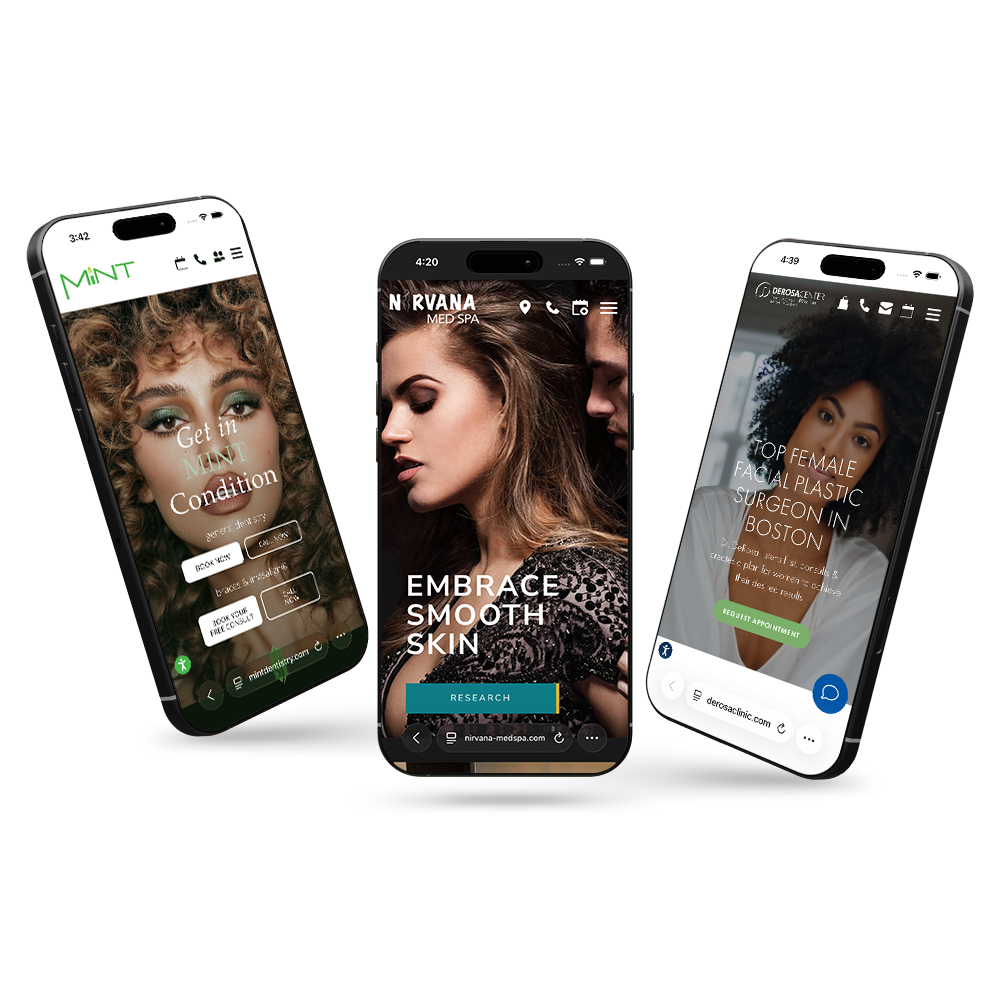
DoctorLogic sells that combination to medical and dental practices: proprietary website software, supported by people who design, maintain, and market the sites. Its current website says it has designed websites for more than 1,000 medical practices. Customers range from individual offices to groups; specialties include dentistry, plastic surgery, dermatology, and ophthalmology.
The product reaches into the ordinary chores that decide whether a website works. Service pages explain treatments. Local SEO maintains practice listings and Google Business Profiles. Galleries show results. Reviews supply reassurance. Paid-search management connects advertisements to landing pages, while tracking records inquiries. A practitioner can commission the work rather than become the reluctant manager of a small publishing department.
Its distinction is the shared machinery beneath those jobs. A generalist agency, an open content-management system, and separate marketing tools can perform many of the same functions. DoctorLogic’s proposition is that healthcare-specific publishing and managed execution belong together. The useful comparison is how much coordination a practice wants to own, and how much control it wants to retain.
The subscription behind the smile
That arrangement has a price structure as well as a design philosophy. DoctorLogic’s published terms describe setup fees and recurring monthly fees. SEO, content, advertising, social campaigns, and chat can be optional services. The current SEO page asks practices to request a tailored quote. A buyer should therefore compare a written scope: website work, continuing marketing, and advertising budget are different purchases.
There is also an exit question. The published 2023 terms restrict exporting or reusing proprietary software compilations, markup, code, and page designs. A practice buying this system should understand what transfers if the relationship ends. Convenience has contractual edges. For an expanding group that values coordinated launches, the trade may be attractive. For a practice that needs a freely portable website, it deserves close examination.
An assistant with an editor
Before-and-after photographs are especially revealing. They may look like simple pictures, but publishing them means titles, descriptions, organization, and connections to procedures. SmartAI Galleries generates headlines and descriptive copy. Related tools draft blogs and build promotions, helping practices turn material they already have into pages people can use.
DoctorLogic says its content team vets, edits, and approves AI-assisted work. A June 2023 company article describes a revealing request: a client wanted a ChatGPT chatbot to respond to patient inquiries. After investigating the risks, the team advised against that application. The boundary matters. A tool that helps describe a gallery has a different responsibility from one answering a patient’s medical question. Human judgment remains part of the product.
“Speak the Truth, Share the Why”A published DoctorLogic core value
The click meets the waiting room
In January 2020, DoctorLogic raised a $7 million Series A led by Unbundled Capital to expand sales, marketing, and product development. Co-founder Stuart Lloyd’s complaint was pointed: “Agency-led solutions aren’t cutting it anymore.” The investment backed purpose-built software as a way to support practices competing for growth.
The business took another turn in March 2025, when it combined with Yapi. The merger announcement put DJ Chhabra in charge of the combined companies and moved Lloyd into strategy. Yapi brings scheduling, forms, reminders, and patient communication. The announced ambition connects acquisition with ongoing engagement. Read as a business decision, it acknowledges that attracting a patient and getting that patient into an office are linked problems.
Later that month, Henry Schein Medical added DoctorLogic to its SolutionsHub portfolio. That gives the platform another route to medical practices. The company now sits between website marketing and the systems that help an office handle the interest marketing creates. The appeal is practical: fewer handoffs for a patient, and fewer disconnected jobs for staff.
- 01Get foundWebsite · local search
- 02Build confidenceInformation · reviews
- 03Book & returnScheduling · reminders
Try being your own patient
A June 2026 DoctorLogic webinar recap, featuring EMARKETER and Affinity Dental Management, puts appointment conversion under the microscope. It argues for following calls and forms through to scheduled visits, rather than stopping at traffic totals. This is a useful shift in emphasis for a business whose earlier case studies celebrated growing libraries of searchable pages.
The lesson is easy to borrow. Open a service page on your phone. Can you identify the treatment, the location, the provider, and the next step? Submit an inquiry and follow its route through the office. Check whether the person answering can actually offer a time. Then compare scheduled appointments by service and location. A busy traffic chart cannot answer those questions.
The conditions are equally concrete. Local content must describe a real local service. Someone must review medical copy and supply credible practice information. Staff must respond, and the schedule must have capacity. DoctorLogic can organize the website and marketing work; those remaining obligations still sit with the practice. The interesting patient is the one who was ready to book. Whether that readiness becomes an appointment depends on what happens next.
Open the next tab
Explore the platform, inspect the customer examples, or watch the company’s introduction.