Huron Gastro already asked its patients what they thought. The answers went into surveys, where they could inform the practice and remain largely invisible to anyone choosing a doctor. In early 2022, its Google reputation presented a less flattering picture. The practice had confused knowing its patients with being known by prospective ones.
- rater8 connects patient feedback requests to appointment workflows.
- Its software serves individual providers as well as practice locations.
- Paid plans start at $89 per physician monthly, subject to a minimum.
- The useful lesson: make asking consistent, then act on the answers.
The private praise problem
Debbie McNeilance, Huron Gastro’s chief operating officer, asked colleagues how they searched for healthcare providers. Their answers gave online reviews considerable weight. That small investigation changed the question: excellent care might earn goodwill, but how would a stranger encounter it? The Michigan practice turned to rater8 to bring more patient experiences into public view.
In rater8’s published account, Huron Gastro increased new online reviews by 14,114% in its first year and reached a 4.94 average rating. These are vendor-reported results, not a clinical-quality assessment. Still, the underlying problem is recognizable: a private compliment has a limited audience. A public review can reach the next person holding a referral and a phone.

A QR code cannot remember
rater8 sells software for that gap. Founded by Evan Steele, the company concentrates on healthcare reputation management. Its raVE platform, short for rater8 Visibility Engine, collects feedback, builds reviews and helps administrators see patterns across doctors and locations. The company reports more than 1,000 practices and 25,000 providers using its tools across over 80 specialties.
The sequence begins with an appointment-system connection. A text or email follows the visit. Patients can give feedback without a staff member remembering to hand over a card. The pollin8 algorithm directs review requests toward the platforms and listings needing attention, including Google and healthcare directories. One busy location should not monopolize the practice’s entire online reputation.
Sports Medicine & Orthopaedic Center in Virginia supplies a useful test of the idea. Some physicians handed out QR-code cards, but the effort varied. An earlier reputation vendor required too much attention. The practice needed a routine it could sustain without an internal marketing hire.
“We wanted a hands-off approach because we don’t have an internal marketing person to fill that position.”Johnny Thompkins, SMOC, in rater8’s case study
SMOC connected rater8 to athenahealth and replaced uneven manual requests with automated outreach. The case study reports 2,072 reviews in year one, a 1,020% increase, with 93% rated five stars. The interesting change is operational: the request became part of the appointment’s aftermath. It stopped depending on who happened to remember.
The bill, before the applause
rater8’s free Monitoring tier provides a feedback inbox, AI-powered summaries and ratings digests. raVE Lite lists at $89 per physician per month and adds review generation, AI-assisted responses, reporting and a dedicated client success manager. Pro lists at $109 and adds surveys, benchmarking, Net Promoter Score and Verified Reviews listings. Pro+ adds listings management and employee surveys at a quoted price.
$89Lite / physician / month
$109Pro / physician / month
The minimum matters. One physician cannot budget $89 as the whole monthly bill. Three physicians on Lite work out to $267 monthly at the listed rate; ten on Pro work out to $1,090, before setup. These are arithmetic examples, not customer invoices. The pricing FAQ describes annual agreements and optional 24- or 36-month terms, so buyers should examine the agreement as carefully as the feature list.
Against alternatives such as Birdeye, Reputation, Yext and Weave, rater8’s proposition is a healthcare-focused workflow: provider-level listings, appointment integrations and patient feedback in one service. That gives a practice a concrete comparison to make. Which system connects to its software, covers its doctors and reduces the work its staff actually performs?
Stars are the beginning of the conversation
More comments create another problem: someone must read them. rater8 offers satisfaction surveys, exportable reports and benchmarking. AI Insights lets administrators ask questions about their own feedback, such as which locations attract scheduling complaints or what patients say about a provider. The useful output is a question worth investigating, with enough detail to take into a meeting.
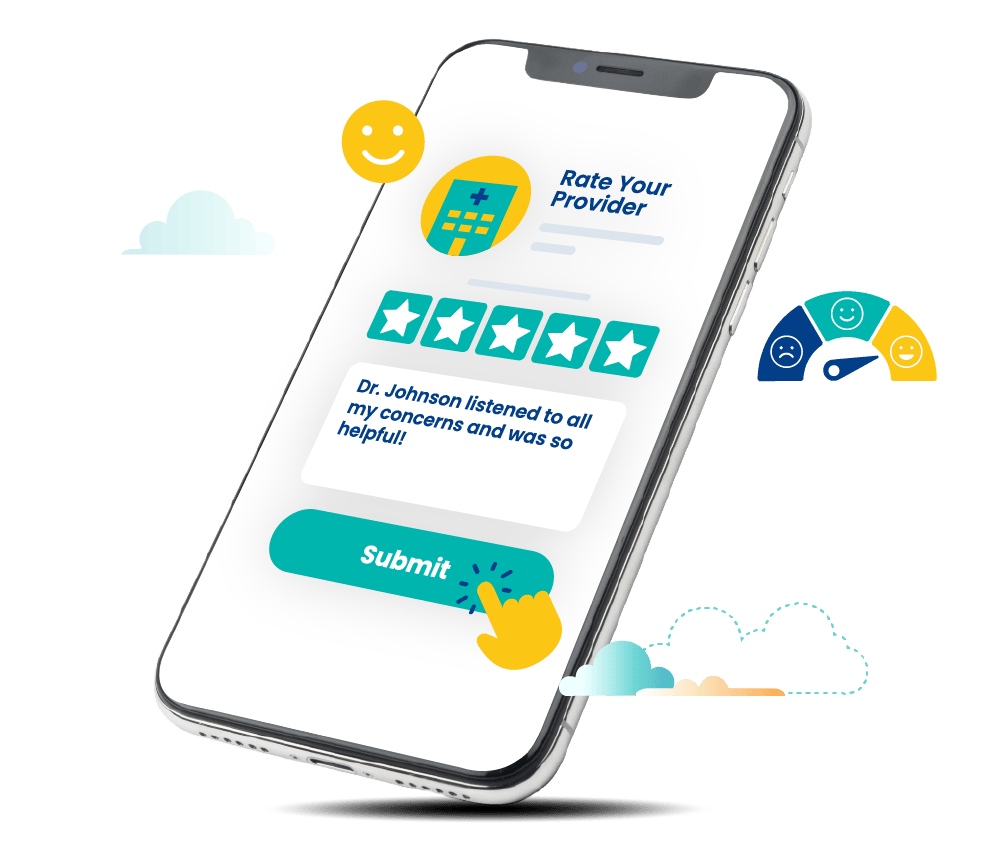
AI-assisted review replies address the writing workload; rater8’s product page says practices retain final approval of drafted responses. Its Verified Reviews listings use appointment-linked satisfaction survey feedback to build structured provider pages. Those are different functions: one acknowledges a comment, the other gives prospective patients another place to examine experiences.
A practice should measure the distinction carefully. Review volume, ratings and clicks are separate from booked appointments and clinical outcomes. In the company’s OSMS case study, the customer explicitly describes online patient acquisition as a mixture of reviews and digital marketing. Attribution is untidy. An attractive chart cannot do the work of a controlled experiment.
The next person choosing a doctor
In April 2024, rater8 announced a Series A led by Elsewhere Partners to expand its reach, team and products. The amount was undisclosed. By August 2026, a certified API partnership with Compulink had added another route from appointments to surveys and review requests. The company says it supports more than 100 EHR and practice management systems.
The next audience includes search tools assembling answers about doctors. Structured listings and consistent provider information are part of rater8’s response. They offer material those systems can find; they do not purchase a guaranteed recommendation.
The lesson travels beyond this software: connect the invitation to an event, ask consistently and give someone responsibility for the answers. It depends on reachable patients, a working integration and staff willing to address recurring complaints. If those conditions are missing, more feedback can simply produce a better-documented problem. The quiet patient is valuable because there is something to learn, as well as something to publish.
Follow the feedback
Explore rater8, its plans, AI Insights and Verified Reviews.
Read the customer stories: Huron Gastro, SMOC and OSMS. See the investment announcement, Compulink partnership and software alternatives.
LinkedIn · Instagram · Facebook · Videos on YouTube · Watch the website’s featured video