Running toward the hardest problem in the room
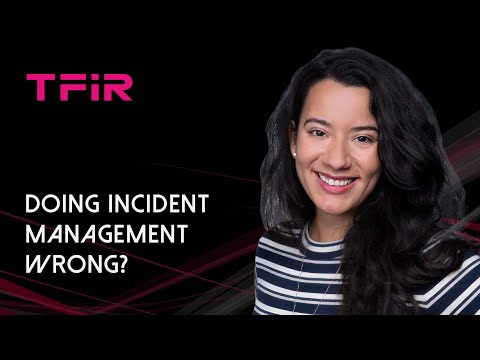
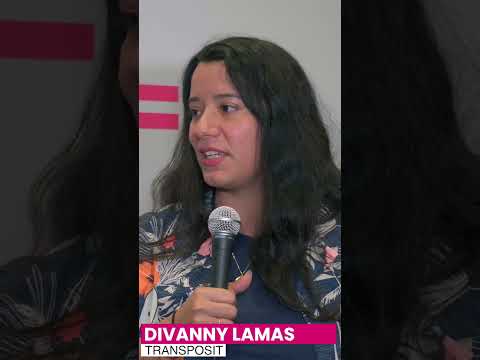
Somewhere between her stint at Harvard's IT help desk and her first AWS re:Invent booth, Divanny Lamas decided that "firefighting mode" is the original sin of enterprise operations - and that fixing it was worth betting her career on.
The story of Divanny Lamas is not a straight line. She arrived at Harvard planning to study government and become an international lawyer. She left with a computer science degree and a head full of questions about why software teams were building such fragile systems. The interdisciplinary privacy-and-technology course she stumbled into changed the trajectory. Then an Evernote internship gave her the startup bug. The rest, she has said, was inevitable.
Before Transposit - before the $50.4M and the Fortune 100 customers and the KubeCon keynotes - there was Splunk. Seven years of it. She came in as a product manager and left having touched product management, sales engineering, customer success, and the scaling of what became one of enterprise software's landmark billion-dollar sales organizations. She was not a passenger at Splunk. She was someone who understood how large enterprises buy, use, and ultimately struggle with complex software.
That understanding led her sideways, briefly, into a machine learning startup for financial services. Her own assessment of that venture: "a complete disaster." She talks about it openly, the way someone talks about a scar they've stopped being embarrassed about. It taught her the difference between a problem that's interesting and a problem that enterprises will actually pay to solve.
The lesson stuck. When she co-founded Transposit and became its CEO, she brought both the Splunk pattern-recognition and the startup scar tissue. Transposit's platform was built for site reliability engineers and IT operations teams - the people who get paged at 3am, who wade through runbooks that no one has updated since 2019, who spend half their incident response time asking "wait, which Slack channel is this supposed to go into?" Transposit automated the process orchestration around those incidents, turning static runbooks into interactive workflows and embedding AI-powered context where the humans actually needed it.
The company's stealth mode origin story is worth noting: Transposit showed up at AWS re:Invent before it had a marketing strategy. No campaigns. No PR. Just a booth. Fortune 100 companies stopped by. VCs stopped by. The product spoke without a press release.
"Let the humans be good at what humans are good at. Let machines be good at machine stuff."- Divanny Lamas, Screaming in the Cloud Podcast, 2024
Her philosophy of automation is deliberately not about replacement. At a moment when the tech industry is racing to claim that AI will make human judgment obsolete, Lamas argues the opposite: the best AI in an operations context is the kind that surfaces the right information at the right moment so a human can make a faster, better decision. Augmentation, not replacement. The engineer at 3am still needs to understand what they are looking at - the platform just needs to stop making that harder than it has to be.
Simultaneously holding the CEO seat at Transposit and a managing director position at Sutter Hill Ventures is a genuinely unusual arrangement. Most founders are either running a company or investing in them. Lamas has been doing both - which means she reads term sheets and product roadmaps with the same fluency. It also means her Transposit decisions were never made in a vacuum; she could see across the landscape of enterprise software bets her firm was making.
Sutter Hill is not a casual brand name to carry. The firm backed Snowflake at Series A. It has been backing enterprise technology for more than sixty years. Being a managing director there while building your own company is either extraordinary confidence or extraordinary competence - probably both.
The rare dual-role bet
The overlap between building a startup and backing startups is rarely as clean as investors claim. Most CEOs who moonlight as VCs eventually choose. Lamas ran the dual track - CEO of a venture-backed enterprise platform and managing director at one of Silicon Valley's oldest firms - and used the tension productively. The operator's perspective she brought to Sutter Hill investments was the real thing, not theory. The VC network she maintained while building Transposit was not just a fundraising advantage; it was a source of pattern-matching across a dozen enterprise problems simultaneously.
She has since moved into an advisory role at cray.vc, a newer firm, and joined South Park Commons as a member - the Palo Alto community that functions as a pre-company gathering place for people working on genuinely hard problems. Her presence there tracks with her stated philosophy: genuine concern about solving a major problem is a signal the problem is worth solving.
50% female engineers. Not a policy. A decision.
Transposit's engineering team reached 50% female at a time when most enterprise DevOps companies were celebrating reaching 15%. This did not happen by accident. Lamas actively recruited candidates from non-traditional backgrounds and built hiring practices that did not optimize for the usual Ivy-league-to-FAANG pipeline.
Her position on diversity is practical before it is political. She argues that varied backgrounds drive innovation - not as a diversity-is-good talking point but as a product observation. Teams that all went to the same schools, worked at the same companies, and think in the same frameworks build products that reflect those frameworks. For a company building incident management tools used by every kind of enterprise, that kind of echo-chamber product design is a liability.
She has pushed directly on the tech industry's tendency to elevate women into "safe" functions like HR while leaving engineering and product leadership homogeneous. The Transposit engineering org was her counter-argument made operational.
"Tech companies need to think about building a culture that is able to welcome people from different perspectives and backgrounds, BIPOC and minorities. It's critical that they elevate women into positions of power and influence - not just 'safe' functions like HR."- Divanny Lamas, Authority Magazine, 2022
Five things she actually believes
Why enterprises keep getting worse at incidents while spending more
Lamas identified a paradox that most of the enterprise software industry prefers to ignore: organizations are investing more money in incident management automation, and the number of incidents is still going up. Costs are still rising. Response times are not improving at the pace the dashboards suggest.
Her diagnosis - the thing Transposit was built around - is that the problem is not the tooling. It's the process. Modern infrastructure is too complex for any engineer to be an expert in every system they might need to touch during an incident. The playbooks get stale. The runbooks assume context that the on-call engineer doesn't have at 3am. The automation that was supposed to reduce cognitive load has added another tool that needs to be checked, another Slack channel that needs to be watched.
Transposit's answer was process orchestration: make the runbook interactive, embed the data lookups inside the workflow, route the right information to the right human at the right moment. Stop making engineers context-switch across twelve tools and start bringing the twelve tools to the engineer. Augmentation, not replacement. Machines handling the machine parts, humans handling the judgment calls.
It's a thesis that has only gotten more relevant as GenAI entered the operations space. When every vendor is claiming their AI will replace the on-call engineer, Lamas has been the consistent voice arguing that the better question is: what does the on-call engineer need to be ten times faster at making a good decision?
- More investment in automation has not reduced incident frequency for most enterprises - it's added complexity
- No engineer can be an expert in every modern infrastructure component - that's the real problem
- Static runbooks assume context that on-call engineers don't have at 3am
- The goal of AI in ops is augmentation - helping humans decide faster, not replacing the decision
- Reactive "firefighting mode" is what diverts teams from actually building products