Cruisebound had a website. What it lacked was a way to finish the purchase. In late 2021, according to Distillery’s account, booking a cruise meant calling a number. One customer service representative answered the line. A business selling holidays at sea had created a very terrestrial constraint: somebody had to pick up.
This is a useful place to meet Distillery, the software development firm. Its vocabulary includes agile teams, artificial intelligence, and nearshore engineering. Its work becomes easier to understand when you picture that telephone. The immediate problem was the distance between wanting a holiday and paying for one.
- Distillery supplies engineers or a complete delivery team.
- Its work spans customer apps, software testing, and business data.
- The useful buying question: which delay should disappear first?
The queue was the product problem
The engagement began in December 2021. Five Distillery people joined: three frontend developers, one backend developer, and a QA automation specialist. After four weeks, the online booking funnel was complete. The first purchase made entirely online followed in January 2022, the case study says.
That staffing detail matters. Someone was responsible for what customers saw, someone for the machinery underneath, and someone for testing it. The goal was one complete action. Cruisebound’s CTO, Tyler Barber, had worked with Distillery engineers at a previous company; his testimonial identifies that experience as the reason he returned.
December 2021 → January 2022
One customer journey, staffed from interface to testing.
A team you can talk to today
Founder and CEO Andrey Kudievskiy built a business around a geographic observation. As he explained on Code Story, developing countries had technical talent, while the United States had commercial opportunity. Connecting the two was the opening. Current company materials date Distillery to 2012; his biography describes moving the business to the US that year.

Today, the pitch centers on nearshore delivery, particularly Latin America. In practice, the attraction is the possibility of resolving a question during the same working day. Customers include Carvana, FilmTrack, Thrive Market, and Sweetgreen. This is a services company serving businesses whose own products need continuing engineering work.
There are two main ways to buy. Staff augmentation puts specialists inside an existing team, with the customer retaining daily control. Managed agile teams add more of the delivery structure: developers, designers, product and project managers, and testers. Web and mobile development sit alongside UX/UI, QA, and data engineering. A buyer can fill a specific gap or assemble a broader crew.
The commercial unit is an engagement. Clutch lists an hourly band of $50-$99 and a $25,000-plus minimum project size. These are directory benchmarks; a scoped quote determines the bill. The buyer’s useful comparison is the cost of delivering an agreed outcome, including the management time needed to get there.
“we don’t distinguish between the two”
Nate Bergey, Carvana engineering team lead, on full-time and contract employees in a Distillery-published testimonial.
Bergey’s comment captures the intended difference from a detached handoff. The contractors participate in the team’s ordinary work. Distillery’s own 2019 culture account was unusually procedural: employee questionnaires helped define values; separate documents covered service and communication; weekly all-hands calls kept distant offices informed. Collaboration had a calendar.
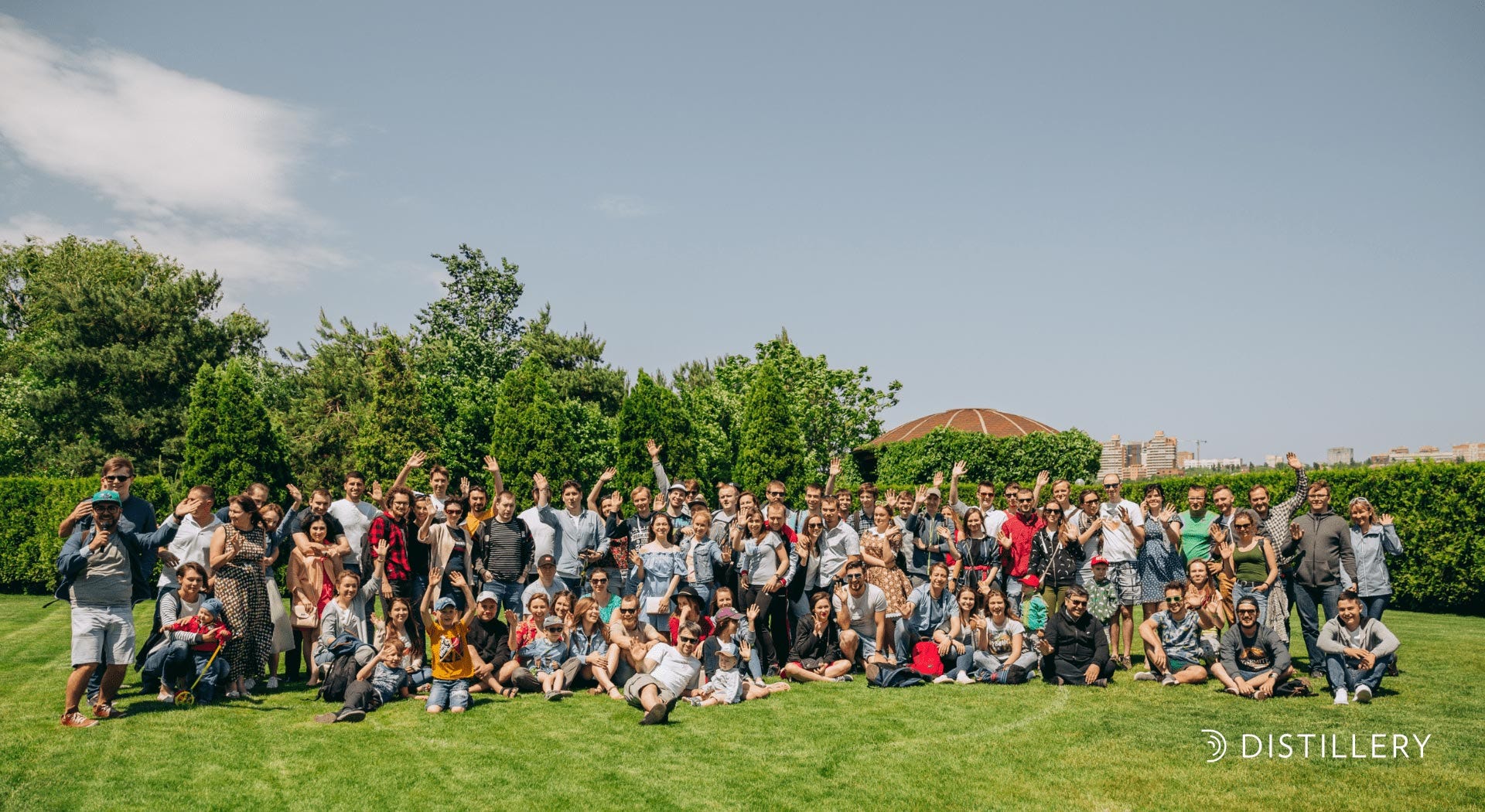
The warehouse has a stopwatch
At Rakuten Super Logistics, the constraint lived inside SmartFill, the application customers used to manage orders, warehouse inventory, and shipments. Distillery describes slow requests and a dashboard that crashed or froze. In that setting, software performance interferes with the ordinary work of moving things.
The reported intervention combined better data handling, dashboard refactoring, interface changes, and testing automation. Request time fell from 12 seconds to 1.8 seconds. Cloud server CPU load fell from 50 percent to 5 percent. These are Distillery’s project figures, describing that particular system.
Notice the sequence: repair an existing workflow, then extend it. A new feature has limited value if the screen containing it keeps freezing. For a technology leader, the copyable habit is to name the delay, measure the starting point, and choose a result someone outside engineering can recognize.
Before intelligence, make the numbers agree
The same reasoning appears in Distillery’s work with LevelUp Finance. One private equity client had investment information spread across CRM systems. The teams consolidated it in Snowflake and modeled it for Power BI reporting. Another engagement involved defining recurring revenue movements in ClickHouse, including upsells, price adjustments, expansions, and contractions.
The difficulty was partly semantic. A financial dashboard needs agreement about what a number means. Distillery’s consulting-firm case work follows that dependency into larger systems: data pipelines, standardized models, and analytics platforms supporting AI. Its verified Databricks consulting partnership fits this work. Better answers depend on usable inputs.
Twelve minutes back
In September 2026, Distillery announced membership in the Claude Partner Network. The accompanying Attorney Share example supplied a bounded AI result: a QA engineer used Claude Code to build a Playwright framework containing approximately 500 end-to-end tests. The company reported reducing full-suite runtime from about 24 minutes to 12.
That is a concrete reason to care about AI-assisted engineering. Shorter feedback cycles let people discover problems sooner. The announcement also leaves engineers responsible for context, guardrails, review, and what ships. The tool operates inside a delivery process.
The practical lesson across these projects is to give the team a finish line. An organization with unresolved priorities, inaccessible systems, or nobody empowered to accept the work will struggle to copy the results. A small budget may also fit poorly with the listed project minimum. Four weeks describes Cruisebound’s checkout, not an arbitrary software wish list.
Start with the customer who cannot complete a booking, the warehouse screen that stalls, or the report whose totals disagree. Then work backward to the people and decisions required. Distillery’s most persuasive proposition is visible at that scale: an ordinary piece of work finally moves.