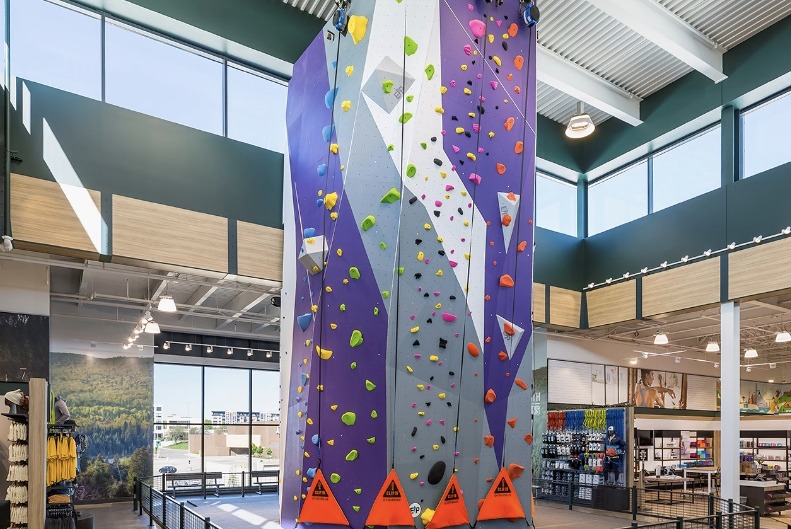
Consider the climbing wall. It occupies space that could hold racks of shirts. It requires equipment, supervision, and a customer willing to do something mildly ridiculous in a retail store: leave the ground. At DICK’S House of Sport, that wall sits alongside golf simulators and multi-sport cages. The merchandise has acquired a testing ground.
- Test the gear: stores become places to play.
- Follow the game: GameChanger connects youth-sports families.
- Mind the bill: Foot Locker adds reach and a turnaround.
The interesting question is what happens to the shopping decision. A bat on a website is a picture and a specification. A bat swung in a cage becomes evidence. DICK’S Sporting Goods has made a substantial bet that helping customers discover what works will give them a reason to visit, and eventually buy.
01The $300 objection
The company’s origin involves a different argument about what belonged in a shop. In 1948, eighteen-year-old Dick Stack worked at an Army surplus store in Binghamton, New York. Asked to suggest fishing products, he produced a list. His boss dismissed it. Stack quit.
According to the company’s account, his grandmother asked what opening his own place would cost. Three hundred dollars, he said. She supplied the money from her cookie jar. Her instruction was admirably brief: “Do it yourself.” A bait-and-tackle shop followed.
“Do it yourself.”
Dick Stack’s grandmother, in the company’s founding account
The chain remained small for decades. Ed Stack, Dick’s son, became chief executive in 1984, when it had two stores. The business went public in 2002. Lauren Hobart became CEO in 2021, the year House of Sport launched. The continuity is less about fishing than about knowing what a customer needs before a skeptical shopkeeper does.
02Give the equipment a tryout
Today’s customers include parents replacing outgrown cleats, golfers chasing a better fit, runners choosing shoes, and people who simply like athletic clothes. DICK’S sells footwear, apparel, and equipment across sports. Golf Galaxy gives golfers a specialist destination; Going Going Gone! serves bargain hunters. Online shopping and store pickup handle the hurried errand.
House of Sport addresses a slower, more uncertain purchase. TrackMan-equipped golf bays and multi-sport cages let shoppers measure performance. Some locations add outdoor fields for clinics, leagues, or open play. Repairs, fittings, and equipment services make expertise part of the visit. Activities and availability vary by location; customers should check before making the trip.
For a parent buying unfamiliar equipment, the value is partly translation. Specifications say what a product contains; a useful employee explains what matters for this child, this sport, and this budget. That is the service the format promises. It also creates an operating obligation: the store has to supply people who can make the demonstration useful. An impressive installation with nobody to help is a costly prop.
- 01Pick it upChoose the gear
- 02Try it outSee how it feels
- 03DecideBuy with evidence
The competitive distinction is concrete. Amazon makes ordering convenient. Nike’s own stores concentrate on Nike. Academy Sports + Outdoors and local specialists offer other combinations of price, breadth, and advice. DICK’S pitch combines multiple brands, practical help, and somewhere to use the gear. Its own labels, including DSG, CALIA, and VRST, add merchandise shoppers cannot price-match across every rival.
Partners have noticed. In October 2025, Gymshark named DICK’S its first U.S. wholesale partner, initially entering twelve House of Sport stores. Nike had already connected its membership program with DICK’S ScoreCard, giving linked members access to offers, products, and experiences. A useful retailer can be a distribution partner even to brands with their own shops.
03The game continues on a phone
Then there is GameChanger, the youth-sports app DICK’S acquired in 2016. Coaches can organize teams, record scores, and broadcast games. Families can follow from elsewhere. Core tools are free; subscriptions sell additional viewing and analysis. As of October 2026, an individual Plus annual plan costs $39.99, while Premium costs $99.99, before applicable taxes.
GameChanger generated nearly $150 million in fiscal 2025 revenue and had approximately ten million unique active users. The appeal is wonderfully specific: someone cares intensely about a game that television will never carry. DICK’S has a role in that game before anyone needs another pair of shoes.
Community spending fits this focus. The foundation’s Sports Matter program supports access to youth sports. Renewed Chicago Sky and Minnesota Lynx partnerships run through 2028 and include clinics and shopping events for young athletes. Those programs serve a different need from a premium store: helping children participate at all.
04A bigger store has a bigger bill
The economics still begin with selling goods for more than they cost to acquire and deliver. Services and subscriptions add other revenue. Fancy surroundings must earn their keep through sales and repeat visits. At fiscal 2025’s end, DICK’S had 35 House of Sport locations, having opened sixteen that year. Company-wide gross capital spending reached approximately $1.14 billion, covering stores, technology, and infrastructure. That figure is not a House of Sport construction budget.
The larger wager arrived in September 2025: Foot Locker. The acquisition brought sneaker-focused brands, international operations, and a combined footprint exceeding 3,200 stores across twenty countries at closing. Reported purchase consideration was approximately $2.5 billion, primarily shares. Buying reach also meant inheriting a business that needed repair.
One early problem was inventory. Fiscal 2025 acquisition-related charges included $217.9 million for inventory write-downs and liquidation. By August 2026, cumulative acquisition-related charges reached $515.8 million; management expected up to $750 million overall. These charges include more than stock clearance and are separate from the purchase price.
The second quarter exposed the gap: the DICK’S business increased comparable sales 4.9%, while Foot Locker’s pro forma comparable sales fell 3.6%. Management revised its annual outlook. The contrast does not prove climbing walls caused growth. It does show why buying a customer base and improving a customer experience are different jobs.
One group. Two scoreboards.
05Copy the test, then build the stage
For another retailer, the useful idea is to identify the uncertainty stopping a sale, then give customers a way to resolve it. Demonstrate the product. Offer a fitting. Build a small trial before committing expensive space. DICK’S reported strong responses from shoppers, suppliers, and communities when explaining House of Sport’s early expansion.
The arithmetic gets harder where visits are infrequent, rent is high, staffing is thin, or products need little explanation. A climbing wall cannot rescue the wrong inventory. DICK’S own expanding group supplies the reminder: the experience can earn attention, but the assortment must still earn the purchase.