Devin Bhushan’s first use for Squint involved a coffee grinder. He attached a digital note to it, a reminder of the settings for a French press. Here was a software engineer with experience in augmented reality, applying the technology to the solemn business of getting breakfast right. The machine could grind beans perfectly well. Remembering the right setting was somebody else’s department.
That small experiment offers a useful way into the larger business he would build. A physical object and the information needed to use it often occupy separate worlds. The object is here. The instruction is elsewhere, perhaps in a document, perhaps in a colleague’s memory. His coffee reminder put them together. A factory has the same separation, with considerably more expensive consequences.
Bhushan founded Squint in 2021 after working at Yahoo and Splunk. He was already an enthusiastic adopter of gadgets and a San Francisco Giants fan. The combination makes a certain sense: someone interested in what technology can do, and accustomed to watching people perform difficult, practiced actions. His first application was domestic. His company’s customers would make tires, vehicles and consumer goods. The distance between the two is large; the underlying question is surprisingly small. How do you get the right knowledge to the person standing in front of the thing?
An engineer learns to read the room
At Yahoo in 2015, Bhushan was given the job of writing the Flurry mobile app himself. He had no prior iOS experience. He built it anyway. The app helped customers understand their product analytics, so his job already involved translating a reservoir of data into something a person could actually use. A database may be full of answers without being particularly good at conversation.
Jess Lee knew him from those Yahoo years. Later, as a Sequoia partner, she would back Squint. Her account of his career connects the Flurry assignment to his subsequent leadership of Splunk’s mobile augmented-reality team. At Splunk, he worked on making industrial data visible. Customers then asked for access beyond the data stored in Splunk. Each request widened the assignment.
There is a pattern in those early jobs. The engineering challenge was real, but the usefulness of the result depended on what happened after the engineering. Could somebody understand the information? Could they reach it where they worked? Bhushan’s career kept putting him close to that last, awkward stretch between a system that knows something and a person who needs it. The stretch would eventually become his company’s reason to exist.
Zero revolutions, one good question
Bhushan graduated from the University of Illinois Urbana-Champaign in 2014 with a bachelor’s degree in computer science. At Yahoo, engineering leader Tim Tully became a mentor. When Tully moved to Splunk as chief technology officer, Bhushan’s work there brought consumer-product thinking to an enterprise problem: factory and field operators needed a way to use their companies’ data.
The operators’ response was inconveniently sensible. Knowing that a machine had reached zero revolutions per minute did not explain how to get it moving again. The missing information was often practical knowledge passed from worker to worker. Bhushan had found a problem that more visibility alone could not settle.
He spent Squint’s first six months validating the idea before writing production code: prototypes, conversations, pricing tests. For an engineer, that is a fairly pointed exercise in restraint. In his telling, the company built once prospective customers were ready to sign. The question from the floor had changed the task. A display could tell someone what had happened. The new product needed to help them decide what to do next.
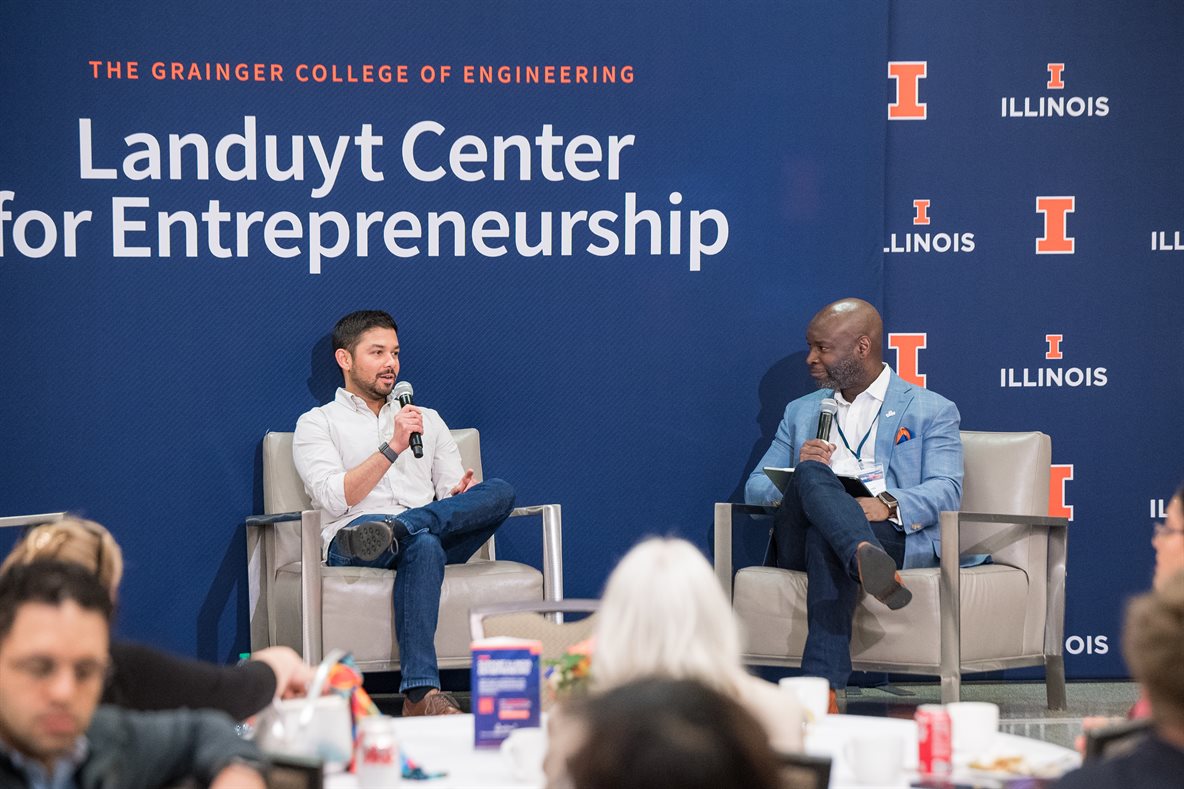
The veteran is part of the operating system
A new factory worker has traditionally learned alongside somebody experienced. That arrangement can carry years of judgment through a few weeks of demonstrations. It also depends on the experienced person being available. Squint’s early proposition was to put instructions in front of the worker through a phone or tablet, with augmented reality connecting steps to the relevant place or machine.
Bhushan described a second obstacle that appeared once customers started creating those guides. Documenting a procedure could itself consume substantial effort. Someone had to observe the work, take notes and assemble the sequence. His team added a way to turn video of the work into draft instructions. The customer problem had moved upstream, from reading a procedure to producing one.
He calls the team’s approach building with empathy. Coming from outside manufacturing meant asking elementary questions rather than assuming expertise. That stance is visible in the product’s evolution: a guide for the operator led to a tool for the person making the guide. Listening revealed another job that needed doing. There is an appealing lack of ceremony in that method. Ask a basic question. Follow the answer farther than expected. Make the next bit less troublesome.
Old colleagues, new obligations
Squint’s financing story includes relationships that began long before its pitch deck. Tully’s Menlo Ventures supported the company at the pre-seed stage. Bhushan later worked with Sequoia and joined its spring 2023 Arc program after receiving a seed investment and an invitation. Lee’s familiarity with him from Yahoo helped begin that conversation; the investment process still involved a pitch, diligence and customer work.
Arc ran through a different subject each week, with lectures and workshops. Bhushan put extra time into the material most relevant to the business, particularly sales and marketing. He later used Sequoia’s network for help with design, pricing and packaging. Engineering experience had given him a way to make the product. Company building required a wider set of decisions.
Asked what distinguished him, he pointed to his knowledge of augmented reality and his ability to connect technology with a problem in an intuitive product. That is a more specific answer than a founder declaring himself visionary. It identifies a craft. It also explains why old colleagues might take another meeting: they had already seen him perform part of that craft, years before there was a company to finance.
A phone joins the factory furniture
By August 2025, the business had attracted a $40 million Series B led by The Westly Group and TCV, with Sequoia Capital and Menlo Ventures participating again. Squint put total funding above $59 million. The company said tens of thousands of operators were using it across hundreds of Fortune 500 factories. Those are company-reported measures of adoption, and they describe a very different setting from the original coffee grinder.
The funding announcement laid out plans to advance the AI, deepen use inside existing manufacturing operations, and expand into energy, logistics and field services. Squint also reported moving into a new San Francisco office that spring. The job for Bhushan was growing along with the product: more customers, more work environments, more people to bring into the team.
The practical attraction remains easy to picture. A worker has a question beside a machine. Software has to arrive in a form that fits that moment. A beautifully arranged library of procedures does little for somebody who cannot find the relevant one quickly. Much of Bhushan’s ambition rests on reducing that distance, again and again, across places where the work keeps moving while somebody looks for an answer.
Give the clipboard something to worry about
In August 2026, Bhushan introduced Squint’s Lean Manufacturing Agent. The task now extended beyond documenting the way a job is done to examining whether it could be done differently. Video of a work cycle becomes a time-and-motion study. The system categorizes activity and points to possible changes, tying recommendations to the footage that supports them.
The scale expands from one workstation to the production line and then the plant. A manager can accept, modify or reject proposed changes. Revised standard work can pass through approvals and become the instructions used on the next shift. That sequence matters: an observation becomes a proposal, a decision, a procedure and another opportunity to observe. A slide deck is often where a promising improvement goes to enjoy a quiet retirement.
For Bhushan, this connects the software to a familiar discipline rather than asking manufacturers to abandon everything they know. Lean methods already ask where time and effort are being wasted. His proposition is to make the observation and analysis easier to repeat. The expert still has goals and constraints to judge. The software supplies another way to inspect the work and carry the resulting decision back to the floor.
- 01 Watch the work
- 02 Propose a change
- 03 Human review
- 04 Update the instructions
Every factory has its own vocabulary
By September 2026, Bhushan was describing a context layer that connected videos, documents and data from factory systems. Each customer gets its own connected record. Manufacturers’ processes are proprietary, and an instruction cannot be separated casually from the operation it belongs to. A familiar-looking machine can sit inside a very particular way of making a product.
Squint trained a two-billion-parameter model for watching footage and connecting it to existing records. The point of that narrower model was practical: building the context with a large language model had been slow and costly. Bhushan’s argument is that AI needs enough knowledge of the specific factory before its answers and actions become useful there.
His longer-term aspiration is an instant changeover, a factory able to switch what it makes as quickly as the arrival of materials permits. That remains a goal, rather than a description of present performance. It brings his original concern into a larger frame. When knowledge is easier to locate and apply, a business may be able to adapt its physical work sooner. The ambition begins with a worker’s question and ends with how quickly a factory can respond to demand.
“There was a lot of stuff that was in people’s heads that had never been documented.”Devin Bhushan, September 2026
The work after the recommendation
In an October 8, 2026 interview, Bhushan described Squint’s Industrial Agent Platform and a knowledge-graph model launched that June. Manuals, video and operational systems feed a connected record that differs by customer. He offered an example of a quality deviation prompting analysis of historical records, followed by assignment of work to a particular person.
He also described the less glamorous half of improvement: carrying out the plan. A recommendation can require physical changes, new instructions, training and tracked assignments. Squint’s intended role includes coordinating that follow-through. Somebody still has to move the inventory bins. Software can keep the surrounding decisions and tasks from becoming another disconnected collection of notes.
This is a useful place to leave Bhushan’s story for now. The engineer who once made analytics readable is working on the consequences of understanding them. His company has moved from attaching information to things, to recording practiced knowledge, to proposing and organizing changes. The coffee grinder needed a reminder. The factory needs a memory that several people can use, update and put to work. Both begin with the same modest admission: a machine can be excellent at its job while leaving its human companion with a question.
Continue the conversation
- Squint ↗
- Devin on LinkedIn ↗
- Devin on X ↗
- Watch the Illinois conversation ↗
- The coffee-grinder experiment ↗
- The Yahoo-to-Squint connection ↗
- Building with empathy ↗
- Inside Sequoia Arc ↗
- Squint’s Series B announcement ↗
- The Lean Manufacturing Agent ↗
- The context behind industrial AI ↗
- The October 2026 interview ↗