Deirdre Quinn was taking notes when the skirts became a problem. At Liz Claiborne, a meeting had arrived at an awkward production question: hemlines were going up, and someone needed to fly to Korea to oversee the shortening of 200,000 skirts. Nobody volunteered. Quinn did. She left the next day, stayed three months, and finished the assignment. Fashion sometimes announces itself with a runway entrance. In this case, it required a departure gate.
The episode is a useful introduction to the co-founder and CEO of Lafayette 148 New York. Quinn studied fashion design, but her career took her deep into production. She became the person who could go somewhere, understand a manufacturing problem, and get it sorted. By 28, she was a vice president. The clothes had to exist before anyone could admire them; she liked the part where they came into being.
In 1996, she joined Shun Yen Siu and Ida Siu to start a brand inside their Manhattan garment factory. Its name came from the building: 148 Lafayette Street, rearranged into Lafayette 148. There was a desk and a phone. There was also something less picturesque and considerably more useful: partners who already knew how to make clothes.
Twelve jobs before the first collection
Quinn grew up in Cresskill, New Jersey, with parents who had emigrated from Ireland. Before leaving high school, she had worked twelve different jobs. Asking her parents for spending money held little appeal when she could earn it herself. The family was large enough to make a corporate seating chart look modest: she has said she knew all sixty of her first cousins.
Her father liked a joke. As the second-born child, Quinn watched her older sister argue for what she wanted, then discovered that getting him into a good mood could be a more effective negotiating method. The anecdote makes her early independence less solemn. There was work, determination, and the useful discovery that a well-timed laugh might move a conversation along.
Her mother insisted on sewing lessons in fourth grade. Quinn loved turning fabric into something she could hold and wear. Later, studying fashion in Miami, she worked in a garment factory and a restaurant to pay her way. Both jobs disappeared within an hour: the factory closed, and the restaurant had been sold. Her account needs no decorative lesson about adversity. Two paychecks gone in one evening is quite enough plot.
The address on the label
Her apprenticeship took place in businesses with different temperaments. Liz Claiborne taught her systems and process. Donna Karan offered a different education in design and excitement; Quinn worked on the launch of DKNY. Escada took her to Hong Kong. Across her production career, she traveled to more than seventy countries. The geographical range mattered because the work brought her into contact with materials, standards, factories, and the people responsible for delivering them.
She eventually returned to New York and considered leaving fashion. The Sius, whose factory had produced clothes for Liz Claiborne, offered another possibility. They could create their own brand and make its clothes themselves. The proposed company joined Quinn’s corporate production experience with the Sius’ manufacturing knowledge. Their shared building gave the business both a workshop and a name.
Choosing an address rather than a founder’s surname also left room for the other people doing the work. Quinn has said they wanted the company to be bigger than any individual. For a business built by three partners, that was a practical piece of branding. A street number could belong to everyone; an ego generally requires more careful alterations.
The early ambition outran the audience. They opened five stores in the first year and quickly consumed the investment. Owning a shop did not automatically produce customers. Wholesale became the way to get the clothes in front of buyers, followed by boutiques and department stores. The factory could supply a collection. The founders still had to build a reason for somebody to seek it out.
New York→Make
Owned factory→Dress
The customer
A factory is a promise with machinery
Quinn’s attachment to manufacturing explains much of Lafayette 148. When a brand controls its own production, decisions about fit and construction sit closer to the people designing and selling the clothes. The company’s factory in Shantou, China, became central to that arrangement. Its New York headquarters and Chinese production operation gave the business a working connection between two countries, established by founders with experience in both.
For the customer, the consequences can be very ordinary: a jacket that fits as expected, trousers worth ordering again, a familiar silhouette in another color. Quinn has talked about customers showing her their trousers and telling her how many colors they own. Repeat purchases are a kind of review that arrives without adjectives. Someone has tried the product, lived in it, and returned.
The model also allowed an unusually broad range of fits. Quinn has described a range spanning fifty-eight sizes and connected that breadth to owning the factory. More fits mean more decisions about how a garment should sit on a body. Her concern was specific: accomplished women should have access to the clothes across different sizes and shapes.
Quinn’s enthusiasm comes with an operator’s qualification. Asked whether other entrepreneurs should buy a factory, she advised against it unless they knew how to run one. Machinery is a demanding business partner. The appeal lies in knowing the work well enough to accept the responsibilities that come with control.
“It’s made in Lafayette.”Deirdre Quinn, 2019
Brooklyn bought room to move
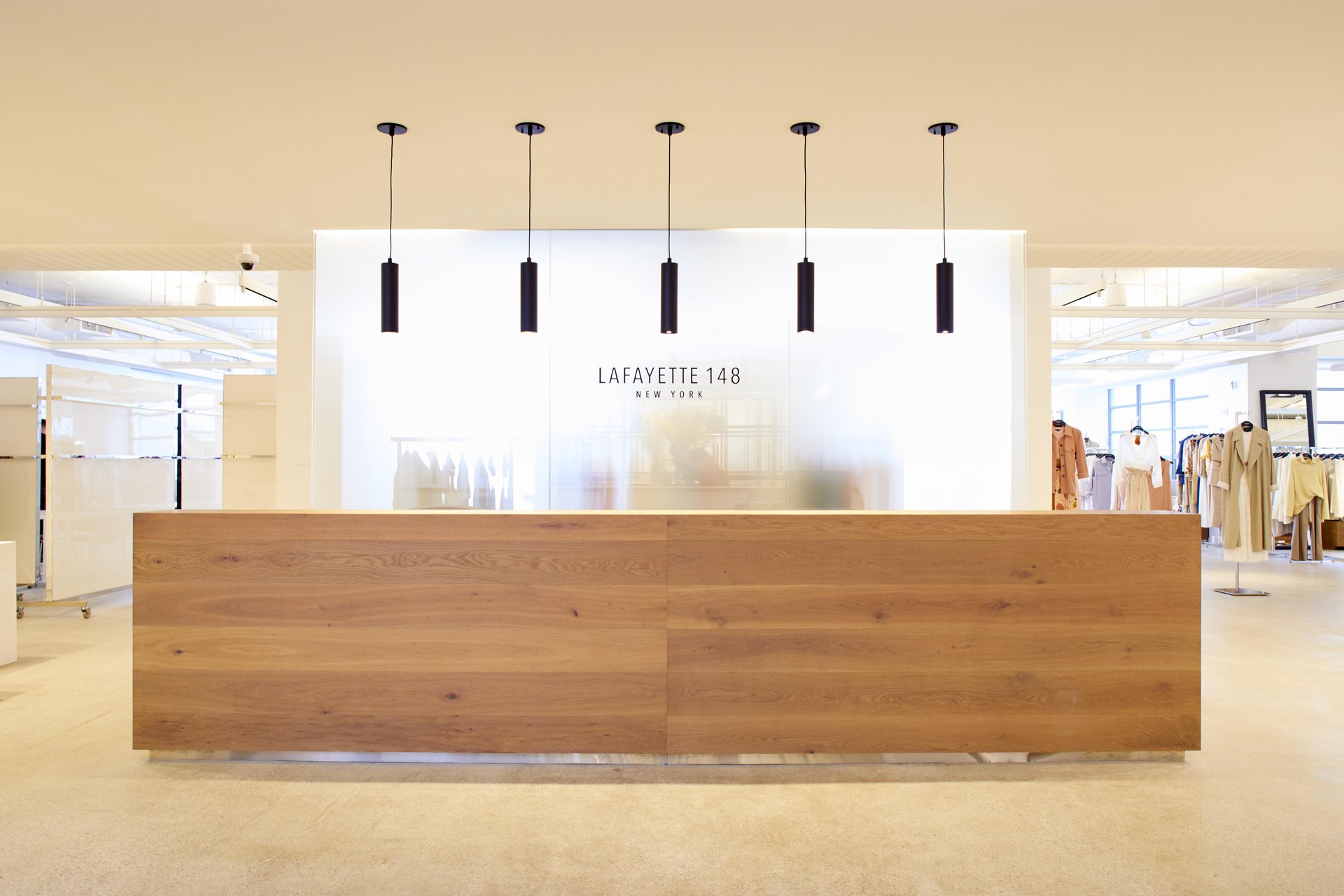
By 2018, the address that had named the business had become an expensive place to keep it. Lafayette 148 moved its headquarters to Building 77 at the Brooklyn Navy Yard. Its SoHo operation had been spread across seven floors; the new office brought the main team onto one large floor. Departments could work closer together, with fewer journeys between levels.
The financial calculation was just as consequential. In 2019, Quinn said the company was saving two-thirds of its former rent. That money helped support new stores. Relocation could feel like a change of identity for a New York fashion business, especially one named for its original home. Quinn treated it as a way to keep investing in the company.
She had told staff that moving to Brooklyn would help her open on Madison Avenue. The move and the retail expansion connected an unglamorous expense to a visible ambition. Rent rarely appears in a fashion caption, although it has a remarkable talent for deciding what can happen next.
The new headquarters offered space for pattern-making, design, samples, and showrooms. Quinn’s work was still connected to the making of clothes, even as the surroundings changed. A company founded in a workshop had found another working home. The view improved; the arithmetic mattered more.
The people who make the decisions
Quinn was comfortable with Shun Yen Siu as the senior figure in the partnership. After his death, responsibility felt different. Decisions she once shared with him ultimately landed with her. She has described learning to lead in his honor and proving to herself that she could take the company forward. The partnership survived in the habits and obligations it had created.
Ida Siu remained a central presence. In 2025, Quinn described her as a continuing source of support and identified creative director Emily Smith as another important partner. Smith had joined Lafayette 148 as an intern in 2003. A founder’s relationship with a creative director has to accommodate both the product and the business around it. Here, that conversation has continued across years of change.
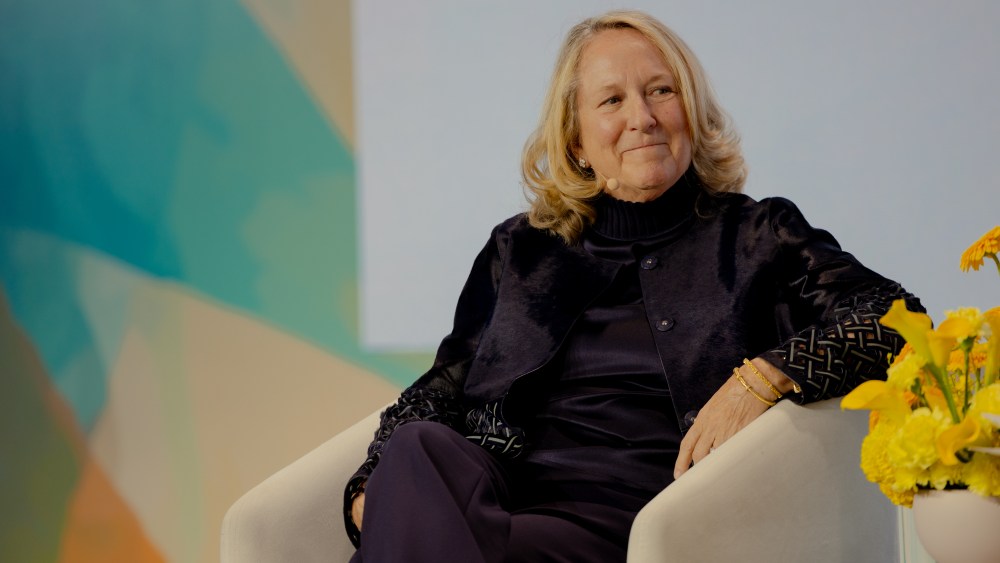
Quinn’s stated values are kindness, intelligence, and integrity. Those words can sound effortless until there are bills to pay and uncomfortable decisions to make. In September 2026, she discussed declining to ship to accounts that failed to pay. She also described sharing profits with employees and being open with them about difficult periods. Her version of transparency includes the numbers.
Her responsibilities extend into education. She serves on the Fashion Institute of Technology’s board of trustees. In 2016, she received EY’s New York Entrepreneur Of The Year award in Retail and Consumer Products. In 2020, she committed to matching her team’s donations to the NAACP. These are distinct activities, connected by her willingness to put time or resources behind institutions and other people.
Thirty years in, the next decision
Lafayette 148 began as a brand for working women and later moved further into luxury. Quinn and Smith made that shift together. In 2025, Quinn described the business as self-funded, without private equity. Independence gives a founder room to choose a direction; it also leaves her responsible for paying for the journey.
At a September 2026 Women in Power event, Quinn said the business was now 85 percent direct-to-consumer. The proportion describes a substantial change in how it reaches its customers. The company that once needed wholesale to establish an audience has built a more direct relationship with the women buying its clothes.
On October 6, 2026, Lafayette 148 opened its first Dallas boutique at NorthPark Center. Quinn described Dallas as an established market for the brand. The opening adds a concrete detail to the thirty-year story: expansion follows customers who already have a reason to come in.
Quinn’s own next step involves giving other people more authority. She wants colleagues to learn how to make decisions and to see a future for the company beyond her. That aspiration brings the story back to the young employee who volunteered when a room went quiet. Someone must recognize a problem, take responsibility, and move.
The future she describes still has clothes at its center. Quality remains a reason to come to work; partners remain a reason to keep going. Thirty years after the desk and the phone, Quinn is asking who else can take the next decision. The factory became a fashion house. Now its founder wants more people inside it to know how the whole thing works.
Continue the conversation
- Lafayette 148: Quinn’s official biography
- Deirdre Quinn on LinkedIn
- Lafayette 148 on Instagram
- Listen: The Kara Goldin Show, episode 454
- Watch: Quinn on business partnerships
- The Korea assignment and early career
- Childhood, work, and family
- The founding years and expansion
- Women, manufacturing, and leadership
- The Brooklyn move
- Five questions, July 2025
- The brand’s move into luxury
- Leadership at Women in Power, September 2026
- Dallas opening, October 2026
- FIT Board of Trustees
- EY’s 2016 New York recognition
- Quinn’s commitment to matching NAACP donations
- The desk-and-phone beginning