In May 2015, Sarah Pierson and Alexa Buckley launched a ballet flat that asked its buyer to do something mildly unusual: measure her feet. Four measurements for each foot, to be precise. The left and right shoes could be different sizes. At launch, the custom version cost the same $195 as the standard one. It was a small rebellion against the idea that a woman’s feet should sort themselves out around whatever happened to be in the box.
The shoe looked familiar. The proposition required a second look. Pierson had entered a crowded category with an argument about the experience of wearing it. A ballet flat ought to do more than look agreeable on a shelf. It should earn its place in the day.
That distinction runs through her story. Pierson is interested in objects that people actually use, in the people who make them, and in the adjustments that let a design survive contact with ordinary life. A millimeter is an unpromising unit for a grand ambition. It is, however, a useful unit for a shoe.
A friendship before a business
Pierson grew up in Winter Park, Florida. At the beginning of freshman year at Harvard, she met Buckley at a cab stand. They became friends, then roommates the following year, and continued living together through college. Their idea for Margaux arrived in senior year, after the friendship had already had time to become an everyday arrangement.
Summer work in consulting and finance had shown them a familiar office routine: women swapping the shoes they travelled in for the shoes they worked in. The pair imagined something that could stay on. The under-the-desk shoe collection was providing a rather eloquent product brief.
By graduation in 2014, both had corporate jobs lined up. Sheryl Sandberg’s commencement speech helped prompt the decision to try their own company instead. In 2016, barely a year after Margaux’s launch, they appeared together on Forbes’ Art & Style 30 Under 30 list. The recognition came early; the partnership had begun much earlier.
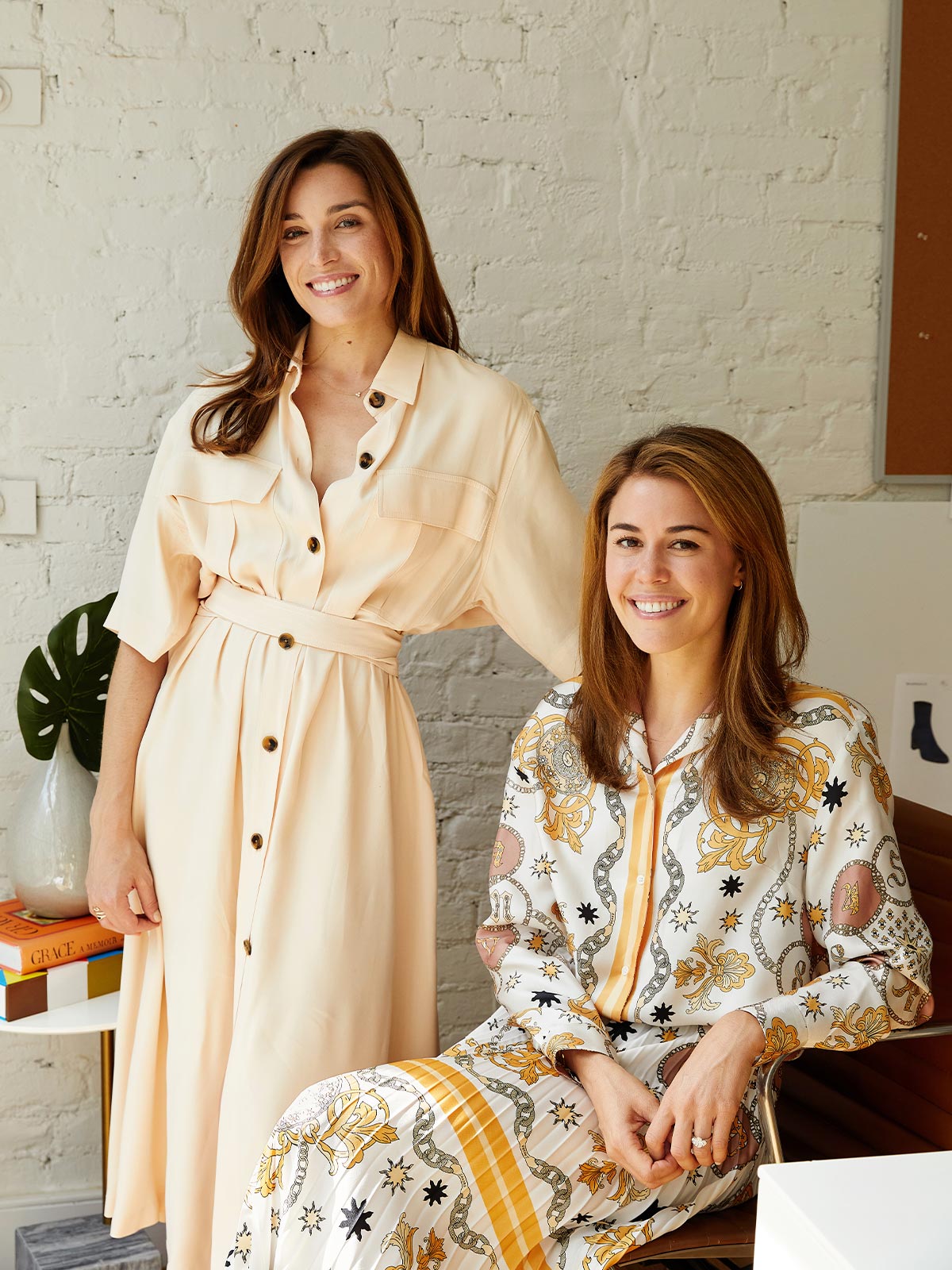
In a later conversation about motivation, Pierson named Buckley as the person who gave her an extra push. She spoke about the value of having someone she wholly trusted beside her. That makes the origin at the cab stand more than an appealing opening scene. The friendship became part of how the work could continue.
The other two-person enterprise
Pierson’s college years contain a second partnership, with a different set of conditions. In 2012, she was named an All-American crew in collegiate sailing. With skipper Brendan Kopp, she helped Harvard finish fifth at the national coed dinghy championship. The pair placed second in the A division, four points behind first place, and won three of their thirteen races.
They also won their division at the New England championship, helping Harvard claim its first title there in eleven years. These were specific results, accumulated across races. Before she had a shoe company, Pierson had experience doing consequential work with another person in a very small space.
A collegiate partnership before the footwear partnership.
Her academic work went in another direction. She studied history, with a secondary in government, graduating magna cum laude with highest departmental honors. Her coursework included twentieth-century American foreign policy, and Niall Ferguson supervised her thesis. She belonged to Phi Beta Kappa and was a John Harvard Scholar.
A history degree and a sailing record do not explain a footwear business by themselves. They do make the route less predictable, which is part of its interest. Pierson’s résumé did not begin as a neatly arranged apprenticeship for the company she would eventually help run. The shoe problem caught her attention anyway.
A factory willing to listen
The early manufacturing search was less picturesque than the founding friendship. The pair assembled a team with retail experience and received about fifty rejections before finding a factory in Spain that would make both standard shoes and customized pairs. Their plan depended on someone being willing to work through a demanding proposition with two young founders.
Three widths - narrow, medium, and wide - were central to that proposition. Offering a range of lengths was only part of the question. The shoe also needed to account for the shape of the foot inside it. This made the business more complicated than selecting a color and attaching a label.
Pierson’s own early explanation started with the woman they wanted to serve. The founders laid out priorities that included classic design, a considered shopping experience, and price. Even the name was chosen for its appearance and character. Margaux was an ideal rather than a person the shoes were named after. The M and X appealed to them. Typography had secured a small seat at the table.
Three width options. Illustrations are schematic, not to scale.
The range has since extended to European sizes 33 through 45, with fit advice offered alongside the shoes. For someone outside the familiar middle of a size chart, that changes the practical question of whether a style is even available to try. A design can be restrained while the number of people it accommodates grows. Pierson’s interest in the balance between form, fit, and function gives that expansion a coherent purpose: the finished shoe has to work for the person who takes it home.
By 2017, a Pacific Heights pop-up in San Francisco gave customers a place to have measurements recorded and try fit samples. Pierson described the aim plainly:
“We want the focus to be on what’s the right fit for you, rather than what we have in the store.”Sarah Pierson, 2017
It is a useful sentence for understanding her product work. Stock on a shelf is visible. A customer’s requirements take listening. The shop was an opportunity to bring those two things into the same room, where the customer could feel the difference rather than imagine it from a photograph.
A camera, a room, a letter M
Pierson’s personal tastes make the business story more legible. She is drawn to art, architecture, and the outdoors. She has named Gil Schafer and Rita Konig among the people whose interiors she admires, and described travel, including factory trips to Spain and Portugal, as an influence on her aesthetic.
She likes classics, unexpected details, and mixing old things with new ones. That leaves room for personality without requiring a wardrobe to submit a fresh thesis every season. Her parents taught her to choose things she loved and use them often. The thought suits someone making a familiar shoe that has to justify being worn again.
Photography is another pleasure. She has called her Fujifilm mirrorless camera her most prized possession, with the memories it holds part of the explanation. She packs a small Fujifilm on trips. A camera gives looking somewhere to go: the shape, the light, the detail that might otherwise disappear on the journey home.
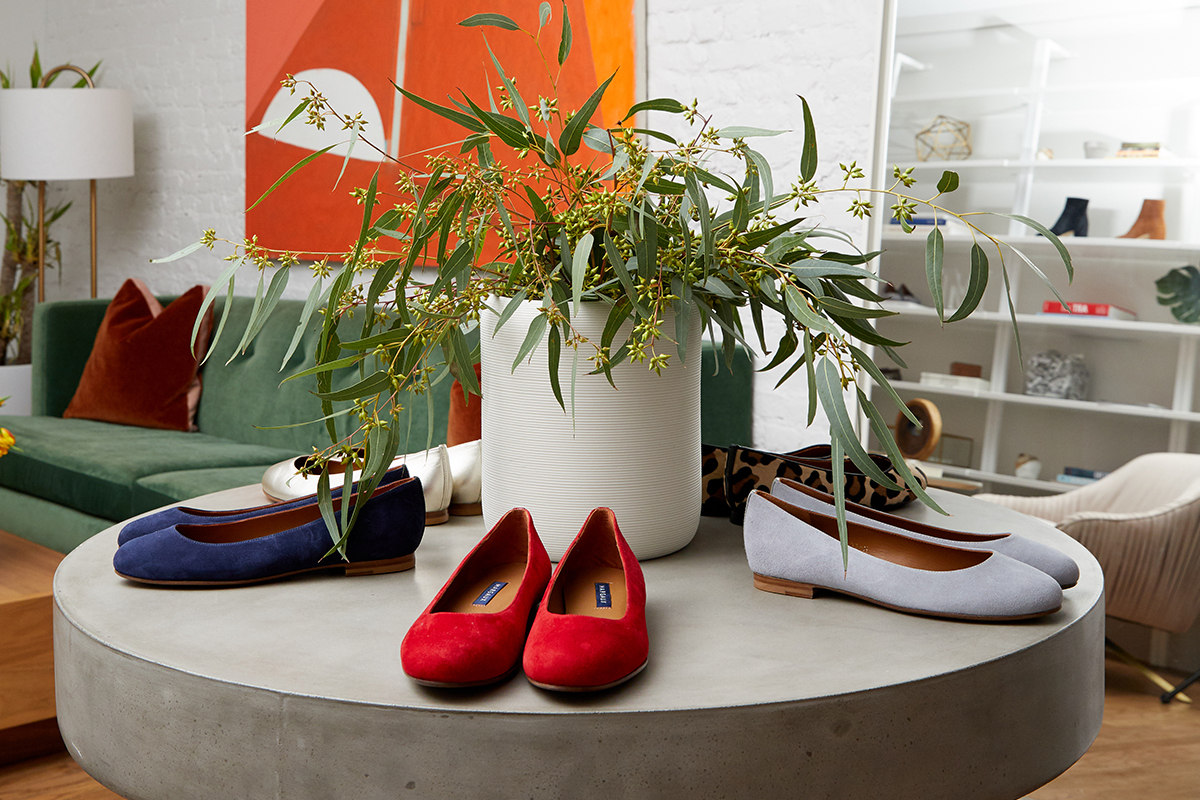
The early office had a less generous view. Working from a small, windowless space in SoHo, the founders bought an acrylic letter M. Pierson described it as a splurge. It travelled with them to later offices, a modest object with a growing employment history. By 2019, she was describing a Chelsea conference room whose tall windows made it her preferred place to concentrate.
There were smaller rituals, too: Chemex coffee with steamed oat milk to begin the office day, Fleetwood Mac on the playlist. Those details put a person into the account. A company can be summarized in a paragraph. The morning that happens inside it takes a few more particulars.
Her Florida upbringing also entered the designs. In 2017, Margaux worked with Mark D. Sikes on espadrilles. Pierson connected the collaboration to a Southern sensibility that she described as colorful, exuberant, thoughtful, and refined. One version used black linen; another used an oxford stripe. Both had interchangeable grosgrain ties. The setting had changed from central Florida to a factory near Alicante, while the taste had found another expression.
Ten years, and another look at the flat
For Margaux’s tenth anniversary in 2025, the founders revisited the shoe that began the business. The Fonteyn kept the adjustable cord bow and five-millimeter foam-padded insole, with a subtly squared toe and a higher rise. Sixteen variations gave the familiar idea another set of possibilities.
The anniversary campaign brought together fifteen women, including the founders, photographed against hand-painted backdrops by Oliphant Studios. It returned to the concept of the original color wheel. The gesture looked backward while the product itself received another pass. A decade is enough time to acquire both memories and opinions about what might be improved.
The company’s collaborations continued to put that thinking into different wardrobes. In 2025, Pierson, Buckley, and Argent founder Sali Christeson hosted a dinner in Lower Manhattan for their footwear collection. The partnership grew from a longstanding friendship. Pierson identified Christeson as someone they turned to for business inspiration. Workwear supplied a new context for the same question of use.
In September 2026, the context was Alison Roman’s fall collection with Margaux. Pierson described a collaborator who arrived with specific ideas about heel height, toe shapes, and how each shoe should feel. Three silhouettes were developed especially for the partnership. Roman’s brief brought the conversation back to the person wearing the finished object.
That is where Pierson’s story keeps landing: a friend beside her, a maker across the table, a woman trying on a shoe. The ambition becomes tangible through those encounters. There is still a shape to consider, a detail to revise, and a reason to make something someone will want to use tomorrow.
Keep following the thread
Visit Margaux · Sarah on LinkedIn · Sarah on Instagram
- The college friendship and the office shoe shuffle ↗
- Margaux’s original 2015 launch ↗
- Pierson’s 2012 sailing results ↗
- The 2016 Forbes recognition ↗
- The early manufacturing search ↗
- Fit at the San Francisco pop-up ↗
- Inside the Margaux office ↗
- Pierson’s architecture and style interests ↗
- The partnership and life beyond the office ↗
- A Fujifilm among her favorite things ↗
- The original design brief and the name Margaux ↗
- The Mark D. Sikes espadrille collaboration ↗
- A decade of Margaux and the Fonteyn ↗
- The Argent collaboration dinner ↗
- Alison Roman’s 2026 collection ↗
- Listen: The Partner Ship Podcast ↗