Betsie Larkin had two songs to sing and a company to build. On tour with Armin van Buuren, there was a gap of roughly two hours between her performances. She spent it backstage, sketching garments, talking to factories and working on the beginnings of Honeylove. An international music tour is an eccentric place to start an underwear business. It does, however, offer repeated opportunities to notice what an outfit gets wrong.
The problem was shapewear that rolled down. Larkin wanted her clothes to feel dependable when she stepped in front of an audience. She tried different brands, kept running into disappointments, and began considering whether she could make something better. A garment intended to make dressing easier had become another thing to manage. The performer had enough cues to remember without adding her waistband to the set list.
Her eventual career change is often compressed into a neat sequence: singer spots problem, singer starts brand. The overlap is more revealing. In 2016, when she formed the company, music still had a claim on her time. A touring invitation arrived. She went, and the sketches went with her. The next occupation was being developed in the intervals of the first.
Before the sewing machine, the guitar
Larkin’s working life had already taken several turns. Her mother taught her guitar. At Boston University she began taking songwriting seriously and sought musicians to play with. She formed a band with Jon D’uva and Zack Stewart, students at Berklee College of Music. Rock was her early setting, with keyboards and experiments in sound gradually entering the picture.
She later made room for a smaller project, singing with guitar and a guest violinist, and worked on solo recordings in New York. That history matters because it gives the familiar phrase “former musician” some texture. Larkin had experienced different sizes of collaboration, different arrangements of responsibility and different ways of getting an idea out of her head. A song could begin privately and require several people to finish.
Her work with Ferry Corsten brought her into electronic dance music. “Made of Love” and “Feel You” appeared on his album Twice in a Blue Moon. In describing those sessions, she recalled writing words and melodies in response to instrumental material he sent. Other collaborations happened over the internet, with tracks travelling one way and recorded vocals returning the other. Sometimes she met a collaborator in person only after they had already made music together.
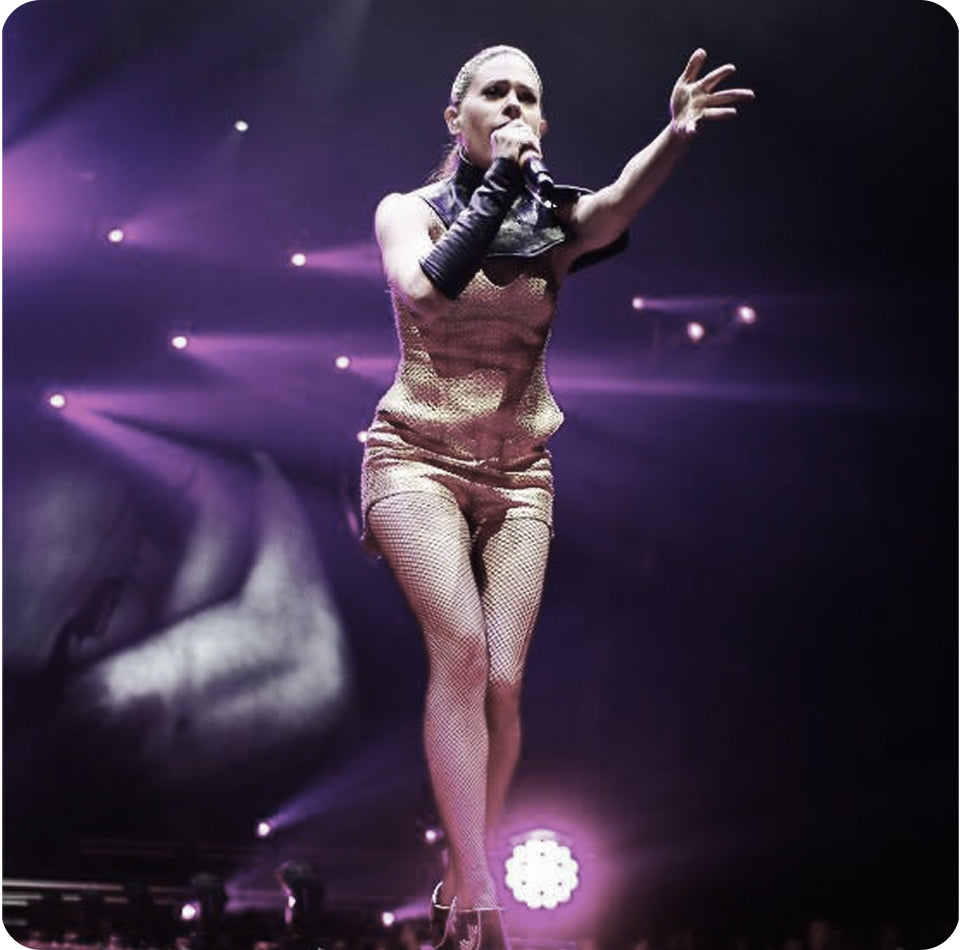
The resulting catalogue includes work with Armin van Buuren, Paul van Dyk, ATB and Gabriel & Dresden. Her musical activities also included DJing and an hour-long mix show, Larke Radio. A voice heard on a record was one part of the job. Choosing music, writing it, performing it and working with producers all supplied other ways to participate.
In 2016 she talked about appreciating her own vocal tracks as music when she played them in a DJ set. She liked seeing people sing along. She also described a growing ability to edit herself, deciding more consciously what a lyric needed. Those are modest, specific descriptions of craft. They leave room for pleasure, judgment and revision, three companions that would be perfectly at home at a garment worktable.
An ugly first draft is still a draft
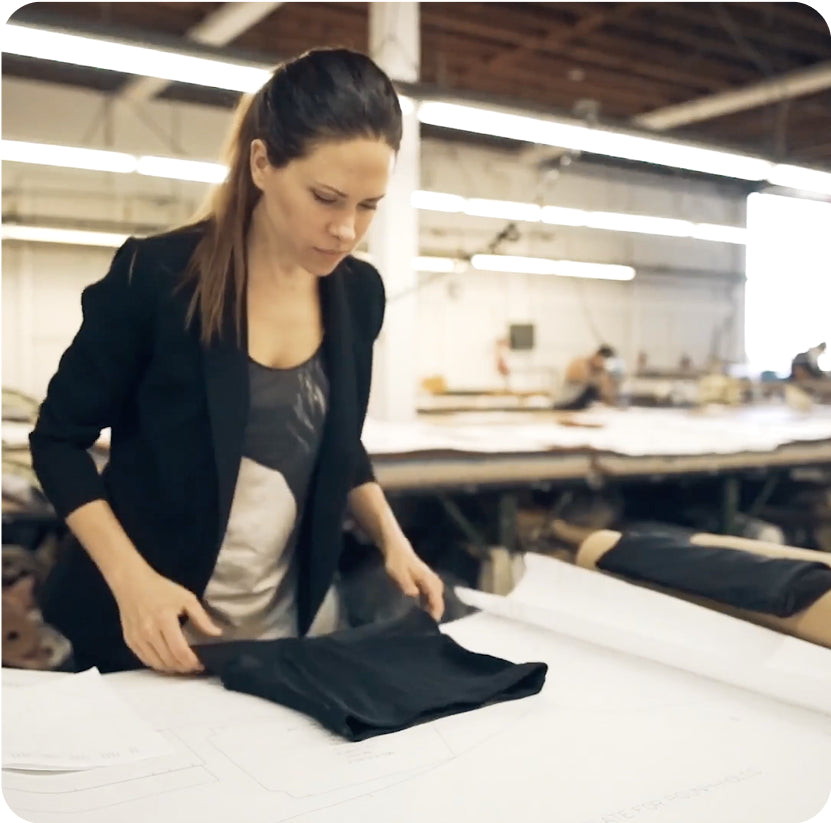
The first homemade version did its job without winning an appearance contest. Larkin had taken sewing classes and owned a sewing machine. She could therefore do something unusually useful with her complaint: turn it into an object. A sample makes a demand more precise. You can show where something sits, how it behaves and what still needs attention. “Make it better” becomes a conversation with material in it.
She then worked with an undergarment designer and a gown maker. The combination is telling. An undergarment has practical duties; clothing also has to look like something a person would choose. Getting one requirement right does not settle the other. The early version gave her a starting point, while collaborators brought experience she could not acquire simply by being dissatisfied with what was already on sale.
“Never work in isolation.”
Betsie Larkin, 2018
Her early advice to entrepreneurs was equally concrete. She had found two advisors who were doing the kind of work she wanted to do. They bought shares in the business. Knowledge and a financial interest travelled together. It was a practical answer to the problem of being new: seek people who have done the work, then give the relationship a reason to continue.
This part of her story has less glamour than the touring schedule, but more instruction. A founder can be the person who understands the frustration most intimately and still need help solving it. Taking a class, making an awkward sample and asking a specialist to improve it are all ways to keep an idea moving. None requires pretending to have arrived fully qualified.
A public name, a private deadline
There was also the question of whether anyone else wanted the thing. Larkin used her statistical background to investigate demand, talking to women and conducting surveys. Her own experience could identify the problem; other people could help establish its reach. The move from “this bothers me” to “will someone buy a solution?” is a small grammatical change with a rather large business attached.
Developing the prototype took about two years. She has described the difficulty of setting a launch date when there was no one demanding the finished product. Every revision offered another reason to wait. A personal project has this peculiar freedom: the maker can keep postponing the moment at which other people get a vote. A business eventually has to surrender some of that freedom.
“Perfectionism is a blessing and a curse.”
Betsie Larkin, 2022
Honeylove’s Kickstarter campaign closed with approximately $314,000. Crowdfunding made the question tangible. Supporters were committing money to a proposed garment, and the business would have to deliver. In 2018 Honeylove launched publicly and joined Y Combinator’s summer batch. The company now had obligations beyond the next sketch.
Her name added another form of accountability. She had already used it in public as an artist. Introducing Honeylove meant inviting people familiar with one kind of work to examine another. Fans might be curious, but curiosity would not manufacture a garment or make it useful. A reputation can arrange an introduction. After that, the product has its own appointment to keep.
The department-store wish
In an early 2018 interview, Larkin was already thinking beyond Kickstarter. She wanted to sell through the company’s own website and perhaps through department stores, naming Macy’s and Nordstrom as possibilities. The specificity is appealing. Founders are often asked to describe an enormous future. Here was an ambition you could picture on a shop floor.
Honeylove later partnered with Nordstrom, with products sold online and in selected stores. That is a useful pairing of early intention and later action. It does not make every preliminary plan prophetic. It shows that one wish survived the much less photogenic work between proposing a retail channel and actually entering it.
Larkin’s own 2022 reflection confirmed that the company launched during Y Combinator in 2018 and raised its Series A with Lightspeed Venture Partners the following year. She also described the move beyond shapewear into a wider assortment. The original stage problem supplied a beginning; the company had to find further reasons for customers to return.
That expansion included tops and bras. Honeylove dates its first bra launch to September 2020. Its stated design process involves competitor research, customer interviews and close attention to comments. Details such as straps, seams and fabric become subjects for discussion. The company’s public history even includes a customer recalling an hour spent discussing bra straps. An hour can disappear quite easily when the object is small and the requirements are numerous.
The business also acquired partners outside product development. Mercedes Bent and Jeremy Liew became part of its investor relationships. In a later description of Larkin’s approach, Bent pointed to both analytical validation and creative attention. A performer’s appetite for getting details right had found another place to operate. The materials had changed; the willingness to revise was still recognizable.
A name with room to grow
The name Honeylove had an unusually domestic origin. Larkin said her mother used it as a nickname for her and her sisters. She wanted a name that could accommodate expansion beyond the first category. It offered both a family connection and some commercial breathing room. The sewing machine was new territory. The word above the door had been around much longer.
By September 2026, Larkin and Igor Lebovic were appearing together on the Operators podcast to discuss the business they had built. Honeylove had meanwhile appeared on the Inc. 5000 in 2024 and 2025. These later chapters put distance between the original backstage project and the company’s wider operation. They also make the early overlap worth remembering: someone was doing the next job before she had finished the current one.
Larkin’s musical tastes supply a pleasant final wrinkle. In that 2016 interview she mentioned watching Michael Pollan’s Cooked and returning to Hayao Miyazaki films. Those interests belong beside the factory conversations and product revisions. A founder’s life can contain a garment sample, a dance track and Spirited Away without requiring a theory to unite them.
What does unite the work is a habit of making things with other people. Her songs travelled between musicians. Her early garments improved with specialist help. Her business gained advisors, customers and investors. The singer who used an interval to sketch had found a new subject to work on, and then enough people to keep working on it after the music stopped.
Listen, visit, keep reading
Watch: Made of Love
Watch: Again, with Armin van Buuren’s Rising Star
Music and mixes on SoundCloud
Betsie’s personal website · Honeylove · LinkedIn · Instagram · X · Facebook
The 2018 founder interview
The 2022 career and funding interview
The 2016 music interview
Listen: Betsie Larkin and Igor Lebovic on Operators