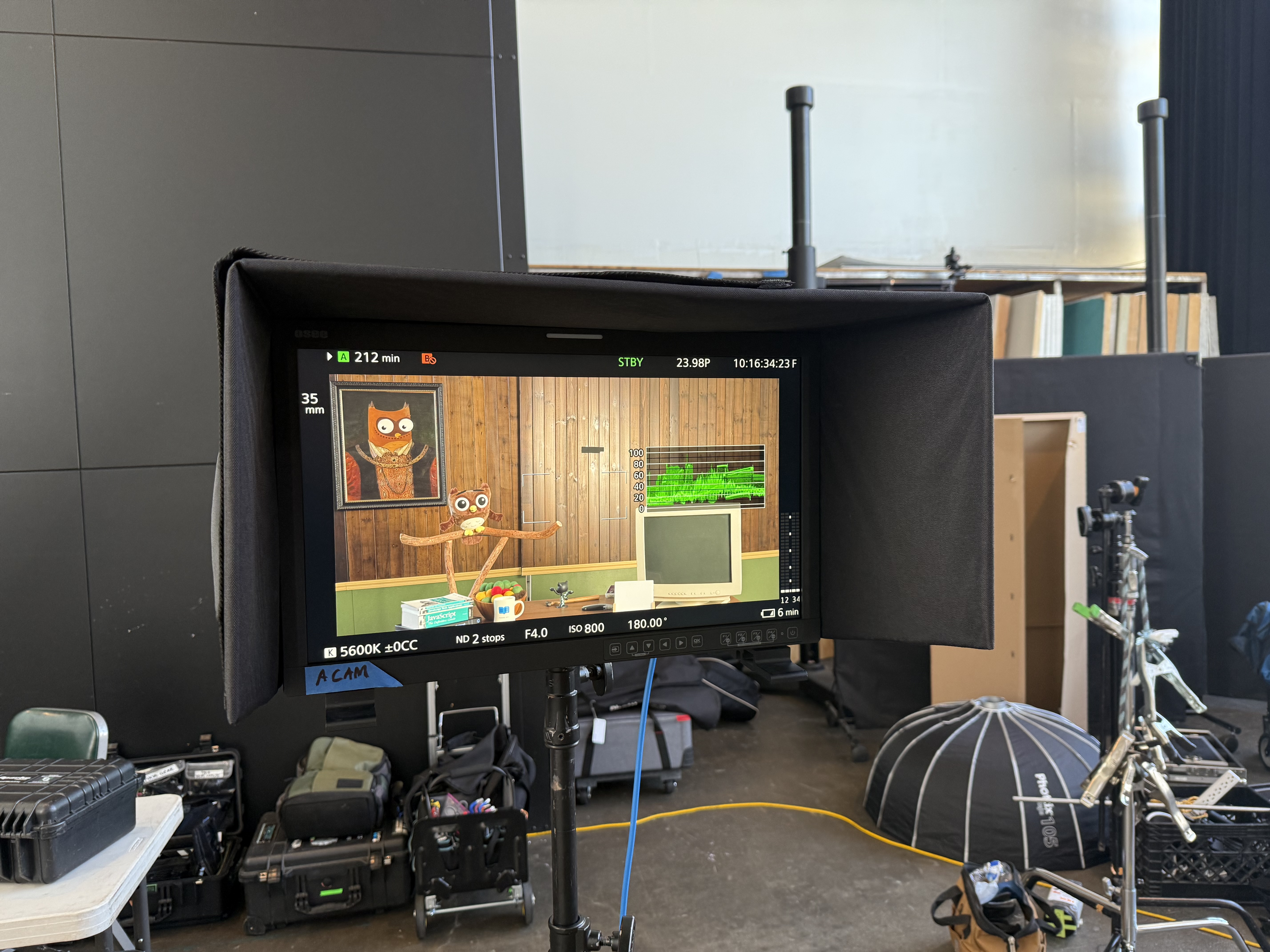
Gregory Koberger gave an owl a small act of discretion. On ReadMe’s login page, the mascot covered its eyes when someone selected the password field. A person could type a secret while a cartoon bird made a point of minding its own business. Software rarely offers such good manners.
Koberger had sketched Owlbert while ReadMe was still in beta in 2014. He liked drawing, admired the personality GitHub had built around its Octocat, and wanted his own company to feel welcoming. Documentation software offered plenty of room for improvement. It also offered plenty of room for an owl.
The animation traveled. Designers shared it, and the design blog Little Big Details picked it up. Koberger later reported that the login page received 77,652 visitors in the following 48 hours. A page usually visited by fewer than a thousand people a day had become something people went out of their way to see.
There is a useful introduction to Koberger in that gesture. He notices a routine interaction, imagines how it could feel, and spends time making the improvement tangible. The result might be a documentation tool. It might be a puzzle room. Sometimes it is simply a bird declining to snoop.
The farm, the browser, the unfinished idea
Before the owl, there was a farm. Koberger grew up in Schaghticoke, in upstate New York, and found programming a way to make something that people elsewhere could see. His description of those early efforts is affectionate and unsparing: “I started programming bad, bad PHP years ago.”
He studied computer science at Rochester Institute of Technology. Programming gradually shared space with design; he enjoyed projects that asked him to do both. The combination mattered. A working system was satisfying, but so was the shape of the experience someone had while using it.
His early career included internships at Offbeat Guides and GigaOM. In August 2010, he joined Mozilla, where he worked on the Firefox Add-Ons site as a web developer and product manager. Later freelance projects included recruiting websites for Greylock and business dashboards for the Golden State Warriors. His portfolio jokes about the latter: the assignment involved dashboards, rather than playing point guard.
The idea for a documentation company took longer to settle into a business. During his Mozilla interview, Koberger was asked where he wanted to be in five years. When he revisited that question in a 2015 essay, he described a period full of detours and learning. He credited people who had helped him get to San Francisco, including Liz Lawley and Eric Willis. He and Willis had discussed the original ReadMe idea.
After Mozilla, freelance work kept putting the same irritation in front of him. Developers needed to explain their software to other developers, and the explanation was often harder to use than it should have been. He had spent enough time inside that problem to want an escape route.
“I founded a company to stop doing what I hated - documentation.”
Gregory Koberger, 2016
The internet arrives at 1:35 a.m.
ReadMe offered companies a ready-made place to explain an API, the interface through which software talks to other software. Its early ingredients included a custom domain, a prepared layout, code snippets, and an explorer that let developers try requests. Stripe and Twilio had helped make the appeal of good API documentation easier to explain. Koberger could point to an experience people already understood.
Getting that experience in front of people was less orderly. At 1:35 a.m. on a Sunday night, a Product Hunt alert told him ReadMe had been posted. He was migrating servers. His colleague Gabe was camping. The main page was unfinished.
Koberger texted Product Hunt founder Ryan Hoover, hoping to have the listing removed. Hoover was asleep. Votes and comments were arriving, and morning was getting closer. Koberger made coffee, emailed the team, and began preparing for the visitors.
There is a familiar comedy in a developer tool launched by an alert its developer did not want to receive. It gave him a deadline with teeth. The list of things that supposedly had to happen before launch became a list of things that could happen before Silicon Valley woke up.
The company’s first Y Combinator application had failed. The next attempt had an actual product and customers behind it. ReadMe entered the Winter 2015 batch. What had been a persistent complaint was now a company with people waiting to use what it made.
Money, with a little patience
ReadMe became profitable early. Koberger initially supported himself with freelance work; after the launch, subscription revenue made it possible to work on the company full-time. That changed the pace at which he could make decisions. A product earning its keep gives its maker something valuable: time to think.
By 2019, ReadMe had spent years growing at a rate the business could afford. Koberger was considering where it should go next. Developer metrics offered a useful extension: understand how people used an API, rather than leave their experience as a collection of unseen successes and failures.
That second product helped make a larger investment meaningful. ReadMe raised a $9 million Series A led by Accel in 2019. At the time, Accel described a company serving more than 3,000 customers and extending its documentation work into community and metrics.
Investor Daniel Levine also remarked on the atmosphere around Koberger and the team. His comparison involved a cupcake, a symbol he associated with a lighthearted workplace that cared about delight. It was an unusually edible assessment of enterprise software. The owl had evidently found sympathetic company.
Please launch before the money runs out
Koberger’s interest in experiences also sent him into buildings where the instructions were deliberately incomplete. His first escape room was in a rainy strip mall in Appleton, Wisconsin. By the end of the weekend, he had tried three. Trips to more rooms in the Bay Area followed.
Eventually he built Startup Escape in San Francisco. Its setting was a startup office, stocked with the familiar scenery of the trade: screens, motivational posters, swag, and a monitor tracking the money left in the bank. The team had an hour to launch before its fictional funds disappeared.
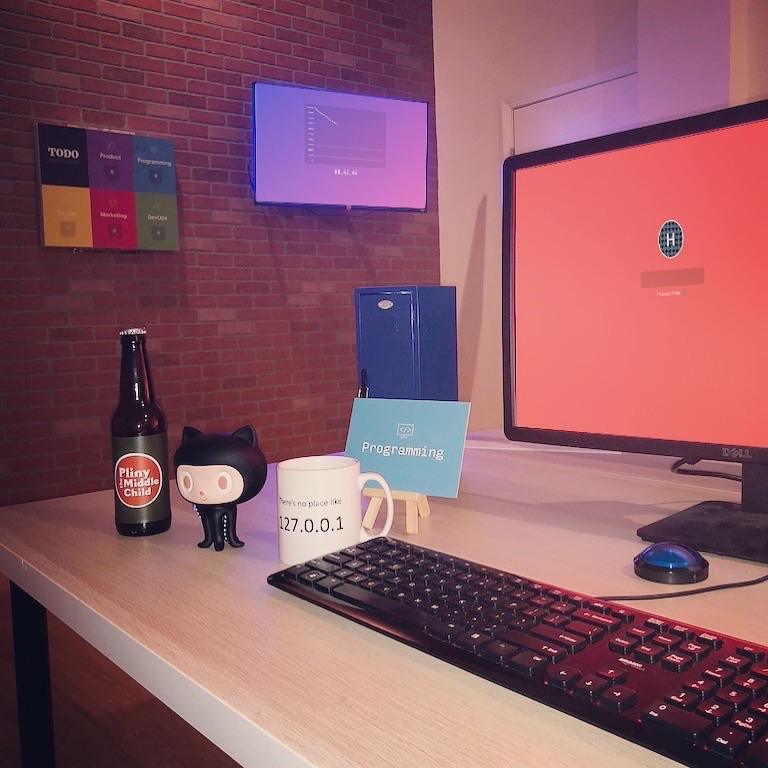
The automated game divided work across product, design, engineering, marketing, and devops. His portfolio records 6,034 players across 852 games over two years, including Steph Curry. Koberger calls it his favorite thing he has made.
The attraction is easy to understand. An escape room lets a designer observe people trying to understand a system together. Confusion belongs in the game, but it needs careful handling. If a clue is difficult because it demands thought, the players can enjoy solving it. If they cannot tell what they are allowed to do, the pleasure can evaporate.
That distinction gives the room a family resemblance to documentation. An API can be powerful and still leave a newcomer feeling stranded. Koberger keeps working on the part that helps people take their next step.
A company with credits
His attention to experience reached the hiring process, too. In 2020, he described a ReadMe approach that invited technical candidates to bring their own projects. Interviewers could watch someone work in familiar territory and ask about the decisions they made.
Candidates had worked on open-source contributions, personal websites, games, and new technologies. One could even use a project assigned by another company’s interview process. A sensible concession to the fact that job hunting already generates quite enough homework.
ReadMe also supplied practical information before an interview and explained the stages ahead. Hiring managers were expected to have done the role themselves for a few months before recruiting someone into it. These choices made the process more legible and gave the company a better opportunity to see how a person actually worked.
Koberger’s way of recognizing help had a similarly concrete form. Inspired by filmmaker Jon Favreau’s use of challenge coins, he had ReadMe coins minted with Owlbert on one side and the company logo and a number on the other.
The recipients extended beyond the payroll. Early customers, contractors, friends, investors, and mentors could receive one. Each came with a personal message explaining the contribution being recognized. A credits page borrowed another idea from film: keep a public record of the people who helped make the thing.
The numbering put contributions into a sequence. The message supplied the meaning. Together, they gave informal help a permanence that a passing thank-you might struggle to carry.
There is a country song in your API
API Mixtape gave Koberger another place to combine technical work with performance. The conference name captured the appeal of assembling separate pieces into something with its own character. He also wanted conversations that included people around APIs who were neither programmers nor computer science graduates.
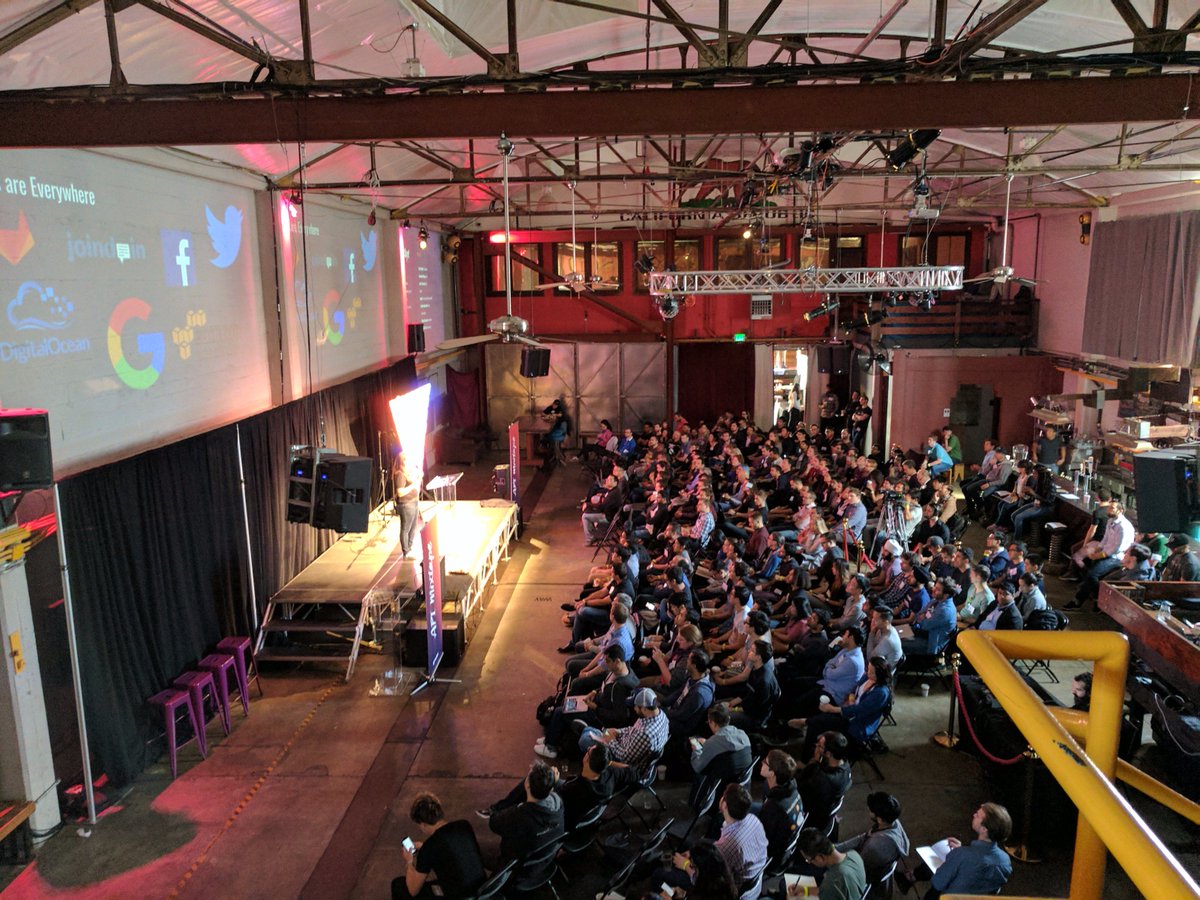
He wrote API-themed songs for the event, including a country love song built around status codes. Later, the team turned a radio-station idea into WAPI, an internet broadcast lasting 24 hours. Discord handled conversations, RadioKing handled broadcasting, and LoopBack helped route the audio. About 1,500 people tuned in.
Such projects require a willingness to risk a slightly odd idea. A temporary radio station is an elaborate way to start a conversation. It also gives the conversation a setting people might remember.
Back to the keyboard
Playfulness does not remove a chief executive’s obligations. In an October 2024 interview, Koberger described a difficult market in which customer churn increased. He ruled out layoffs, canceled his meetings, and returned to writing code. The team launched three additional paid products and brought the business back to positive cash flow.
He described wanting a workplace people enjoyed, rather than making a billion-dollar company the central ambition. The choice still required the business to work. His account gives the employees credit for the outcome, and puts new products at the center of the response.
In November 2024, he announced ReadMe Refactored. Editing moved into developer hubs; MDX added interactive components; GitHub syncing let teams work in either environment. My Developers was intended to help companies understand individual users and where they needed help.
The first visit to an API and the hundredth can involve very different needs. Koberger has been pursuing that idea for years: documentation should help the person using it, in the situation they are actually in.
The joke on the login page survives as a useful clue to his work. Someone is paying attention to an interaction most people would pass over. Someone has considered how it feels. And, when the password appears, someone has remembered to look away.
Follow the experiments
More from Koberger, plus conversations and projects behind this profile.