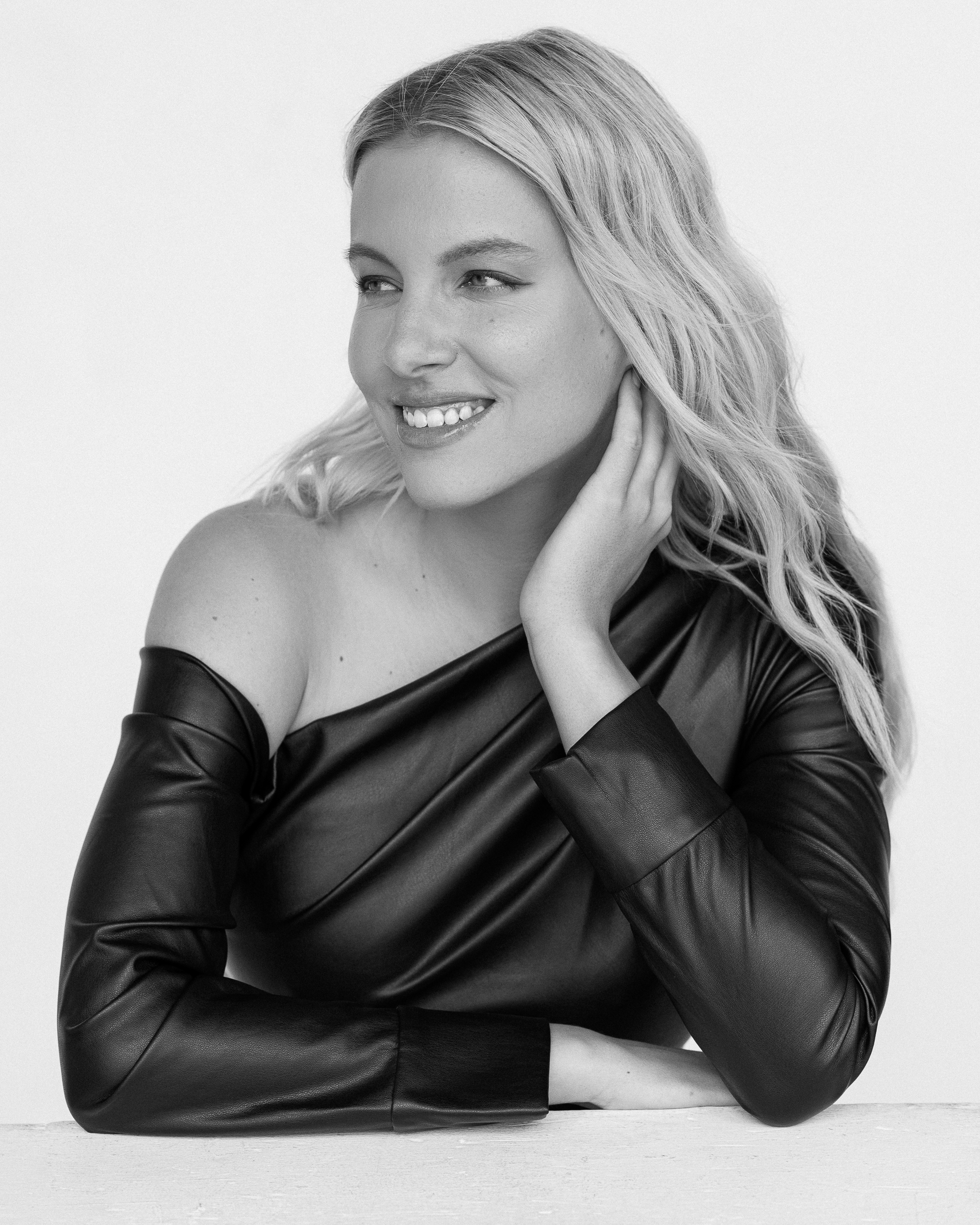
The Group Chat Theory of Money
Katrin Kaurov runs a company built on a small, weird idea: that the most useful financial advice you will ever get is from a stranger your age who is just as terrified of their checking account as you are. Frich, the social finance app she co-founded with Aleksandra Medina in 2021, is the operating system for that theory. Open it and you can peek, anonymously, at how peers your age spend on dating, mental health, rent, and the slow leak of a Saturday night. You can see what they invest in. You can see what they don't.
The premise sounds chaotic. The execution isn't. Frich has crossed 250,000 Gen Z users, raised $2.8 million in a seed round led by Antler with Restive and TruStage, and is signing partnerships with credit unions including MSUFCU that normally take years to court a Gen Z audience. The numbers are not the story. The story is that Kaurov noticed something her industry missed: financial institutions are afraid of young people, and young people are afraid of financial institutions, and somebody has to act like a translator.
A Childhood Spent in Customs Lines
Kaurov was born in Tartu, Estonia. By fourteen she was modeling internationally. By eighteen she had worked in more than twenty countries, often negotiating her own bookings, often paid in a currency she had to convert in her head. She has described this period as a crash course in personal finance, branding, and connections. She means it literally. A teenage girl on a flight to Tokyo with a contract she had to read herself learned the meaning of float before she could explain it.
Most founder origin stories try to make the past look like fate. Kaurov's looks more like a very long apprenticeship for a job nobody had invented yet. The model who reads contracts and tracks her own expenses across borders is, functionally, a tiny CEO. The fact that she grew up to become one is the closest thing in her biography to an obvious move.
The Apartment
The most charming detail in the Frich story is geographical. Kaurov and Medina were students sharing a small New York apartment when the company began. The kitchen table was the office. The two roommates went from splitting rent to splitting a cap table. By 2024 the company had a real address - 92 Canal Street, Lower East Side - and a team of fifteen.
The shorthand version of every great fintech is a frustration. Kaurov's frustration was the gap between what Instagram suggested everyone her age was doing with money and what they were actually doing. The numbers on the feed didn't match the numbers in the group chat. Frich is the group chat, formalized and built to scale, with the embarrassment removed.
Modeling Trained the Founder
Kaurov is direct about the link between the runway and the boardroom. Both depend on brand. Both depend on showing up. Both reward an unreasonable confidence in your own taste. The fashion industry taught her how to read a room, how to be sold to and how to sell, and how to construct an identity that travels.
It also taught her how to be underestimated. In a profile for NYC FinTech Women, Kaurov noted that during early pitches investors would ask, plainly, "Who's going to be the real CEO?" She and Medina did not waste energy on the question. They used it as fuel. Her advice to other women in fintech is short enough to fit on a Frich card: "Being different isn't a weakness, it's your superpower." And the mantra she leans on when fear shows up: "Act like you already are."
What Frich Actually Does
Frich is not a budgeting app. There are enough of those. It is a comparison engine. Users plug in spending and saving habits. The app shows them how their patterns line up against other Gen Z users in similar income brackets, cities, and life stages. You can find out, anonymously, that your friends are spending less on going out than you assumed. You can find out that the financial choices you were ashamed of are not weird. You can find out that they are.
This makes Frich a particularly useful pipeline for financial institutions. Credit unions like MSUFCU partner with Frich to reach younger members through something that already feels native to them, instead of trying to drag them into a banking app from 2009. Kaurov has been clear about the asymmetry: the institutions need the audience more than the audience needs the institutions. Translating between them is the business.
The Harvard Bridge
Between modeling and founding, Kaurov spent 2019 to 2021 in Harvard's Master's program in Entrepreneurship and Innovation. The credential matters less than the timing. She was at Harvard during a stretch when Gen Z's financial anxieties became impossible to ignore. The pandemic compressed everyone's relationship with money into something raw. Frich was conceived inside that compression.
Aspirations, Without the Polish
The line Kaurov keeps returning to is that money conversations should be as casual as a group chat. That is the long bet. Not better budgeting. Not more investing courses. A cultural shift in how a generation talks. If Frich is right, a twenty-three year old in Brooklyn will, in a few years, ask her phone how her peers are handling a tax bill the way she currently asks for restaurant recommendations.
It is a soft goal with a hard execution: an anonymous comparison layer that has to be safe, accurate, and addictive enough to use. The fact that the company has grown to a quarter-million users without an army of growth marketers suggests the underlying need is real. Gen Z, it turns out, is desperate to find out it is not alone.
What She Is Like in the Room
People who have interviewed Kaurov - on the FINIEN podcast, on Hitting the Mark, on Restive's own series with Cameron Peake - describe a founder who answers questions without preamble. She does not hedge. She does not soften the parts that should not be softened. She talks about being asked who the real CEO was without bitterness, which is a tell. She is past it.
The other tell is the company's voice. Frich's brand is loud, profane, friendly, and not even slightly intimidated by the financial services industry it is selling into. That voice does not appear by accident. It comes from a founder who used to be a brand.
What's Next
Frich's seed round closed in May 2024. The next milestone is the obvious one: a bigger round, more partnerships, and the gradual expansion of the comparison engine into adjacent categories. Watch for Frich to push deeper into investing data, into credit cards, into the categories Gen Z is most embarrassed and most curious about at the same time. Watch, too, for Kaurov herself to become a louder public voice on what Gen Z wants from finance. She has the platform now. She has, more importantly, the receipts.