Story / Workforce & HR Tech
Deel Owns The World, TriNet Owns The Backyard
One company hires people in countries where you have no office. The other runs HR for the office you already have. Same industry, almost no overlap - and the choice comes down to where your next hire sits.
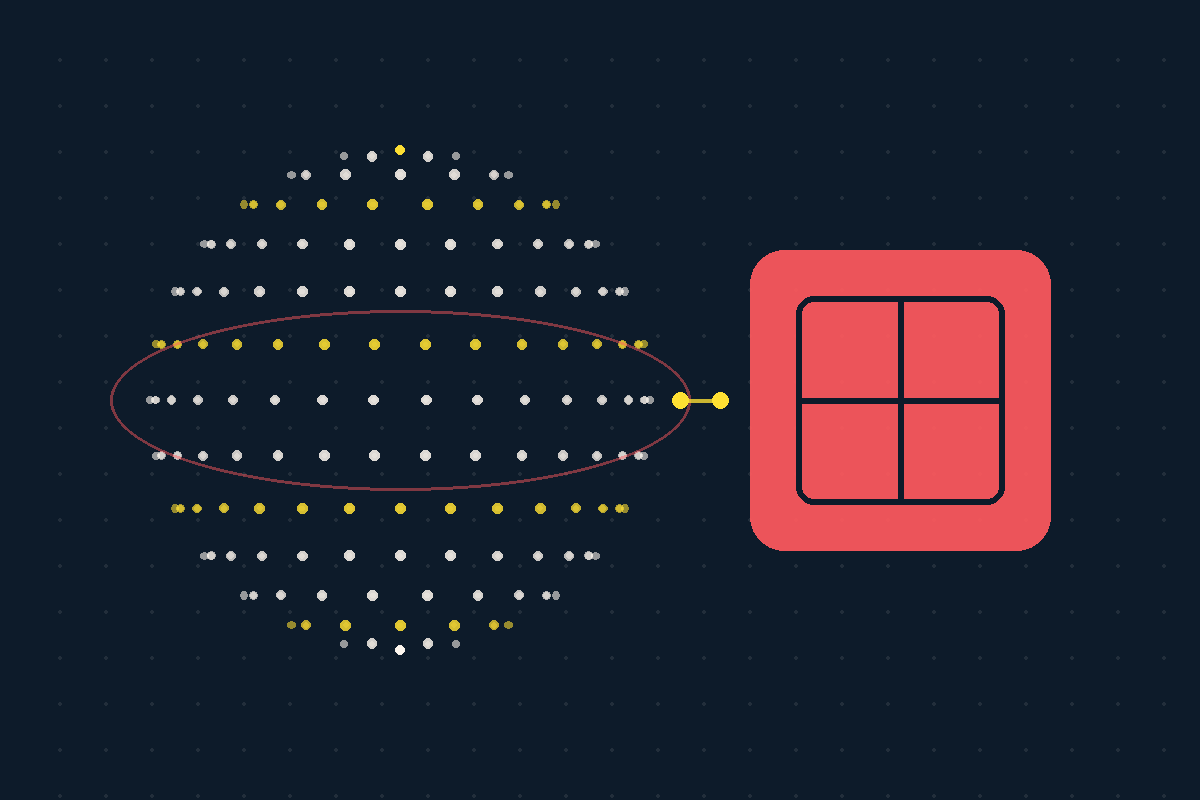
People keep putting Deel and TriNet in the same sentence, as if picking between them is a feature fight. It isn't. They sell to the same buyer - a founder or an HR lead who needs to pay people and stay legal - but they answer two different questions. Deel answers, "How do I hire someone in a country where my company doesn't exist?" TriNet answers, "I already have a US company and payroll is eating my week - can someone else run it?" Once you see that split, half the comparison spreadsheets on the internet stop making sense.
The vocabulary is where most people get lost, so here it is in plain terms. TriNet is a PEO - a professional employer organization. It signs a co-employment deal with your business: you keep running the team day to day, and TriNet takes on payroll, benefits, workers' comp, and a stack of compliance work under a shared tax ID. Deel's core product is an EOR - an employer of record. In the country where you're hiring, Deel's own local entity becomes the legal employer. You direct the work; Deel is the name on the employment contract, the tax filing, the statutory benefits.
PEOs are typically domestic. EORs are used for global hiring. The one line that settles most Deel vs TriNet debates
The reason the models don't overlap
A PEO needs you to already be an employer. TriNet co-employs the people you've hired - which means you need a US entity for it to co-employ into, and its benefits and protections stop at the US border. An EOR exists precisely so you don't need that entity. Deel spun up wholly owned companies in country after country so that when you want a designer in Portugal or an engineer in Brazil, there's already a legal employer standing there. That's the whole trick, and it's expensive to build, which is why Deel owning its entities in 130+ countries is the moat rather than a footnote.

Two very different scoreboards
Look at the numbers and you can see each company's shape. Deel is the fast-growth software story: founded in 2019 by Alex Bouaziz and Shuo Wang, roughly $1.4B in annualized revenue by early 2026, up about 63% year over year, at a $17.3B valuation, with the kind of 85% gross margins that put it near the top of public SaaS. It's been EBITDA positive since September 2022. TriNet is the older, steadier public company - on the NYSE as TNET - measured not in ARR but in payroll volume and headcount: about 334,000 average worksite employees in 2025, down 5% on the year, $70B in payroll run, and 2026 revenue guided to $4.75-4.9B. One is chasing reach. The other is defending scale.
Reach vs Scale - two different bets
Illustrative comparison. Deel = global spread; TriNet = domestic depth.
How they actually differ, line by line
The pricing row is worth pausing on, because it tells you who each company grew up serving. Deel puts its numbers on the website: global payroll from about $29 per employee a month, EOR from about $599, premium tiers above that. TriNet keeps pricing private enough that a signed NDA is typically part of getting a quote, on top of implementation costs and monthly minimums that shift by industry and size. Neither approach is wrong. One is built for a founder self-serving a hire at midnight; the other is built for a longer enterprise sales motion where a benefits package and a risk profile get negotiated.
The most expensive HR mistake is buying a domestic PEO for a global team, or a global EOR for a team that lives on one floor. The practical stakes of getting this choice wrong
The tell: everyone is drifting toward global
Here's the quiet part. In mid-2026 TriNet started offering an embedded EOR service through a partnership with Multiplier - a signal that the demand curve keeps bending toward the exact problem Deel was built on. It remains quote-based with a limited real-world track record next to Deel's in-house coverage, but the direction is the point. Meanwhile Deel keeps expanding into the domestic HR surface - payroll, an HRIS, contractor management, immigration, equity - that used to be pure PEO turf. The two motions are creeping toward each other from opposite ends. For now, though, the honest advice is still boringly simple.
Draw a map of where your team physically sits. If the pins are scattered across several countries, or you expect them to be soon, an EOR like Deel is doing work a domestic PEO simply can't. If every pin is inside the United States and what you want is Fortune-500-grade benefits, real compliance cover, and someone accredited to take payroll off your desk, TriNet has been doing exactly that since before most of its competitors existed - it's held ESAC accreditation since 1995 and carries IRS Certified PEO status. The map picks the vendor. Price and features are the argument you have after that, not before.
What you can actually do with each
With Deel you can hire a full-time employee in a country you've never registered in and have them onboarded, paid in local currency, and compliant without opening a subsidiary - plus manage contractors, run global payroll, and handle immigration from one dashboard. With TriNet you can hand a US small or midsize business the HR back office of a much larger company: multi-state payroll and tax administration, group health and retirement plans, workers' comp, and hands-on HR advice, so a 40-person firm gets benefits and protection usually reserved for a 4,000-person one. Different jobs, both real.
Go deeper
Deel — website Deel vs TriNet breakdown Deel — LinkedIn TriNet — website TriNet PEO overview TriNet — investor relations Deel — revenue & valuation (Sacra)Frequently asked
What is the actual difference between Deel and TriNet?
Deel is primarily an Employer of Record (EOR): it legally employs workers on your behalf in 150+ countries so you can hire abroad without setting up a local entity. TriNet is a Professional Employer Organization (PEO): it co-employs your US-based staff under a shared tax ID to run payroll, benefits, and compliance. EOR is for global hiring; PEO is for domestic HR outsourcing.
Do I need a legal entity to use each one?
With TriNet you generally need to already have a US legal entity - it co-employs your existing workforce. With Deel's EOR you do not need a local entity in the country where you're hiring, because Deel's own entity becomes the legal employer there.
Can TriNet hire employees for me in other countries?
Historically no - TriNet's PEO is US-focused and its benefits don't extend internationally. In mid-2026 it began offering an embedded EOR service through a Multiplier partnership, but it remains quote-based with a limited track record compared with Deel's in-house global coverage.
How does pricing compare?
Deel publishes pricing: global payroll from about $29 per employee per month, EOR from about $599 per employee per month. TriNet does not publish pricing and typically requires a signed NDA before providing a quote, plus implementation costs and monthly minimums that vary by industry and size.
Which should I choose?
Choose Deel if you're hiring internationally or expect to expand across borders. Choose TriNet if you're a US-based company that wants comprehensive domestic HR, access to large-group benefits, and an established, accredited provider. The deciding factor is usually simple: where does your next hire physically sit?