An extra shift is a small event in a large business. Someone agrees to cover it. A manager stops worrying about the rota. The work gets done. Dean Zimberg has built a company around a question tucked inside that ordinary transaction: when an employee makes the business work better, how quickly can some of the value come back to them?
His answer is Jolly, the New York company he founded in 2022. Employees earn points for specified actions at work, then redeem them for rewards. The comparison is deliberately familiar: airline miles and credit-card cashback, brought into the working day. A rewards balance has a useful advantage over a congratulatory speech. You can buy something with it.
There is a tidy financial idea here, and a more personal one. Zimberg has moved through financial engineering, computer science, investing and company building. Along the way, he has repeatedly brought people from different professional worlds into the same project. A student club, an academic presentation and a startup board are very different rooms. His career offers a way to follow the conversations between them.
The room before the boardroom
At Lehigh University, Zimberg founded the Lehigh FinTech Group, which began in 2017. He wanted business students and engineers working together on practical problems. Its 2019 hackathon, sponsored by Citi Ventures, gave that ambition a deadline: 36 hours, teams with ideas to defend, and more than $12,000 in prizes.
He described fintech as Wall Street and Silicon Valley coming together. That combination also describes the kind of education he was pursuing. A technical solution needed a reason to exist in the business world; a business proposal needed enough technical understanding to survive contact with the people expected to build it. Each side had homework.

For Zimberg, the group extended into teaching itself. He described a curriculum shaped by students and work with outside organizations. The useful thread is participation: getting students into the conversation with the people who had actual problems to solve. A club could become an entry point into an industry, rather than simply another appointment in the campus calendar.
Other campus roles added different kinds of responsibility. He was vice president of Lehigh Consulting Group in 2018 and also served as a board trustee at Def Hacks, a nonprofit that organizes computer-science learning events. These are separate organizations, but they place him around the same practical task: arranging opportunities for other people to do something together. Before he was recruiting employees, he was helping assemble communities of students.
A student with a second project
In 2018, Zimberg took part in Lehigh's Startup Academy, a collaboration with the Nasdaq Entrepreneurial Center. The program placed students in San Francisco and matched them with startups. He also started a company of his own that let people create websites and portfolios. Even while learning how a startup worked, he had another one in progress.
A portfolio builder is an interesting early assignment for someone who would later sell software to employers. It asks a small, concrete question: what does a person need to show, and how can software help them show it? There is no need to pretend that every student project predicts a later business. This one does establish that making products was already part of his education.
His academic work also explored the machinery beneath financial transactions. In May 2019, he was among nine named contributors to a presentation for Citi Ventures on reducing friction in municipal bond markets through blockchain technology. The project considered smaller bond units and a different way to issue and trade them. It was a proposal about access and transaction costs, with the plumbing receiving as much attention as the promise.

His undergraduate path ended with Lehigh's class of 2020. He studied financial engineering, then earned a master's in computer science at Cornell in 2021. Those subjects provide two distinct tools: one for examining the economic structure of a problem, the other for building a system that might change it.
Learning what an employer counts
Zimberg's early work took him into established financial and operating organizations. He interned in financial planning and analysis and business operations at Tesla in 2019, followed by a summer analyst role at Stifel. He later worked at Two Sigma before founding Jolly. It is a career with spreadsheets close at hand, even when the subject becomes employee motivation.
The Tesla connection would become consequential. In March 2025, former Tesla chief financial officer Zach Kirkhorn led Jolly's $16.5 million Series A and joined its board. For Zimberg, that brought the experience of a large employer into a company selling tools to employers. A finance leader's seat at the table has particular relevance when the proposed purchase must justify its cost.
Jolly's investors included people with experience across payments and software, among them David Marcus and Gokul Rajaram, as well as venture firms. Acadian Ventures partner Jason Corsello credited Julien Codorniou with the introduction to the company. The network around Zimberg had widened from students and sponsors to people evaluating whether workforce incentives could become a lasting business.
There was earlier backing, too. Dorm Room Fund's Molly Fowler recalled meeting Zimberg fresh from Cornell Tech, initially working on a consumer-facing technology idea. Her account describes a concept refined over time, rather than a finished business arriving fully dressed for its funding announcement. That matters in a founder's biography. The polished explanation comes later; the work includes finding an explanation worth polishing.
Hiring the person who used to hire you
One of Zimberg's more revealing decisions concerned a former boss. As a college senior, he worked on Sam Shiah's partnerships team. Shiah was a mentor before Zimberg became a founder. Later, Zimberg hired him to lead partnerships at Jolly, and described the appointment as a significant personal milestone.
There is a little social awkwardness available in that arrangement, should either party care to claim it. The former junior employee now runs the company. The former boss brings experience the founder wants inside it. Zimberg's explanation was direct: a founder should build a team whose members are better than the founder in their respective work. The organizational chart can accommodate a change of direction.
“It's to build a team where everyone is better than you.”
Dean Zimberg, on a founder's job
The anecdote makes his interest in alignment less abstract. People arrive at a company with histories, expertise and relationships that predate their job titles. Hiring Shiah acknowledged that history and gave it a new purpose. It also supplies a useful counterweight to the solitary-founder portrait: some of the work of building a company is knowing whom to bring back into the room.
The short distance between work and reward
Jolly's product puts a similar emphasis on making a relationship explicit. Employers specify actions they want to encourage, such as covering shifts or arriving on time. Work data triggers points. The employee can redeem the balance. The company's proposition is that a useful action and a tangible reward should be connected closely enough for both sides to understand the exchange.
That proposition also appears in the subjects Zimberg chooses to discuss outside Jolly's product announcements. He has written about Marriott's customer rewards, mentioning his own appreciation of status, upgrades and points while traveling for work. The question he raises turns the loyalty program around: a hotel company rewards guests for coming back; what encourages the employees who make the visit work?
He has also examined Wawa's employee ownership model. The relevant biographical detail is his choice of example. He is looking at how a business gives employees a financial connection to its results, extending his interest beyond the particular points system he sells. An ownership plan and a reward balance operate differently. Both invite a discussion of who participates when the business succeeds.
What happens after the points arrive?
By September 2026, Zimberg was addressing the other end of the transaction. Jolly announced plans to acquire Rye, the commerce company whose founding team includes Arjun Bhargava and Twitch co-founder Justin Kan. Rye builds infrastructure that allows AI agents to make online purchases. The proposed combination joins the issuing of workplace incentives to the process of spending them.
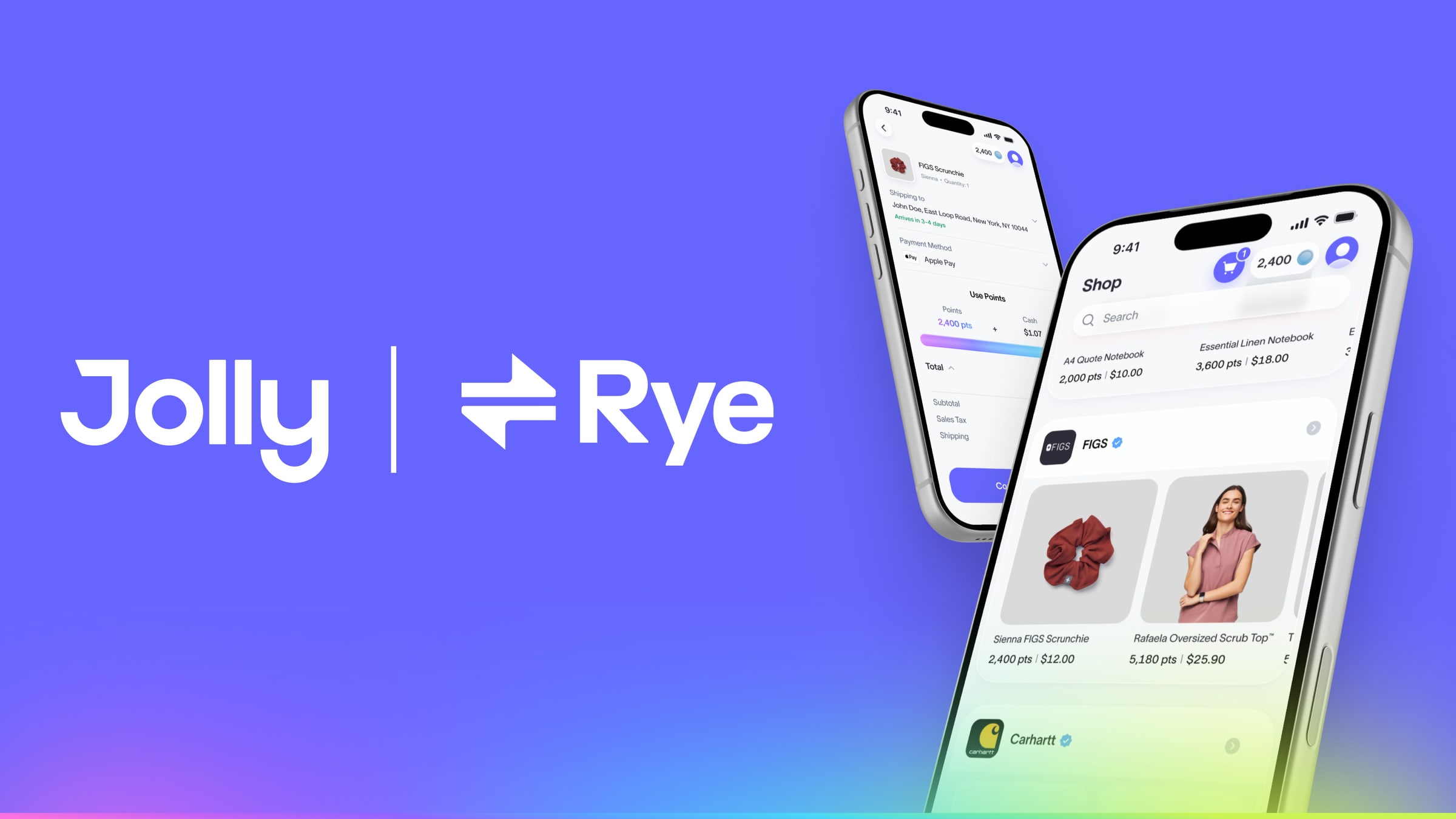
Jolly said at the announcement that it had served nearly 200,000 frontline workers across more than 100 employers. Those are company-reported measures of reach, rather than a verdict on every employee's experience. The strategic direction is clear enough: Zimberg wants a reward earned in an employer's system to become something a worker can obtain through a broader shopping infrastructure.
That brings his story back to the extra shift. The employer records an action; the worker wants something useful from it. Between the two sit data, financial decisions, software and the people who operate all three. Zimberg has spent years moving between those subjects. His current undertaking gives them an ordinary test: after someone helps the work get done, what do they have to show for it?