Davidson Pattiz had already spent nineteen years at Zenith when the chief executive’s job became his. The announcement arrived in July 2024; the appointment took effect on January 1, 2025. Six months between the news and the new title, almost two decades between joining the company and running it. For anyone accustomed to careers narrated as a succession of daring leaps, this one offers a different pleasure: watching the distance accumulate.
There was a lawyer before there was an insurance executive. There was a claims operations job before the presidency. And, alongside the corporate appointments, there were students to mentor, teaching assistants to support and agricultural leaders to help develop. The recurring subject in Pattiz’s working life is the time it takes people to become useful to one another.
Insurance supplies a fitting setting for that story. Its daily vocabulary can sound like the index of a particularly formidable filing cabinet. Underwriting. Claims. Actuarial work. Yet the business depends on judgments made by people, often about commitments that outlast the conversation in which they were first agreed. Pattiz’s route to the top gives that patient work a human chronology.
A lawyer changes the subject
At Brown University, Pattiz studied economics and psychology. He graduated with the class of 1989, then earned his law degree at Georgetown. The pairing is an appealing prelude to a career involving both institutions and the people inside them: economics asks how decisions work in aggregate; psychology asks why an individual might make a particular one. His subsequent legal training added another way of examining the consequences.
Before Zenith, Pattiz spent about ten years at Skadden, Arps, Slate, Meagher & Flom. A long law firm name is an occupational hazard in a legal biography, but the length of this stay matters more. By the time he entered insurance management in 2005, he had already spent a substantial part of his career practicing law.
His early Zenith responsibilities included serving as executive vice president for claims operations. That placed him inside an operating function of the insurer. In February 2006, the parent company elected him an executive vice president and designated him an executive officer. The move into the business had quickly become a place in its senior management.
There is a useful distinction between arriving at a company with professional expertise and learning how to operate the company itself. Pattiz’s next nineteen years make room for both. His legal background preceded the work; the expanding management responsibilities came through years inside Zenith. The sequence gives his eventual appointment a depth that a single line on a business card cannot convey.
Nineteen years before January
By the beginning of 2015, Pattiz’s promotion to chief operating officer was being celebrated in Brown’s alumni notes. Those short dispatches are a charmingly compact form of biography. A career milestone appears amid the ordinary news of people carrying on with their lives. Here was a promotion after nine years at the same insurer, a midpoint that would eventually prove to be roughly halfway to the CEO appointment.
He later became president and chief operating officer. The 2024 succession announcement described increasingly broad leadership responsibilities over the preceding twenty years. The dates have a pleasingly unglamorous consistency: join, take responsibility, take more responsibility, keep working. A résumé can make this look effortless simply by deleting the Tuesdays.
The insurer he would lead works nationally in workers’ compensation, alongside a property and casualty operation focused on California agriculture and a claims servicing business. UCLA’s biography of Pattiz describes an organization of more than 1,400 professionals. Those are company responsibilities, rather than a personal scorecard, but they establish the scale of the job he accepted.
Kari Van Gundy, the outgoing CEO, described him as “a strong and impactful partner over my tenure as CEO.” Her planned move to executive chairman accompanied his appointment. The arrangement gave the change in authority a period of overlap, with an established colleague remaining involved as Pattiz took the chief executive role.
The language of partnership is particularly apt here. Pattiz’s promotion followed years in which he and Van Gundy had worked in the same senior team. His appointment drew on experience already accumulated within the business. For the people reporting to that team, the new chief executive was someone whose work had long been part of their own working environment.
“A strong and impactful partner over my tenure as CEO.”Kari Van Gundy, announcing the succession in July 2024
There were also occasions to explain the business to its customers. At the CalMutuals JPRIMA annual meeting in March 2018, Pattiz spoke about the forces influencing workers’ compensation insurance and offered advice on purchasing insurance claims services. His title then was chief operating officer and executive vice president. The setting brings an otherwise abstract responsibility into focus: an executive helping a room of customers understand the service they buy. It also places him alongside Van Gundy, who addressed the same gathering. Years before the succession announcement, their work included representing the insurer to the people relying on it.
A boardroom with roots in the soil
In March 2025, shortly after becoming CEO, Pattiz joined the California Agricultural Leadership Foundation’s board. Zenith’s agricultural insurance business supplies a direct connection to the industry. His interest in the foundation, however, already extended back years: its chair, Mike Young, welcomed him as a longtime supporter of its leadership work.
The board placed him alongside people connected to farming, agricultural services, processing and university education. An insurance executive joined a conversation that reaches well beyond insurance. That matters in a sector where the future of an enterprise may involve several generations of one family as well as the changing demands of the wider industry.
Pattiz put his ambition for the work plainly: “Building new leaders and sustaining California’s vital, multigenerational agriculture industry are worthy efforts”. The two parts of that thought belong together. An industry can preserve its accumulated knowledge while preparing other people to take responsibility for it. Continuity needs someone available to continue.
His agricultural connections also include Hans Kabat, who delivered a leadership address at the 2025 World Ag Expo. Pattiz publicly thanked Kabat for sharing his experience with the community. Kabat, in turn, thanked Pattiz and other organizers for the opportunity to speak. It is a small example of the practical work surrounding leadership development: making the introduction, arranging the occasion, bringing people into the conversation.
The next person gets a chance
A parallel line runs through Pattiz’s involvement with Thrive Scholars. His public professional profile lists service on its Los Angeles board and mentorship committee beginning in March 2014. The organization works with students on the journey through college and into careers. Here, developing people involves opening doors at an earlier stage than a corporate succession committee usually considers.
Zenith’s connection to Thrive has included sponsorship, mentoring and internships. Pattiz has described a decade of support for dozens of scholars, with some eventually joining the company as full-time employees. It is an unusually concrete account of a partnership: students move from an introduction to work experience, and some move from work experience to a job.
He and Debby Pattiz also hosted an online information session for Congregation Or Ami members interested in becoming mentors. That episode shifts the view from an executive endorsing an institution to a couple helping other people become involved. A mentorship program needs willing mentors as well as willing students. Someone has to invite the former into the room.
At Brown, Davidson and Debby are also named supporters of the Pattiz Family Computer Science UTAship, part of the university’s undergraduate teaching assistant endowment. His own undergraduate subjects were economics and psychology. The family’s support reaches into a different department, helping sustain the teaching work through which students assist other students. It is another instance of backing the people who help someone else get started.
THREE PLACES TO DEVELOP PEOPLE
Making a case for the less crowded room
When Pattiz appeared in UCLA Anderson Forecast’s Forecast in FIVE, the conversation brought the insurance career back before a student audience. Host Seth Katz highlighted his case for considering insurance alongside banking and consulting: the industry offers strategic challenges and opportunities to develop leadership experience. A field easily overlooked in the first round of career planning receives a hearing from someone who has spent twenty years inside it.
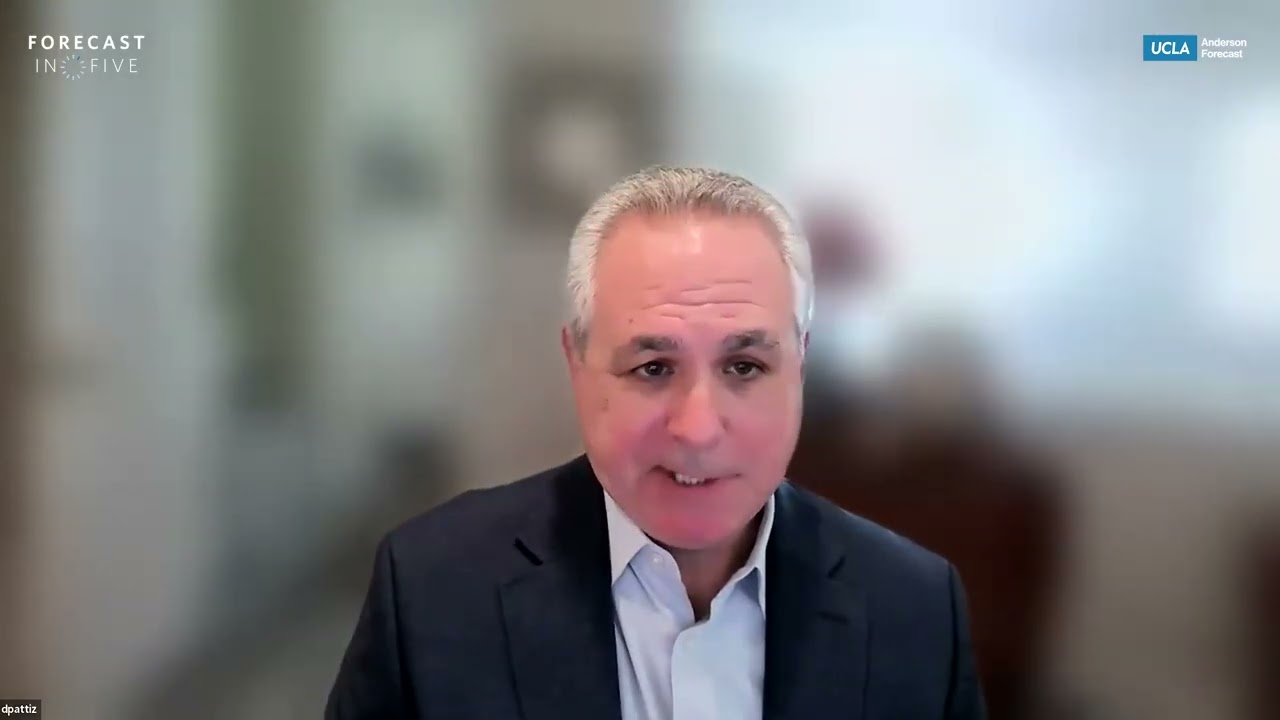
There is a quiet wit in an insurance CEO pointing students toward an opportunity they may have walked past. Career prestige can produce a remarkably orderly queue. Pattiz’s example invites a longer look at another door. His own entry followed legal practice; his progress then came through operations and increasing responsibility within one organization.
That history makes his involvement in mentoring more interesting than a detached recommendation to work hard. He has occupied several stages of professional development himself: student, lawyer, operating executive, company president, chief executive. He now works with institutions that help others cross their own thresholds, whether into college, an internship or agricultural leadership.
The story returns to January 2025, but the appointment looks different after those other commitments come into view. A longtime executive took responsibility for an established insurer. Around that event sits a broader habit of supporting the development of people who will eventually take responsibility themselves. The title changed on a particular morning. The preparation occupied years.