A tenth is an unusually precise amount of goodwill. It can be calculated, budgeted, checked. When David West helped start Civicom in 2000, the founders committed 10% of profits to worthy causes. The business would have to make money, of course. But some of that money already had somewhere else to go.
There is a small but consequential distinction between wanting to be generous and deciding on a percentage. A wish can wait for a less expensive year. A standing commitment follows the company into the next one. At Civicom, the pledge became part of how the business described its beginnings, alongside customer value and a sense of purpose for employees.
West, Civicom’s founder and CEO, is based in Greenwich, Connecticut. His working life has passed through consumer brands, consulting, communications technology and a charity that puts donors and beneficiaries in the same virtual room. These occupations have different vocabularies. Their common subject is the distance between a useful idea and the person who might use it.
That distance would become particularly vivid in the Philippines. West spent a night with a family living in poverty. The experience prompted a practical question: could the communications tools his businesses used every day bring distant sponsors close enough to meet the people they wanted to help? The eventual answer was Feathers Project.
Pizza, juice, and a detour through Russia
The business career began with a much smaller transaction: pizza sold in a college dorm on Friday and Saturday evenings. It is a pleasingly literal beginning for someone who would later spend years thinking about customer demand. Students wanted dinner. West had something to sell. No one needed a presentation about the addressable market.
He went on to earn an MBA at Harvard Business School, attending from 1978 to 1980. At Nestlé, he worked in brand management and ran a juice business, helping champion the national launch of Juicy Juice. It was an apprenticeship inside an established organization, where a new product needed room on the corporate agenda as well as on a supermarket shelf.
In the early 1990s, West explored starting a juice business in Russia. The plan reached a personal boundary: pursuing it would mean moving his family there. He set it aside and became a partner in a marketing and strategy consulting firm. Entrepreneurship, in this episode, included the decision to leave an opportunity alone.
A consulting assignment with Sprint later encouraged another attempt at building a company. Civicom’s first commercial product was PlezeCall audio conferencing. The route from juice to conference calls looks odd on a business card. In practice, both involved finding a market for a service or product and working through the particulars required to deliver it.
The unglamorous business of making things work
Civicom was founded in 2000. West’s company developed beyond conferencing into services that help people record, organize and act on information. Its businesses have included transcription, voice-to-CRM entry, online research support and remote workforce operations. Much of this work begins where the interesting conversation ends and the administrative work starts.
There is plenty of commerce in that interval. A sales conversation has to become a usable customer record. An interview has to become material a researcher can examine. A meeting needs people, technology and support to arrive at the same moment. Each problem is small enough to describe plainly; solving it repeatedly is the business.
By November 2014, Civicom’s Chatterbox platform was adding analytics to online research communities. Researchers could examine responses as they arrived, view individual participants’ contributions and summarize findings visually. The company was working on the machinery behind listening: how to collect what people say and make it easier to understand afterward.
In 2022, the research business introduced MyQual for independent researchers. The package combined interview rooms, recording and private backroom chat with tools for clipping, storyboarding and mobile assignments. The particulars matter. West’s company kept finding work inside the steps around a task, including the steps too ordinary to make a stirring product announcement.
Today, Civicom describes itself as a parent company supporting more than 30 autonomous brands through shared technology and operations. That arrangement gives its history a useful shape: separate services for particular customers, with common machinery behind them. Its public emphasis on service fits a career spent moving between products, customers and the work needed to connect them.
A feather on the other side of the call
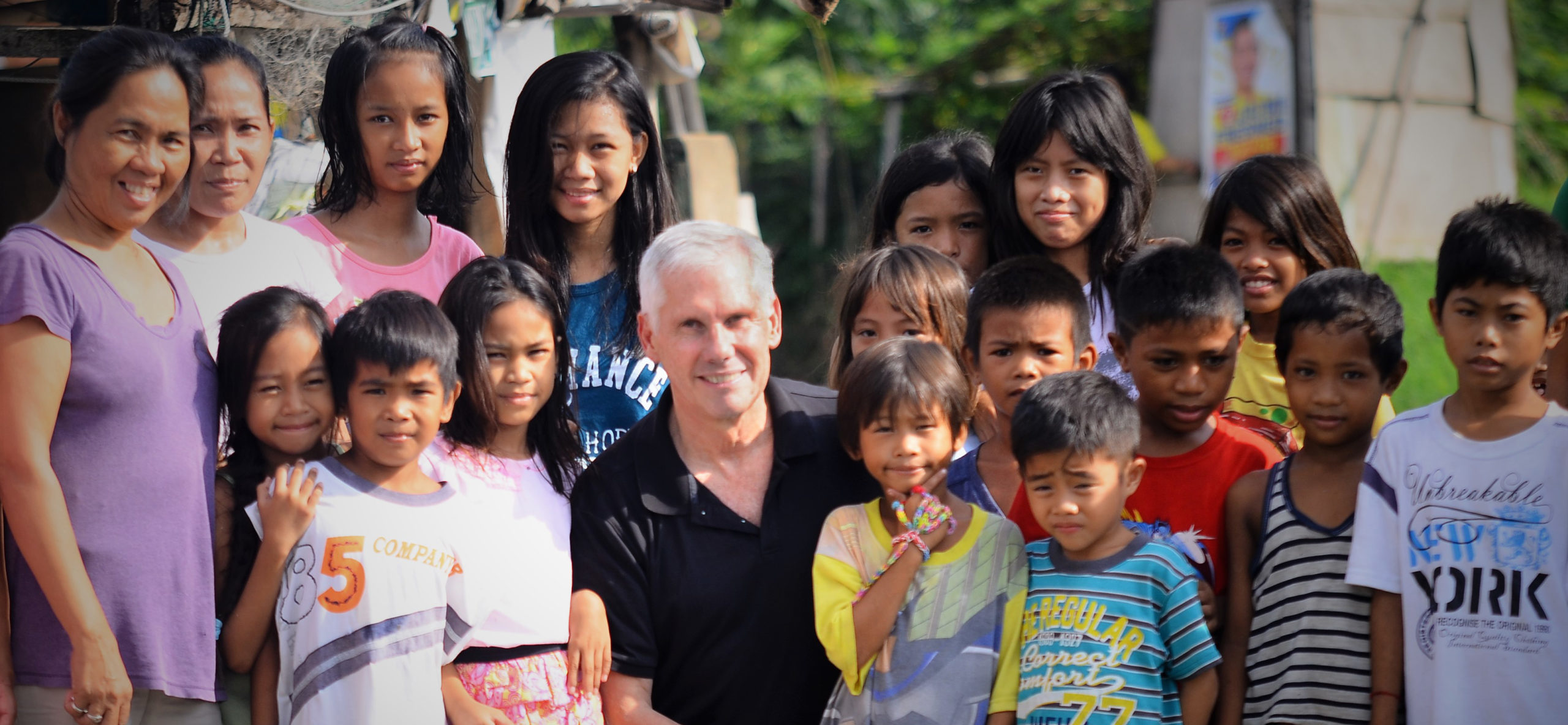
The charitable commitment preceded Feathers Project by years. West had been looking for a cause that employees could participate in meaningfully. His stay with a Filipino family gave that search a setting and a question he could work on. The seed of the project was planted in Sapang Palay, a community in the Philippines.
His response drew on something already at hand. Civicom linked people across geography for business; similar technology could introduce a donor to a family. A sponsor could learn about someone’s circumstances through conversation, rather than encounter that person only as a line in an appeal. The familiar web meeting acquired a different purpose.
West put his earlier search plainly: “For years I searched for a cause that could engage my employees in a meaningful way.” The sentence has the patience of a problem left open. Feathers gave it an operating form, connecting sponsorship with the opportunity for direct human contact.
The project’s name comes from a physical gesture. A beneficiary provides a feather to a sponsor as an expression of gratitude. Amid video links, payment arrangements and administrative procedures, there is this light, tangible object. It is a rather modest souvenir for a system intended to cross an ocean, and all the more memorable for it.
Feathers was founded in 2015, and its US tax exemption dates to January 2016. West is listed as its president in nonprofit filings. The idea therefore grew into an organization with officers, recurring responsibilities and the paperwork that accompanies charitable activity. Even a feather needs someone to keep the accounts.
“For years I searched for a cause that could engage my employees in a meaningful way.”
David West · on the origins of Feathers Project
The arithmetic behind the meeting
Civicom’s original 10% commitment and Feathers’ promise about donations describe different things. The first concerns a share of company profits. The second concerns where sponsorship money goes. Feathers says donations go entirely to beneficiaries because corporate supporters, including Civicom and TeamSpan, cover its administrative and operating expenses.
That separation matters to understanding West’s design. Staff, banking and administration still require money. Corporate support pays for that work so that a sponsor’s donation can take a direct route to the beneficiary. The arrangement gives the companies a continuing role in the program, beyond introducing a donor or holding a fundraising event.
Feathers’ process begins locally. Field advocates identify potential beneficiaries, then use community vetting to verify their circumstances. A recorded introduction or an optional live video meeting connects the sponsor with the beneficiary. The ceremony is filmed, and monthly support is delivered through a debit card. Twice-yearly updates keep the relationship from ending with the first transfer.
It is a sequence full of practical decisions. Someone must identify the household, arrange the connection, verify the recipient and keep the payments moving. Technology helps with distance; people carry the responsibilities on either side. Seen this way, the charity has a family resemblance to West’s service businesses: the experience depends on what happens around the central transaction.
The framework also extends to other companies through Buy Forward. Participating owners permanently pledge at least 5% of profits to charitable causes. Civicom’s own commitment is 10%. The percentages are easy to confuse, but keeping them separate shows the ambition: a company can set its own level of giving while joining a broader practice of making that decision in advance.
A CEO with a book on the shelf
West’s interests have also taken him into print. In 2008, he coauthored Reality Check: The Unreported Good News About America with Dennis Keegan, then chairman and chief investment officer of the Auspex Group. The book argued that negative news coverage obscured a more favorable account of American economic and public life.
It belongs to its moment, with arguments framed around the news and politics of that period. As a detail in West’s career, it adds another form of work: organizing information into an argument for readers. The founder who built communications services also took a position on what people were hearing through the news.
There are quieter interests, too. His professional biography includes wine and food preparation, commercial real estate and stone art among the areas in which he has worked on ideas. The list has the cheerful untidiness of a person whose interests decline to stay inside an industry classification. Pizza, at least, turns out to have been an early clue.
The ambition that still has work to do
On LinkedIn, West describes his life goal in three words: “Life goal: Exemplary Entrepreneur.” It is an aspiration, and a demanding one. A title can be printed once. An example has to survive the ordinary decisions that follow, including the budget, the customer problem and the next request for help.
His career offers concrete things to consider against that ambition. There is a business founded in 2000 that still describes giving as part of its structure. There is a later nonprofit that uses communications technology to bring sponsors and beneficiaries into contact. There is also the less tidy route that preceded them: consumer products, an abandoned Russia plan, consulting and another start.
The appealing detail is how much of the story depends on arrangements. Decide the percentage before the profits arrive. Fund the administration. Give someone responsibility for the payment. Arrange a meeting across a distance. These are decisions that turn an intention into something another person can actually experience.
For West, the conference call became useful far beyond the office. It could carry a business discussion, a research interview or the first conversation between a sponsor and a family in the Philippines. The connection was familiar. Who got to meet, and what could happen after they did, gave it a new reason to exist.
Follow the connections
Explore West’s work, the giving model, and the book.