A military discount ought to be a small transaction. Someone has served. A retailer wants to acknowledge it. The price drops a little. In the version that caught Blake Hall’s attention, however, a veteran handed over a DD214, the document recording separation from military service. A store employee could see far more personal information than the discount required. The paperwork did its job rather too enthusiastically.
Hall had spent fifteen months leading a reconnaissance platoon in Iraq. He understood the importance of knowing who someone was. Back home, he encountered a peculiar arrangement: people who had already proved themselves to the military still needed to expose a sensitive document to obtain a modest benefit. The question was practical. Could a person prove one relevant fact without handing over a whole file?
That encounter became part of the origin of ID.me. The company began in 2010, co-founded with fellow veteran Matt Thompson, and initially tried selling deals to the military community. Hall’s eventual business would live inside a different part of the transaction: the moment a website decides whether the person on the other side deserves access.
Today, Hall is co-founder and CEO of a company whose September 2026 announcements put its user network above 170 million. The distance between a veteran at a checkout and a national identity system is considerable. His route across it includes an Army education in responsibility, a Harvard MBA, a business model he abandoned, and public arguments about what verification should demand of ordinary people.
Before the green button, 450 patrols
Hall’s first consequential career choice involved two admission offers. His father, a West Point graduate, advised him to consider whether he actually wanted the academy’s way of life. Hall chose Vanderbilt. He graduated in 2004 after studying American history and economics, then served as an Army officer. The family example influenced him without prescribing the campus.
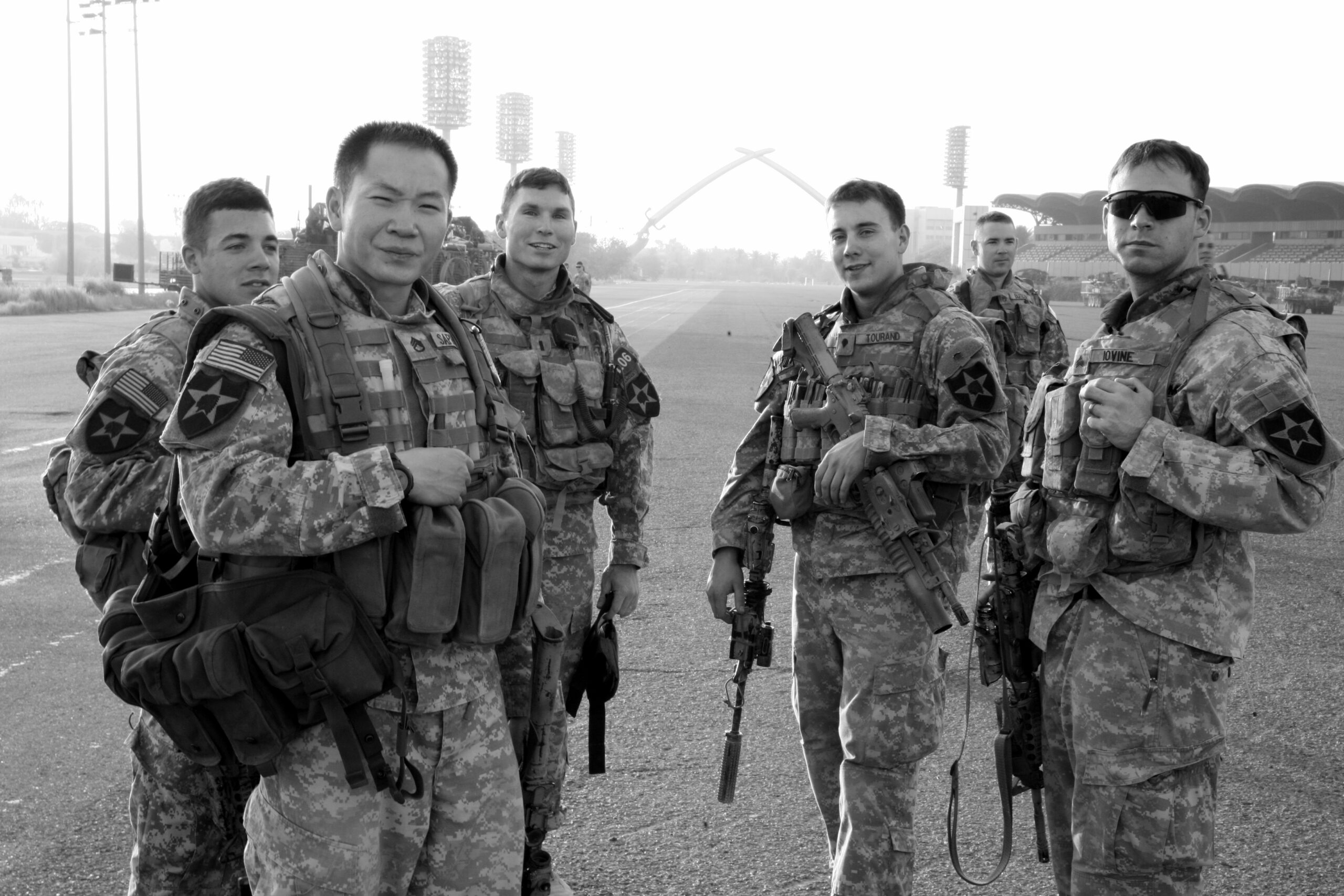
He completed Ranger School and Airborne School. In Iraq during 2006 and 2007, he led scouts and snipers on more than 450 combat patrols. His published biography records two Bronze Stars, including one for valor. Those are the formal entries. In his own account, the more meaningful result was that everyone in his platoon and its attachments returned without casualties.
The work gave him an unusually early education in responsibility. At 23, he was carrying decisions that affected 32 people and their families. His later reflections describe a deliberate effort to concentrate on preparation and the variables he could control. Leadership required useful action even when the consequences were too large to contemplate comfortably.
The distinction matters in his business story. A founder can sound impressive by talking about pressure. Hall had already worked in circumstances where an inadequate plan could not be repaired by a better presentation. When he discusses corporate leadership, competence and the confidence of the people doing the work recur more often than the prestige of the person giving orders.
The company had to change its mind
After the Army came Harvard Business School and an MBA. The entrepreneurial prospect was much less tidy than the résumé. Hall declined a full-time offer from McKinsey. He describes selling his dream car to fund the venture. In the early Washington operation, he committed to a townhome lease that would provide space for the technical and customer support teams while cash was painfully limited.
TroopSwap’s daily-deals business put the company in a crowded trade. Finding people to buy the offers and persuading retailers to provide them created a familiar problem: each side wanted evidence that the other side would turn up. A military focus gave the enterprise a recognizable audience, but an audience alone could not make the economics work.
The useful discovery was buried in the machinery. To offer a benefit to a veteran, the company needed to verify military affiliation. Retailers needed that capability too. Hall and Thompson could offer the verification service itself, allowing a customer to establish eligibility online rather than call a store or present papers at a counter.
The business became Troop ID, then ID.me in 2013 as it expanded beyond military affiliation. Under Armour was among the early users of the verification service. Teachers, students and first responders presented related questions: how could a website reliably recognize a person’s membership in a particular group? The company’s changing names recorded its changing understanding of the work.
Hall later acknowledged that choosing daily deals had been a poor business decision. That admission is more informative than a polished origin myth. ID.me emerged because he reconsidered what customers needed and which part of his company provided it. The discount was the visible product. Verification was the capability that could travel.
A wallet that can leave the website
The idea behind Hall’s digital wallet is easy to picture with an actual wallet. A driver’s license goes with its owner; it does not require a fresh application at every counter. Hall wants verified identity to have a similar portability online, across organizations that accept ID.me. A login would carry proof the user had already established.
The business therefore depends on two groups deciding to participate. People need a credential worth keeping. Organizations need to accept it. Each additional place that recognizes the credential makes it more useful to its holder. Each additional holder gives another organization a reason to consider accepting it. The early marketplace problem has grown into the architecture of the network.
Hall has explained the ambition through comparisons with payment networks. His concerns also extend to people whose records do not fit automated checks neatly. In 2018, ID.me developed video-based verification with work involving NIST and Veterans Affairs. A live interaction could provide another route for someone who could not pass a records-based process.
There is a pleasingly ordinary example in his account of the company’s work: Torrey Pines. The golf course needed to establish whether a customer lived in San Diego and qualified for resident pricing. Identity had wandered onto the fairway. The same underlying question could govern a retail discount, a local rate, or access to a government account.
Hall calls the company’s access mission “No Identity Left Behind.” The phrase carries an Army inheritance, but its product meaning is exacting. A system has to reject an impostor while allowing a legitimate person through, including the person whose paperwork or digital records make the task inconvenient. Both outcomes belong in the design.
“No Identity Left Behind.”
Blake Hall’s stated access mission at ID.me
Trust includes the uncomfortable questions
As ID.me expanded into government services, verification became a public issue. People might choose a retailer because they liked its offers. A person trying to reach a tax account has a more urgent reason to get through. The company’s decisions about biometric checks, personal information and alternative routes consequently acquired a different weight.
In January 2022, Hall apologized after describing ID.me’s facial recognition as exclusively one-to-one matching. The company also used one-to-many matching against a database for fraud detection. He defended that additional check as an anti-fraud measure. The distinction mattered because the public description had not conveyed the full practice.
The following month, the IRS announced plans to move away from third-party verification involving facial recognition. That announcement belongs to the history of the rollout; it should not be mistaken for a description of every later sign-in option. It illustrates how quickly a technical choice can become a question about public access and acceptable conditions for proving identity.
Hall’s stated aim of giving people control over their information puts those questions directly inside his mission. What information is required? What will happen to it? How does someone proceed if the usual check fails? The answers determine whether the convenience he proposes feels like a useful credential or another obstacle. For a company selling trust, explaining the mechanism is part of the work.
Who gets paid, and where it lands
The company’s September 2025 financing announcement described $340 million raised across its Series E and a recent credit facility, at a valuation above $2 billion. Ribbit Capital led the equity round. Hall connected the funding to expanding reusable identity and countering fraud involving AI. The combined figure matters: it includes financing beyond the Series E itself.
By September 2026, the company was extending the verification question into the destination of a payment. Its partnership with Plaid links identity checking to financial account verification for government benefits. ID.me checks the person; Plaid checks the receiving account. The proposed result is a way to confirm that the account belongs to the verified recipient before money moves.
“Identity verification tells an agency who is asking to be paid,” Hall said when announcing the partnership. The next question concerns where that payment goes. A correct identity attached to the wrong account can still leave the intended recipient without the money. His original concern about revealing too much at checkout has developed into a concern about connecting the right pieces of evidence.
Later that month, ID.me named Susannah Stroud Wright chief legal officer and Darragh Whelan executive vice president of engineering. Hall described legal and engineering questions as increasingly connected as AI raises the stakes. The appointments suggest a practical recognition: scaling identity infrastructure requires people who can understand both how a system works and the obligations that accompany its use.
Company-reported figures. Network users include people with different levels of verification.
A mentor, a campus, a title to earn
Hall’s career has accumulated a number of recognitions. He received Vanderbilt’s Young Alumni Achievement Award in 2020 and an EY Entrepreneur Of The Year award for the Mid-Atlantic region in 2022. In 2025, he joined Vanderbilt’s inaugural cohort of National Security Fellows. The university relationship now extends from his undergraduate years to the work of protecting digital systems.
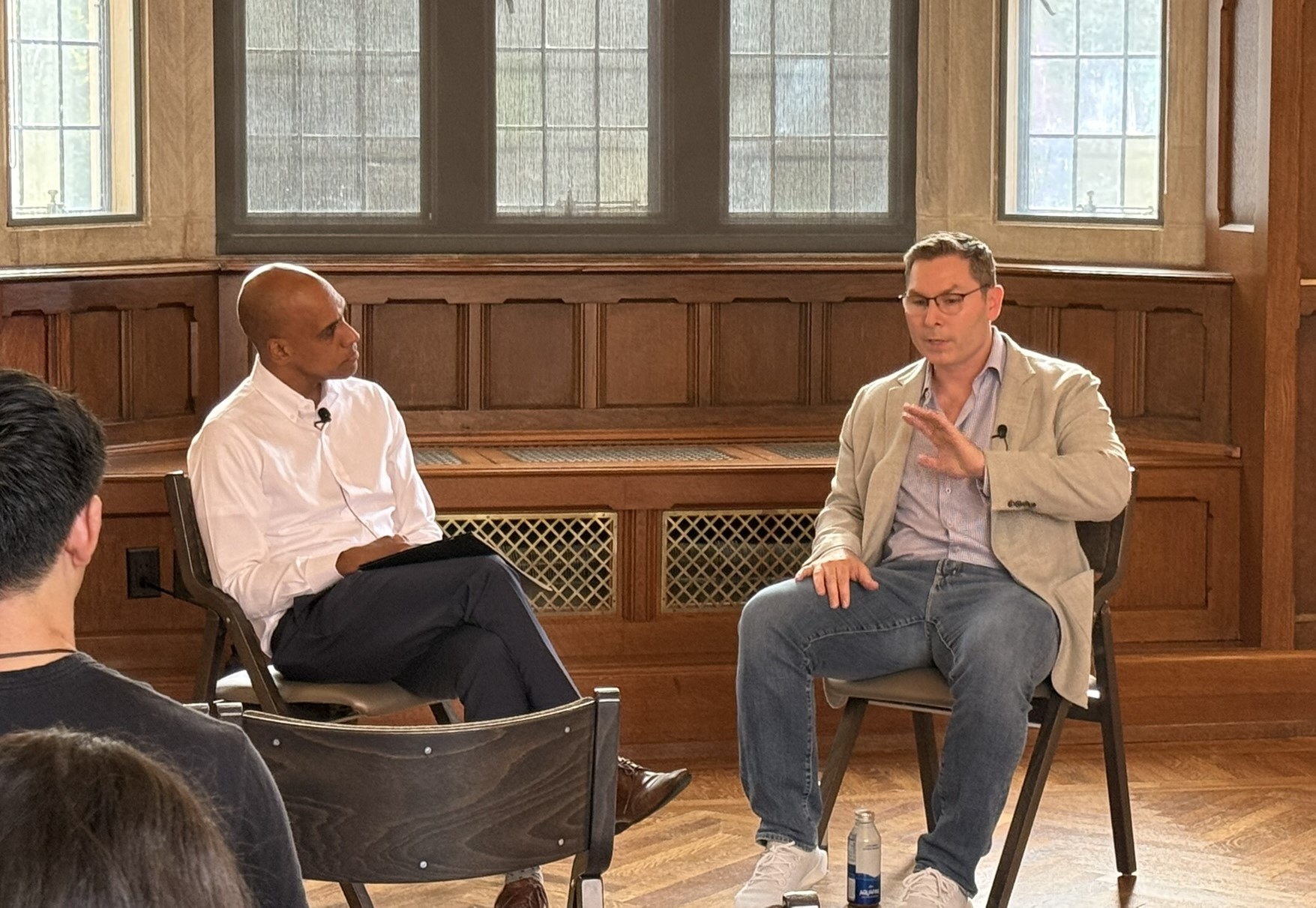
He returned to campus in September 2025 for a conversation with students launching the College of Connected Computing’s Plot Twist series. A history and economics graduate had become its first example of an unconventional route into technology. He emphasized finding a capable mentor who cares about the person as well as the work. That advice has precedents in his own story.
Investor David Tisch helped connect him with Kelly Perdew, the Army veteran and entrepreneur who became an early investor and mentor. Perdew remembers Hall acting quickly on suggestions for improving the initial business plan. Their relationship adds a useful detail to the founder portrait: the same person who committed himself to an uncertain venture was willing to change its design.
Hall’s public accounts return to service, learning and earning the confidence of his team. Those commitments are demanding enough without decoration. An identity company can grow because organizations accept its credentials; its leader must continue earning acceptance from people whose access depends on them. Sixteen years after the start, the small question at the checkout still has force. What does someone need to know about you, and what should you be able to keep to yourself?