Anthemos Georgiades had already studied the ancient world when the modern one gave him a rather elementary problem: finding somewhere to live. At Oxford, he saw would-be renters camping overnight outside a property management office to get first access to apartments. The arrangement had a certain medieval efficiency. Whoever arrived early enough, and tolerated the weather, could have a better chance at a roof.
The spectacle stayed with him. Later came moves across London, New York and Boston, and the same irritation in different postcodes. Finding a listing could be manageable. Securing the apartment meant entering a correspondence tournament with landlords, agents and property managers. A search engine could introduce you to a home; it could leave you standing at the door.
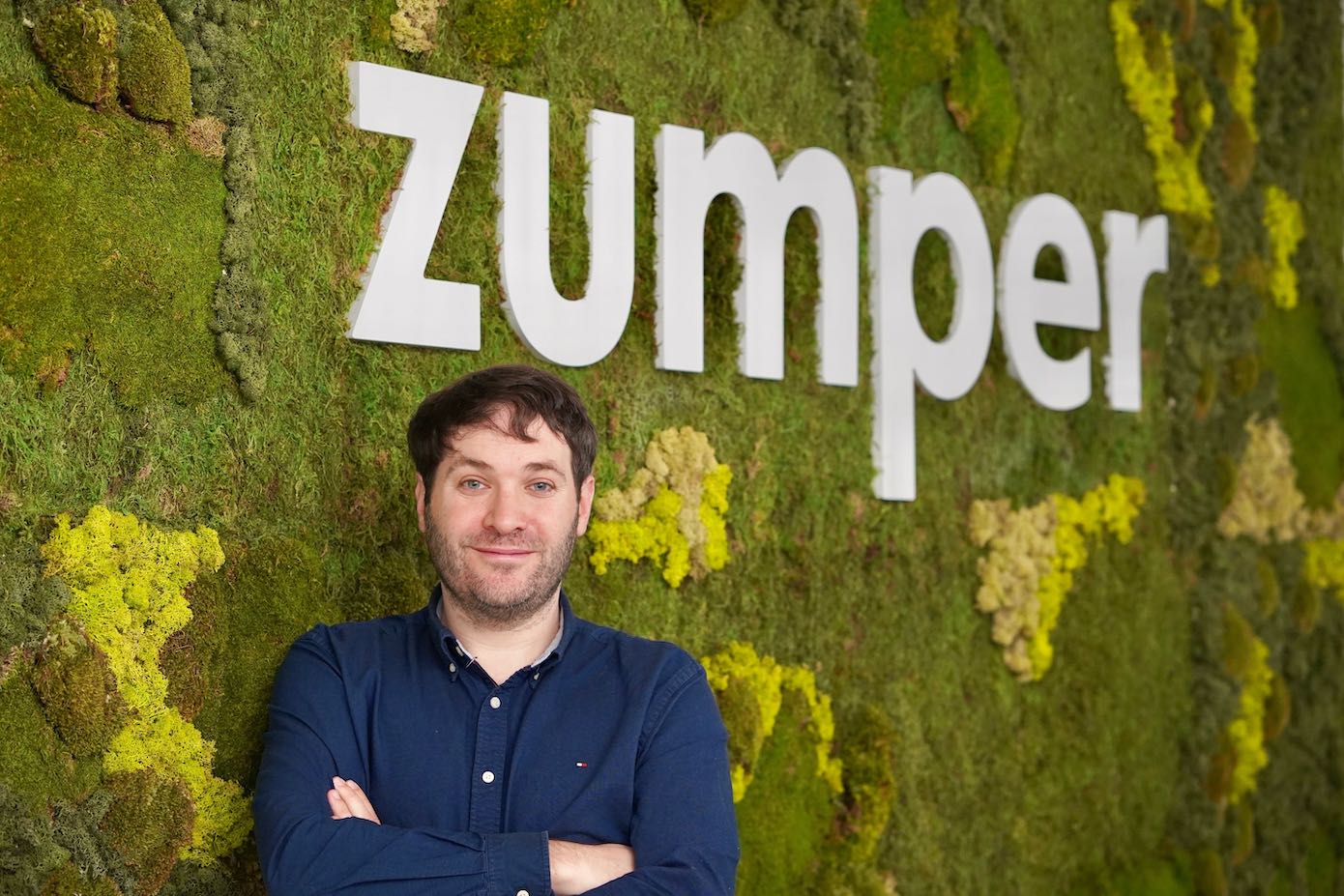
Georgiades eventually co-founded Zumper in 2012. Its ambition could fit on a luggage tag: make renting a home as easy as booking a hotel. Almost fourteen years as CEO followed. In March 2026, he moved to chairman. The short sentence had turned into a long working life.
Homer did not provide a rental application
His Oxford finals thesis concerned tree and plant metaphors in Homeric epic. There are more obvious preparations for a property technology company, although a close reading of complicated human behavior is hardly wasted on the rental market. He entered Somerville College in 2001, studied Classics, and later added a Cambridge MPhil and a Harvard MBA.
Before Zumper, he worked at Boston Consulting Group in London and New York and served as an economic adviser during the 2010 British election. He also spent time at Atomico. The sequence gave him experience of institutions, investors and decisions made at a distance from the people affected by them.
He described entrepreneurship as a calling that combined his Oxford training with a longstanding obsessive streak. The polished credentials can obscure the practical motive. In his own account, he fell into founding because he wanted to fix a problem. His most relevant qualification was seven rented apartments in his twenties.
A summer internship, with himself
During business school, Georgiades used a summer to test the rental idea in San Francisco. He later called it an unpaid internship for himself. Instead of taking the conventional summer job, he tried to discover whether renters at an open house would use their phones to apply for the apartment in front of them.
The trial involved 35 leases. It was small enough to observe directly and concrete enough to matter. He could test what people did while trying to secure a home, rather than collect agreeable answers about a hypothetical app. The eventual pitch condensed that work into ten slides; Zumper raised its first million dollars in 2012.
There is something usefully unglamorous about this beginning. An apartment application is an awkward object around which to organize a summer. It involves documents, timing and another person’s approval. Yet those inconveniences were precisely what the test needed to encounter. The product would have to survive the ordinary business of renting, with all its interruptions.
Three weeks before the stage, a retreat
In 2011, the early platform let renters apply on site and see competing application activity. The response from consumers was encouraging. Rental professionals were harder to persuade. Many preferred familiar calls and emails to real-time applications arriving through an unknown company.
About three weeks before TechCrunch Disrupt in 2012, the team changed course. Georgiades recalled Alexia Tsotsis, then TechCrunch’s co-editor, questioning how the pitch would explain the transparency to renters. Information about competition might help an applicant; it might also feel like something that could be used against them.
The application product was postponed. Zumper launched a more conventional posting and search platform, then spent eighteen months building the foundations. A September 2014 launch finally brought Zapp, its one-click rental application, into the market. Patience had acquired a very practical meaning: do enough ordinary work that the ambitious product has somebody willing to receive it.
“We weren’t ready. We postponed. It sucked.”
Anthemos Georgiades, recalling the 2012 product decision
The landlord had to come along
A renter’s enthusiasm could only carry Zumper so far. The other side of the transaction controlled the inventory, the application process and the eventual decision. Georgiades had approached the business as a consumer. Running it required learning what made a landlord or property manager adopt a new tool.
The early mobile products show how that lesson took shape. Zumper Pro allowed an agent or landlord to create a listing from the unit itself, and make a digital flier for Craigslist. A consumer app followed, letting renters monitor neighborhood listings. Each side received something useful without waiting for the entire vision to arrive.
Years later, discussing rentals with Mike Simonsen, Georgiades explained that much of his previous decade had gone into understanding the business customer. The founder who wanted to escape a rental bureaucracy had spent his career learning its workings. A convenient button needs a great deal of cooperation behind it.
Seventy-five people change the conversation
By 2017, Zumper had grown to 75 people. Georgiades wrote about the difficulty of preserving the early company’s culture, including a technical decision made with startup haste that took more than six months to undo. The next attempt involved a month of research and advice from experienced engineering leaders.
He was willing to describe the mistake publicly. He also reconsidered the premise that a larger team should behave like the first handful of employees. Fast decisions had served an early company with little room to wait. The same habits could become expensive when more people and systems depended on them.
His account of the office included a taste for La Croix. More revealing was his view of the founder’s changing job: give new colleagues room to contribute their experience and humor, instead of making them perform a nostalgic reenactment of the seed stage. The old days are pleasant company. They are less reliable as a management system.
The arithmetic of hiring one person
Another essay took a mathematical approach to culture. Add a twenty-first employee to a team of twenty, Georgiades observed, and you introduce twenty possible new bilateral relationships. Add a seventy-sixth to a team of seventy-five and you introduce seventy-five.
The distinction matters because a hiring decision can look deceptively private. A founder meets a candidate, likes them, and pictures one more helpful colleague. Everyone else then has to work with the new arrival too. The organization has changed by more than a single entry on a payroll sheet.
The calculation counts possible pairs, rather than measuring actual friendships, meetings or friction. Its value lies in making growth visible from another angle. Georgiades was asking founders to look past headcount as a badge of importance and think about the working relationships they were creating. The next hire arrives with a much larger social suitcase than expected.
When the spreadsheet enters the room
Fundraising imposed another adjustment. When Zumper raised its $46 million Series C, Georgiades discovered that the presentation habits of earlier rounds no longer worked as well. Investors wanted evidence of a substantial business. Attractive images and an account of the future had to make room for the financial model.
Chief financial officer Khaled Alami had joined nine months before the company went out to raise the round. Georgiades initially thought a CFO might be premature. He later credited Alami’s preparation and financial credibility with helping the process, alongside a senior team investors wanted to meet.
The admission fits his recurring public habit of explaining where he had misjudged a situation. He could sell the vision, but the company needed other people who could substantiate it. As the business grew, sharing the room became part of the work. An ambitious founder’s pitch benefits from someone who knows which cells contain the assumptions.
A British accent, two boys, and a working household
His public self-description allows for a smaller scale of responsibility: a father to two boys, trying to retain his British accent in the western United States. His wife, Lucy Georgiades, co-founded Elevate Leadership. She has described their first San Francisco home as a small apartment on the Filbert Steps.
In a later exchange about working near each other, Lucy joked about distracting her husband. He replied that he had been pretending to listen to music through his AirPods. It is a modest domestic detail, and a welcome one. The founder discussing the future of online marketplaces still has to negotiate the acoustics of a shared working day.
The search moves into a conversation
By 2024, his interviews were circling a new question: what happens when people ask an AI assistant to find their next home? Discussions covered semantic search, assistants taking actions, and the value of up-to-date rental inventory. Those subjects returned him to the original problem of connecting discovery with something a renter can actually do.
On February 4, 2026, Zumper announced its app in ChatGPT. Renters could browse listings, use conversational filters and see local pricing trends. Links still took them to Zumper to contact properties or arrange tours. The conversational interface had arrived; the property relationship remained part of the journey.
Georgiades’s recent marketplace discussion considered a future in which software agents might become a much larger audience. For a rental platform, that raises questions about timely inventory and the usefulness of its data to other systems. The entry point can change even while the underlying task remains stubbornly familiar: find an available place, understand it, and make a move.
A different chair, the same unfinished question
Shawn Mullahy, who joined Zumper in 2019 and became its chief revenue officer, took over as CEO in the March 2026 announcement. Georgiades moved to the board chair, retaining an active role in long-term vision and strategy. His founder’s job had changed once more, this time in its formal title.
The arc is unusually consistent. A classicist encountered a rental problem, tested a response, delayed the part he most wanted to launch, and learned the requirements of landlords, colleagues and investors. Every stage added people whose agreement the original idea needed.
The appeal of a book button is its apparent simplicity. Georgiades’s career makes visible the labor behind that promise. The renter should have fewer steps to negotiate. The company has spent years figuring out how many steps it takes to give them that convenience.