In June 2026, David Hauser stood on a stage in Orlando holding a red award. Bits In Glass had been named Creatio's Delivery Excellence Partner of the Year. The photograph has the familiar ingredients of a technology ceremony: lanyards, a luminous backdrop, smart jackets. Hauser supplies a patterned shirt and a smile. Behind the tidy presentation lies a less tidy business problem, one he has been working on since 2002: how to make the promises of software survive contact with an actual company.
A demonstration can be immaculate. An operating business rarely enjoys that luxury. It has existing systems, competing priorities, customers waiting for answers and people who would quite reasonably prefer to finish their work before learning another interface. Hauser's career has developed in this gap between what technology can do and what an organization can get it to do on a Tuesday afternoon.
He is the co-founder and CEO of Bits In Glass, an enterprise technology consultancy with a business spanning North America, Europe and India. Its history includes software development, systems integration, low-code automation and, increasingly, applied artificial intelligence. The vocabulary has changed considerably. The founding complaint remains easy to understand: innovation, delivery and customer service ought to turn up at the same appointment.
Two degrees, with Japan in between
Hauser's route into computing began elsewhere. At the University of Alberta, he completed a BA in Recreation Administration. He spent two years in Japan, then earned a BSc in Computing Science. His LinkedIn profile also lists Japanese at limited working proficiency. It is an agreeably indirect beginning for someone who would spend decades helping businesses organize their processes.
After several years in software development, he helped establish Bits In Glass in 2002. The partners were frustrated by consultancies that failed to bring innovation, delivery tied to outcomes and customer service together. The ambition was practical: build a consultancy that could combine all three. That origin gives the subsequent partnerships and expansion a useful point of reference. Growth would mean carrying the service promise into more places.
His interests outside work include travel, cycling and skiing. He also describes enjoying the construction of strong teams and learning how to commercialize new technology. There is a recognizable combination here: technical curiosity alongside an interest in the people and organization needed to make a business of it.
The unglamorous advantage of doing the work
By 2019, Hauser's responsibilities covered several kinds of work that business profiles often put in separate compartments. A company overview identified him as vice president of finance and administration and Appian practice lead. His MuleSoft author biography described consulting practice management, including sales and delivery leadership. Money, customers and implementation all appeared in the same working life.
His experience included software projects and architecture consulting across education, energy, government, financial services, telecommunications and agriculture. These are different businesses with different demands. A consultant working across them has to deal with the particular organization in front of them. A diagram may travel well; the decisions required to put it into service need rather more attention.
The combination of commercial and technical responsibilities helps explain the shape of his career. Hauser was involved in the delivery practice as well as the administration of the firm. The work involved selling an engagement, organizing the people to execute it and understanding how the project fitted into the business. A job title can be concise. The job itself has other ideas.
Six months before the handshake
In August 2021, Bits In Glass announced that it was joining forces with Crochet Technologies, a consultancy based in the UK and India. Crochet would become a Bits In Glass company. The arrangement added Pega expertise and extended the firm's delivery network, giving the North American business a broader international operating base.
The detail that makes the announcement interesting is the work that preceded it. Hauser said the two companies had already completed several joint projects over six months. They had experience of working together before making the relationship more permanent. For a consulting business, that is a useful introduction: the prospective partner has already encountered a deadline.
Vivek Saluja, Crochet's founder and CEO, was central to that expansion. The combination brought together Bits In Glass's North American experience and Crochet's presence across other markets. Hauser spoke about bringing the Bits In Glass brand to India, the UK and the EU. International growth arrived through a relationship that had first been tested on shared assignments.
“After several joint projects over the past six months”
David Hauser, discussing the Crochet combination, 2021
The announcement also described more flexible resourcing and a broader range of capabilities for existing customers. Those are operational concerns with consequences for the people doing the work. Expansion was being expressed in terms of how projects could be staffed and delivered, alongside the addition of new countries to the company's reach.
A growth partner, then a wider bench
Another change came in February 2024, when Capital Square Partners completed a significant investment in Bits In Glass. The investment was intended to support innovation, international expansion and growth both within the business and through transactions. Canaccord Genuity advised Bits In Glass. Hauser described choosing the investor through a focused search for a growth partner.
Capital Square Partners pointed to the firm's leadership team and relationships with Appian, Pega and MuleSoft as reasons for investing. Its interest was in the business built around those platforms: the expertise and customer relationships needed to put automation into use. For Hauser, the stated ambition was to continue building a global boutique digital transformation firm.
That phrase contains a management challenge. A boutique suggests close attention; global reach requires coordination across places, teams and customers. Adding scale while retaining the quality of individual engagements gives the chief executive a continuing test. The founding promise becomes something that has to be organized repeatedly, across a larger business.
Later that month, Bits In Glass announced Celia Wanderley as chief innovation officer. She had previously been chief technology officer and head of Invent at AltaML, following work at Deloitte. The appointment put enterprise technology and AI experience into the executive team soon after the investment. Hauser linked her arrival to designing solutions with the firm's technology partners and serving clients.
A business built through relationships
- 2002Bits In Glass begins
- 2021Crochet joins the business
- 2024Capital Square Partners invests
- 2025Omnico adds CRM expertise
- 2026Creatio delivery recognition
The customer record gets a larger part
In May 2025, Creatio announced Bits In Glass as a Premier Partner. The proposed work focused on manufacturers and distributors in North America, with a 36-month collaboration to deliver CRM automation. Customer relationship management can sound like an administrative category. In practice, it concerns the information a business needs when someone asks what has happened to an order, a customer or a service request.
That July, Bits In Glass announced its acquisition of US-based Omnico. Founder and CEO Barney Holmes would join the leadership team as senior vice president of CRM. Hauser emphasized Omnico's platform expertise, software engineering culture and delivery record. The acquisition added a team to the practice as the company was expanding its commitment to Creatio.
By June 2026, there was a concrete delivery example alongside the award. Bits In Glass described replacing an energy technology and services provider's legacy CRM, bringing several business units onto Creatio. It also built an offline-first field-service application that synchronized technicians' work with customer and asset records. The example connected office systems with work happening in the field.
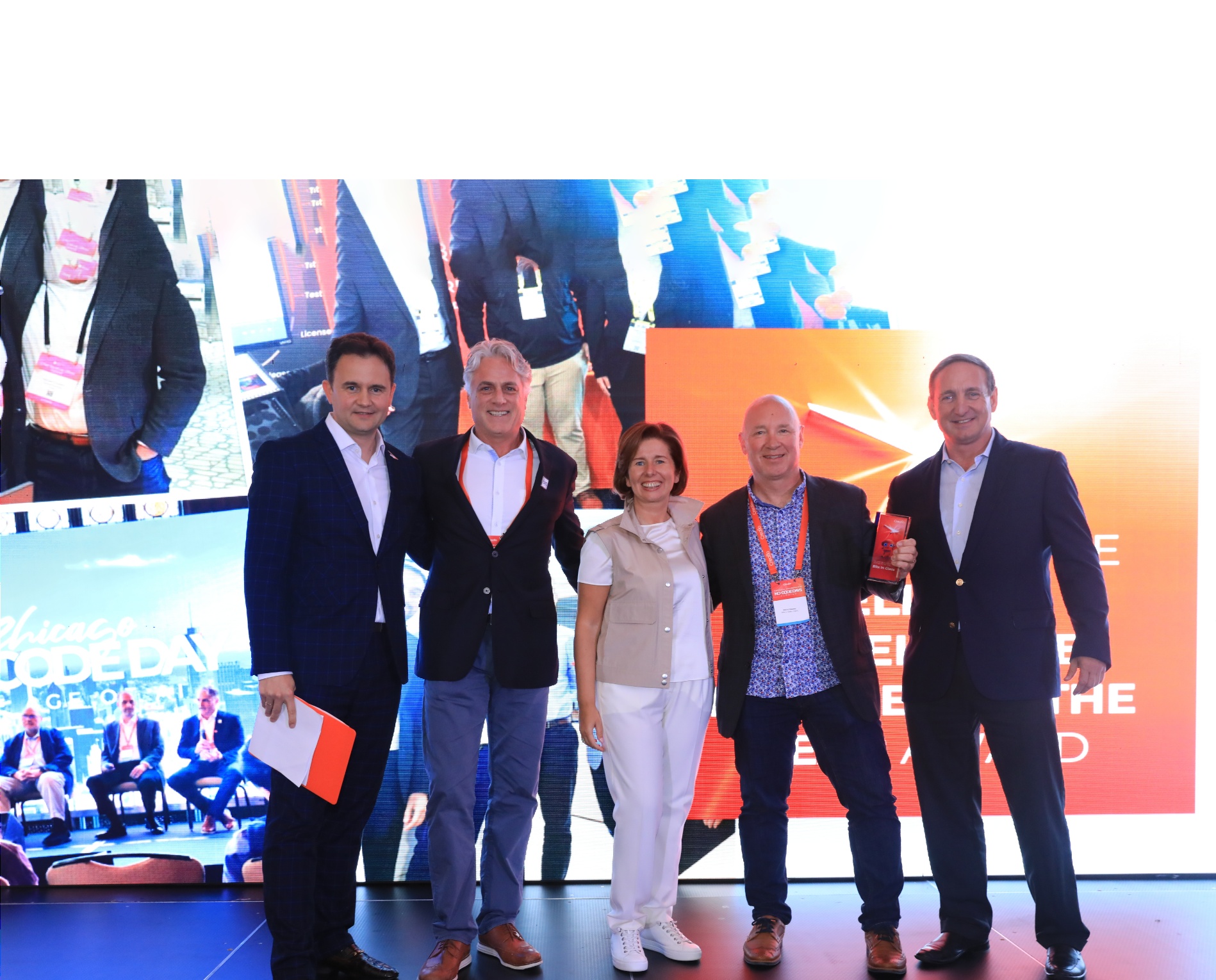
Hauser accepted the award on June 12. Holmes spoke about the trust of clients and the discipline of the delivery team. The distinction was awarded to the company, and the account of the work gives it a suitably collective character. The chief executive holds the trophy; the implementation involves a much larger cast.
The next assignment is already in production
Hauser was also listed as a speaker at Creatio's No-Code Days in Florida in May 2025, presenting a session about the skills, roles and program mindset of a no-code and AI center of excellence. The subject fits the organizational side of his career. It puts attention on how a company arranges the work around a technology, including who will carry it forward.
On October 8, 2026, Bits In Glass announced Select partner status in the Claude Partner Network's Services Track. The announcement described a certified delivery team and live client deployments. Hauser connected the new work to more than twenty years of automating business processes and data, with AI agents handling routine labor while people concentrate on judgment, exceptions and outcomes.
The firm described engagements designed for production with governance and auditability. Its stated work included adding AI to existing platforms and moving older workflows to other runtimes. The language is newer than the Appian practice biography from 2019, but the practical setting is familiar: software entering an organization that already has responsibilities, systems and customers.
The stage photograph captures a pleasant moment in that continuing assignment. Hauser's longer story runs through degrees, development work, practice leadership, partners and teams. The tools will keep changing. Every completed engagement still has to earn its place in somebody else's working day. For a founder whose business began with impatience about consulting, that remains a useful standard to carry into the next meeting.