David H. Lasker wanted to buy an old news clip. A competitor refused to sell it to him. For someone whose working life had involved getting pictures onto television, this presented a different sort of assignment: the picture had already been made, yet getting hold of it was still a problem. He went on to establish a permanent broadcast archive. The news had acquired an afterlife, and Lasker intended to keep a copy.
That episode offers a useful entrance to the career of News Exposure’s founder and CEO. His business concerns what happens to coverage after the audience turns away. A broadcast can finish its first job in minutes and remain useful for years. Someone must decide to retain it, organize it, and make it possible to find. Otherwise, yesterday’s bulletin has the inconvenient habit of becoming yesterday’s missing bulletin.
Lasker came to this work through Chicago television, with a background that also included computer science. The camera and the database would eventually belong to the same professional story. One captures a moment. The other makes a return visit possible. His career has involved both ends of that journey, with customers waiting at the far end to ask a question about something that has already happened.
A camera before the catalogue
As a young teenager, Lasker had a photograph published in his neighborhood newspaper. During college, he moved from still photography into video and began working as a stringer for television stations in the Chicago market. An early picture had found an audience. Video gave that interest a different medium and a place in the working news business.
He attended Northern Illinois University from 1986 to 1990, earning a Bachelor of Science with a concentration in Computer Science - Applied Business. His later professional interests would include computer hardware, programming languages, video production, and editing. The list moves comfortably between the equipment used to gather information and the systems used to handle it.
In October 1994, he founded Network Video Productions, serving as its president and a video journalist. The service covered breaking news for Chicago television stations. His work also appeared on CNN, The Discovery Channel, and The Learning Channel. Coverage made for one market could travel beyond it; a camera assignment could have more destinations than its original operator might see.
The video news service he started with a competitor eventually had eight video journalists covering breaking news at its peak. Lasker’s subsequent move into monitoring shifted his position in the process. He had worked on gathering footage for stations. He would now work on helping people locate what those stations had broadcast.
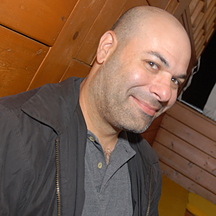
Lasker’s career has taken him from the camera to the catalogue.
The price of keeping the past
In 2000, Lasker founded Nationwide News Monitors. Its work included television and radio monitoring, media intelligence, and PR analysis. By 2003, the company had joined an international network of monitoring services that pooled material in a searchable database. A local broadcast could now sit within a wider system of retrieval.
In the middle of that decade, he developed the permanent archive. There was a practical opening: recordable DVDs were becoming cheaper. Storage costs helped determine whether a recording could be kept. Their decline made preservation affordable on different terms. A seemingly ordinary purchasing detail had consequences for the service he could offer.
The archive also grew through acquired collections. Keeping older recordings meant a business could answer requests that reached back beyond its own recent monitoring. The useful life of the material was no longer confined to the day it aired. There is something pleasingly awkward about that proposition in the news business: the deadline passes, but the product keeps working.
- 2000Nationwide News Monitors founded
- 2010HD library begins in November
- 2011News Exposure created
The permanent high-definition library began in November 2010. News Exposure followed in 2011, continuing the monitoring work and adding that HD collection to the offering. The shift in picture quality brought a corresponding question about preservation: footage would need to remain useful in the format customers expected.
The business also carried the name media monkeybiz. In November 2015, the Chicago Business Journal covered its rebranding to News Exposure. The earlier name had a certain bounce; the later one told a prospective customer rather more directly what was on the desk. Across those names, Lasker’s professional work continued to connect broadcast material with people seeking it.
The people behind the search
News Exposure established a research department in 2013 that included staff manually logging broadcasts. In 2014, it hired industry veterans from Cision, Multivision, and VMS. Its history records a rise from one employee in 2011 to more than 30 in 2018. Those are dated milestones, useful for seeing how the operation developed.
One recruitment story supplies a more conversational measure of expansion. Mike Shaldjian had run Media Watch AZ before selling the company to News Exposure. After a year away from the industry, he received a call from Lasker asking whether he was bored yet. Shaldjian joined News Exposure in April 2015, overseeing account managers while also handling clients of his own.
The question about boredom is a welcome interruption in a history of libraries and recording formats. It puts a person back into the machinery. Experience with customers, markets, and an industry’s working habits travels with people. Bringing someone into a business can also bring back years of knowledge that no newly installed system arrives with.
“Both have led to our success.”
David H. Lasker, on technology and customer service, 2019
That pairing appeared when News Exposure placed eleventh in G2’s 2019 list of Chicago-area B2B technology companies. Lasker welcomed the recognition and pointed to both the platform and the customer service behind it. His description made room for the person delivering the result as well as the technology producing it.
His own professional biography emphasizes listening to clients, discussing their problems, and finding workable answers. It is a straightforward description of service work. The archive can contain a recording; the customer still needs the right recording. A search becomes useful when it resolves the request that started the conversation.
Lasker also works in the industry’s shared spaces. He was listed alongside Dan Kane and Shaldjian for a Publicity Club of Chicago digital-content webinar in May 2020. In 2023, he was announced for a FootageFest discussion on acquiring news footage, alongside Fox Archives’ Brian Sargent and clip producer Ted Cannon. His experience connects the people collecting footage with the people seeking permission and access to use it.
The danger of answering too quickly
Lasker’s writing moves from access to judgment. In a 2021 guest article on PR crises, he stressed preparation, a measured response, and empathy. A business facing unwelcome attention has to consider both the speed and the content of its reply. The ability to respond immediately does not relieve anyone of the obligation to think first.
His warning was plain: “there is such a thing as bad publicity”. An audience’s attention can be costly. His advice asks communicators to take that possibility seriously, rather than treating visibility as a prize regardless of what prompted it. For someone who sells ways of finding coverage, that is a useful distinction to maintain.
In March 2025, he returned to the problem in an article for the National Institute for Social Media. Monitoring could identify negative mentions, but the next task involved assessing their significance. The credibility of the speaker, the audience’s reaction, and comparisons with earlier incidents all belonged in that assessment.
He recommended acknowledging valid concerns, explaining the action being taken, and continuing to follow the conversation. The approach gives saved information a practical use. A past incident can help someone understand a present one; a current complaint can reveal what needs attention. Keeping a record earns its place when it helps improve the next decision.
What did the coverage accomplish?
In February 2026, Lasker addressed young PR professionals in a guest article for Culpwrit. His argument centered on earning trust through evidence. Coverage, insight, and a demonstration of results could help a junior practitioner contribute to strategy and gain a client’s confidence. Monitoring belonged near the beginning of a career, where useful habits and working credibility develop together.
In June, his ColoradoBiz article began with organizational goals before discussing the measurements used to assess PR. Media mentions, reach, website traffic, engagement, and sentiment can each tell part of a story. Choosing among them depends on what the organization is trying to achieve. A report needs a question to answer before its numbers acquire much meaning.
Define the goalChoose a relevant measureAssess the result
An editorial diagram of the approach in Lasker’s June 2026 article.Those recent pieces bring his career back to the user of the information. A recording can establish what aired. Analysis asks what the coverage meant and whether it helped accomplish a purpose. The founder who once needed access to a clip now writes about the decisions people can make after they have obtained one.
There are smaller details, too. Lasker’s listed interests include softball and Scrabble, alongside the predictable video and computer subjects. They offer a glimpse beyond the archive without requiring a grand theory of his character. Sometimes an interest in Scrabble is allowed to remain an interest in Scrabble. The tiles need no business plan.
His working story has plenty of its own material: a neighborhood photograph, Chicago camera assignments, a monitoring company, cheaper storage, acquired collections, and a call to someone who might be bored. Across those changes, he has kept returning to information that someone else needs. The news moves on. Lasker has made a career of leaving a way back.
Keep the conversation going
- News Exposure · company website
- David H. Lasker on LinkedIn
- Lasker’s professional biography
- His advice for young PR professionals · February 2026
- His guide to measuring PR performance · June 2026
- His article on monitoring negative publicity · March 2025
- His advice on handling a PR crisis · July 2021
- The archive’s business history
- Digital-content discussion with Kane and Shaldjian
- The FootageFest 2023 news-footage panel
- G2’s 2019 Chicago-area company list
- The 2015 rebranding coverage