David Fetterolf was already running a business when he decided a supplier’s software deserved a more permanent place in it. In June 2003, Med e-Manager, where he was president and CEO, bought MDeverywhere. The attraction was practical: combine a service operation with technology it had come to know as a customer. Courtship by purchase order is an unfashionable sort of romance, but it does give both parties something useful to discuss.
The deal offers an early view of a career spent joining software to services. Fetterolf would later lead Stratus Video, then move into executive chairmanships and work alongside private equity investors. Across those changes, the interesting question is how an application becomes a business people keep using. A good demonstration can fill a meeting room. A working operation has to survive Monday morning.
A customer before a buyer
The 2003 transaction brought together two distinct pieces of an administrative workflow. Med e-Manager supplied revenue management services. MDeverywhere supplied mobile software for capturing charges and related information. Its products ran on Palm OS and Pocket PC handhelds as well as desktop workstations. Those devices now have the period charm of a very important pager; at the time, they offered a way to move work away from cumbersome paper processes.
Fetterolf described the software as something his company wanted to make a permanent part of its tools. Howard Jewell, MDeverywhere’s president and CEO at the time, described an existing client relationship and joint marketing activity. The merger therefore followed experience of working together. There was something rather reassuring about that sequence: use the product, understand its place, then put the businesses together.
Later biographies describe Fetterolf as MDeverywhere’s founder and president. The transaction itself supplies the finer detail: in 2003, he led the acquiring company, Med e-Manager. His association with the combined business belongs in that context. Corporate histories often acquire a tidier silhouette with age. The original arrangement is more interesting, because it shows the commercial relationship that preceded the combination.
Before that chapter, he had been a division president at Datamedic. His responsibilities there included financial performance and teams covering marketing, sales, implementation, support, manufacturing and development. He had studied electrical engineering at Cornell and earned an MBA at Wharton. The education pairs circuits with balance sheets; the operating job added the awkward and necessary business of getting departments to work together.
The growth curve gets steeper
From 2013 to 2020, Fetterolf served as president of Stratus Video. Its business connected customers with interpreters through video, telephone and in-person services. A screen was the visible part of the offer. Behind it sat a network of people, scheduling, technology and customer relationships. The product needed human expertise at the other end of the connection, which made its expansion an operating challenge as well as a software story.
The reported revenue figures give the change its proportions: $270,000 in 2012, before his presidency; $4.4 million in 2014; $47.4 million in 2017; and $111 million in 2019. The starting point matters. A small base can produce a handsome percentage without producing much of a company. By the end of this sequence, Stratus had crossed the $100 million revenue mark.
In his 2018 conversation with interviewer Malcolm Lui, Fetterolf described a focused sales approach and complementary product lines. The lesson is usefully unromantic. Having several services gives a customer more reasons to stay, but each service need not play the same role in winning the account. A complete offering and a persuasive reason to buy are related commercial achievements, each requiring its own attention.
By 2016, Stratus was preparing an app for requesting an in-person interpreter. Users could select a language and see available interpreters on a map. The comparison with ordering a car was immediate and understandable. Software was being used to make a local service easier to arrange. There is a modest pleasure in a product whose premise can be explained before the coffee arrives.
Keep the names, connect the machinery
A further combination arrived in 2019, when Stratus and InDemand came together. Fetterolf described a plan to retain both brands while integrating management, interpreter pools and technology behind them. A shared interpreter platform was the intended destination. The arrangement draws a useful distinction between what customers recognize and what an operation needs to share.
A familiar brand can remain on the door while the systems behind it change. That is an appealing sentence to put in a transaction announcement and a substantial assignment to hand an operating team. Integration involves deciding which processes travel, which relationships need continuity and where separate businesses can work as one. In this case, the stated plan put the interpreter network and technology at the center.
Then came the sale. On February 14, 2020, AMN completed its acquisition of Stratus Video for a stated $475 million in cash, subject to the transaction’s working capital adjustment. By then, the business offered three ways to deliver interpretation. The buyer was acquiring a service organization supported by proprietary platforms, with an established customer base attached.
Stated cash consideration for Stratus Video, subject to a working capital adjustment.
A sale price is an efficient headline. It compresses years of work into a number large enough to stand alone. It also leaves much of the operating story outside the frame: the recruiting, the implementation, the support and the decisions about which product to build next. Fetterolf’s public comments about management offer a way back into that less photogenic, more revealing part of the business.
The transaction also marks a change of perspective in his career. Running a growing company means making decisions with a team already assembled around a product. Helping another business develop its plans requires asking what that organization needs to become. The experience is related, although the responsibilities sit in different places.
Permission to have a better idea
In a 2017 discussion of quality and management, Fetterolf argued for developing employees and trusting departments to make decisions. He also welcomed suggestions from across the organization. His phrase was straightforward:
“I like to encourage entrepreneurial spirit.”David Fetterolf, 2017
He described a connection between investing in a team, the service customers receive and the business investors ultimately own. It is a management position with consequences for everyday authority. Inviting ideas is easy enough; deciding whether people can act on them is where the invitation acquires meaning. His stated preference gave departmental judgment a place alongside company-wide expectations.
There is a human connection in the Stratus growth years, too. Kate Pascucci, a Cornell graduate, joined the company as marketing director after a call from Fetterolf’s son, a Cornell friend of hers. She moved to Florida for the job. The episode has the recognizable scale of an actual career decision: somebody knows somebody, a role opens, and an introduction turns into a move.
It also brings a different texture to a story otherwise crowded with transactions. Networks become tangible through such calls. A university connection can lead to a conversation, and that conversation can place someone inside a growing company. The resulting work still has to be done. An introduction is a doorbell, with no guarantee about what happens after the door opens.
Another seat at the table
After Stratus, Fetterolf’s work with Berenson Capital began in 2020. He helped source Interactive Digital Solutions and MedSitter and became executive chairman at close. Berenson subsequently described his contribution to strategy and the infrastructure for reaching customers. The role moved him into supporting management teams and investment decisions, carrying operating experience into a different seat.
IDS brought another video communications business into the story. Its customers spanned enterprise, government and other organizational markets. The connection with Fetterolf’s previous work is visible in the commercial materials: software, implementation and ongoing service belong together in the offering. Selling a system starts a relationship that someone must then maintain.
When Berenson formalized its Operating Executive Program in 2022, Fetterolf joined the inaugural group alongside Marc Eigner and Ron Kasner. The program connected experienced executives with investment sourcing, diligence and work after an acquisition. That remit gives an operator several moments to be useful: assessing the promise, helping shape the plan and confronting the details once a transaction has closed.
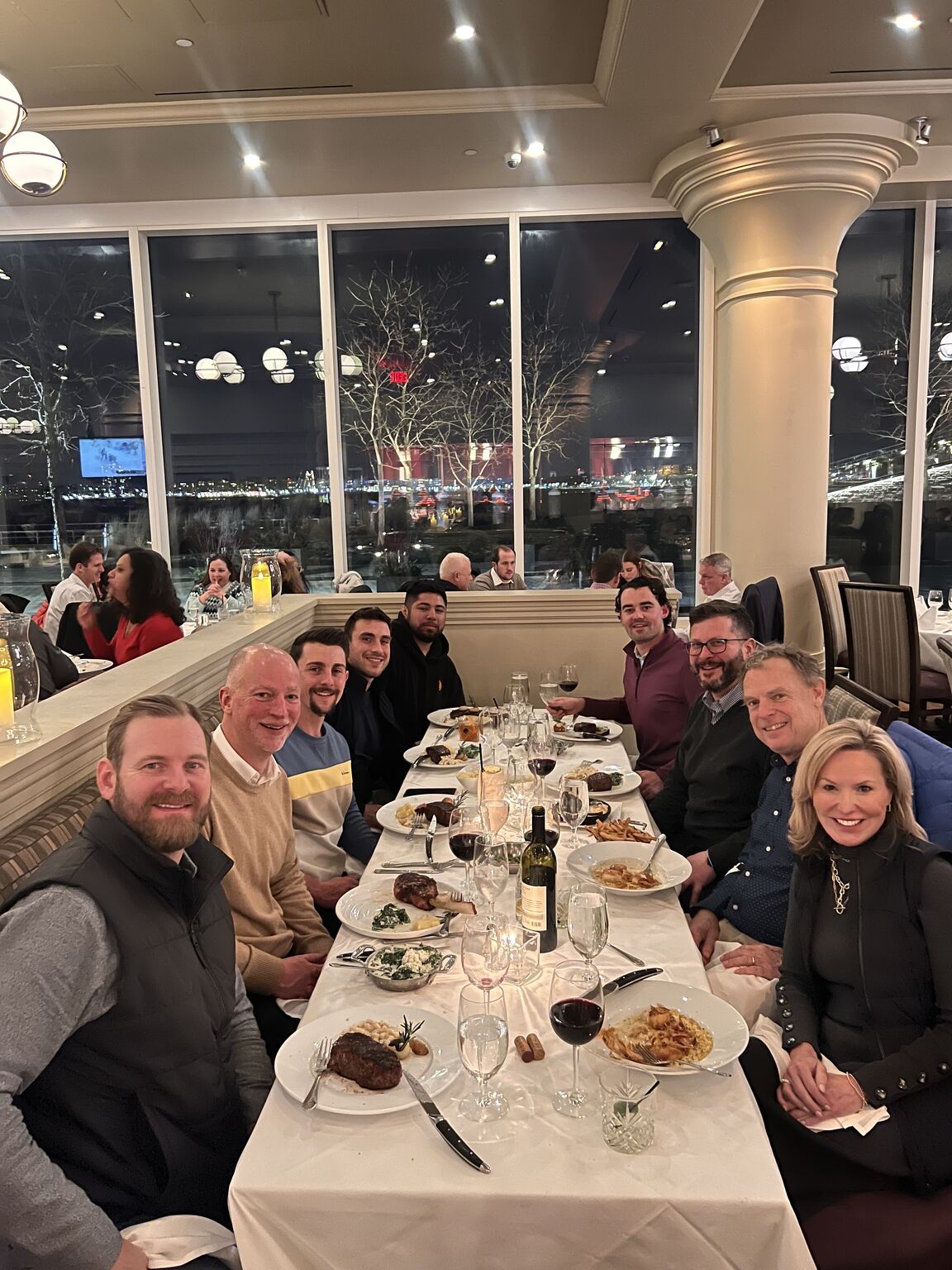
A January 2025 team gathering in Boston offers a less formal view of this later chapter: colleagues around a dinner table, plates and glasses occupying considerably more space than corporate titles. The company’s account of the gathering paired strategy with team building. After all the language of infrastructure and growth, there is something pleasantly ordinary about people making time to sit together.
Fetterolf’s career has moved through an acquisition made by a customer, a growing interpretation business, a sale and executive chairmanships. The recurring subject is the organization around the technology. Someone has to connect the people who build it, sell it and deliver the service. His story finds its substance there, in the work between a promising product and a business that can keep its promises.