Twenty-four independent firms can agree to a merger and still disagree about almost everything that follows. Who makes the decisions? Who gets the introductions? Whose way of doing things becomes everybody’s way? When Alan Levitz became Alera Group’s founding chief executive in 2017, the transaction supplied a name and an ownership structure. His assignment was to help the people inside it build a working company.
For someone who had spent decades at GCG Financial, it was a considerable change of scale. Alera began with more than 750 employees, 40 offices and businesses spread across 15 states. Many founders spend their first year trying to hire a team. Levitz began with teams, plural, and the rather delicate task of making the plural useful.
A room full of owners
The idea had roots in relationships among independent agencies. Through the Benefit Advisors Network, owners had been exchanging experience and considering what a closer arrangement might offer. Levitz and GCG became involved in 2015. He was already running a firm with several kinds of insurance and financial expertise, a useful background for a business that intended to cross those boundaries.
There was no reason to assume that entrepreneurs accustomed to their own authority would find shared ownership effortless. Levitz acknowledged the mix of doubt and possibility surrounding the discussions. Bill Brown, one of the participants, remembered his ability to keep meetings productive. Getting owners into a room was one task. Getting them out with a decision was another.
That distinction gives the founding story its human scale. Twenty-four firms are an impressive line in an announcement. Twenty-four sets of loyalties, habits and expectations are a management problem. Levitz’s role sat between the two: understand the people well enough to make the combination workable, then give them reasons to keep working at it.
The apprenticeship at GCG
Levitz joined GCG Financial in 1983. By 2012, he was its CEO and president, responsible for a firm serving clients whose financial lives did not fit neatly into a single product category. GCG became a strategic partner of the Chicago Family Business Council that year. The setting was apt: family businesses have to make decisions about ownership, continuity and the people who will eventually take over.
His education included a business administration degree from the University of Northern Colorado, followed by financial planning and insurance designations. The qualifications supplied technical grounding. Running GCG required a broader view, with benefits, property and casualty, risk management and wealth management under one roof. Alera’s later breadth had a precedent in the work he already knew.
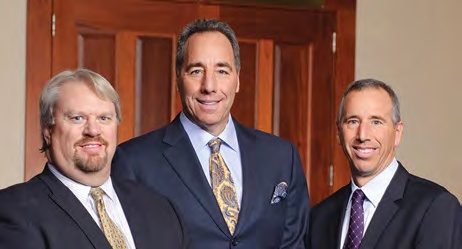
The old photograph catches him in the middle of his GCG partners, a reminder that his business life did not begin with Alera’s launch announcement. By the time he became its first CEO, he had spent more than three decades inside the earlier firm. The national venture was a new undertaking built on a long period of practice.
A national promise with local obligations
At launch, Levitz described an ambition that sounds simple until someone has to carry it out. Clients would gain access to the expertise and resources of a larger firm while retaining the personal service and decision-making of a local business. The company reported $158 million in annual revenue and more than 20,000 clients. It already had people relying on it before the new name had much history.
National resources are useful only when someone can reach them. A specialist in one office must become useful to a colleague somewhere else. A customer who trusted a local adviser needs a reason to welcome the larger organization behind that adviser. The founding promise therefore put a practical obligation on Levitz and his team: make the additional size improve the experience.
Leadership appointments helped define that work. In 2018, Jim Blue joined as president, bringing experience from Marsh & McLennan Agency New England. His responsibilities included revenue growth, integrating new firms, sales, cross marketing and carrier relationships. Those were the daily mechanisms through which a collection of businesses could begin acting like a national one.
Blue’s arrival also gave Levitz a colleague whose remit reached across the company. Their eventual succession announcement would come six years later. First came the less ceremonial work of running the business alongside one another.
Choosing who comes next
Levitz’s interest in collaboration extended to selecting acquisitions. In 2018, he said cultural fit was the first thing he looked for in a prospective partner. Alera had spent nearly two years defining its culture before launch. Protecting that investment meant considering how a new owner would behave after the deal, alongside what the business would contribute.
Consider Lighthouse Group. Alera acquired it effective December 1, 2020, adding eight Michigan locations and experience across industries including construction, manufacturing and retail. Lighthouse had its own history of combining businesses. For Levitz, the attraction included a fit between organizations already accustomed to collaboration. The acquisition brought people with experience of the very organizational puzzle Alera was trying to solve.
Legacy Risk & Insurance Services added another kind of reach. Its 2020 addition expanded Alera’s presence in the San Francisco Bay Area and brought property and casualty expertise across industries such as real estate, renewable energy and technology. A national map was becoming more densely populated with specific capabilities. The question for a colleague was increasingly: who elsewhere in this company knows the thing my client needs?
The larger Propel transaction, announced in September 2021, paired a planned merger with recapitalization. Genstar, Alera’s original private equity partner, supplied new capital alongside Flexpoint Ford, Propel’s existing partner. Propel’s Tacoma base and property and casualty business extended the combination’s reach in the Northwest and Southeast. Bringing firms together was now also a question of bringing their capital relationships together.
The work between acquisitions
Acquisition announcements can make a career look like a procession of closing dates. They leave out much of the operational work. In June 2022, Alera promoted John Mollica to Chief Information and Innovation Officer, responsible for technology strategy and operations and for evaluating solutions with business leaders. A company assembled from many firms needs people responsible for how its systems work together.
Two days later, Alera announced the acquisition of Wharton Business Group, a Pennsylvania wealth firm managing more than $3.5 billion in assets. Its services included investment advice and business continuity planning. The figure described client assets managed by the acquired firm; it was a different measure from Alera’s own revenue. For Levitz, the deal added depth to a business he had helped build across several disciplines.
The combination of those announcements is revealing. One concerns internal capacity, the other additional expertise. Both matter to a leader promising clients that a larger firm will be easier to draw upon. The business has to absorb the new capability and make it available. Otherwise, growth remains something the finance team can measure more readily than the client can feel.
When colleagues challenge the CEO
Levitz’s public account of leadership includes room for correction. In a recorded conversation, Matt Kistler recalled Peter Marathas challenging the CEO to listen more carefully during a meeting. Levitz accepted the point. He also remembered his father giving him a single development priority each year, including learning to delegate.
There is an appealing economy to that approach. A long list of improvements gives everyone plenty to discuss. One clear priority gives a person something to practice. The meeting story carries a related implication: a company that asks colleagues to speak candidly has to allow the chief executive to be on the receiving end.
“Be quick to be transparent. Don’t wait.”
Alan Levitz, in conversation with Matt Kistler
Another test came from within the organization. In 2020, Dickerson Insurance Services managing partner Tony Lee described colleagues raising the lack of gender and ethnic diversity in leadership. Levitz and the executive team acknowledged the concern and established a working group. Lee left the outcome open. His account records an issue being raised and a response beginning, without pretending the conversation itself had completed the work.
That episode matters because collaboration is easy to celebrate when everyone agrees. Its usefulness becomes clearer when a colleague identifies something uncomfortable. A leader’s willingness to hear the objection creates the possibility of a better decision; the subsequent work determines whether that possibility becomes anything more.
A different chair, a familiar assignment
By September 2024, Alera reported revenue approaching $1.4 billion and more than 4,400 colleagues. The company announced that Blue would become CEO on January 1, 2025, and Levitz would become Executive Chairman. Levitz’s new responsibilities would include identifying strategic partners. The founding chief executive was changing his relationship to the business he had helped assemble.
The handoff makes sense alongside the earlier partnership. Blue had joined in 2018 to work on growth and integration. In 2025, he described further integration and performance as priorities, including sharing acquired firms’ expertise more widely and bringing parts of their operations together. The founding promise still required attention at the next scale.
Outside that work, Levitz plays guitar and snowboards. He has recalled the longer-haired version of himself before insurance became his career. It is a welcome detail in a story otherwise populated by offices and ownership structures. Even the person responsible for a national brokerage had a life before the organization chart.
His move into the executive chair leaves him close to the task that made Alera distinctive at its start: finding businesses and people with something useful to contribute to one another. The numbers tell how much the organization grew. The harder question, present from the beginning, is what its people can accomplish together once the introductions are over.
Keep reading & watching
Alera Group Alan on LinkedIn Alan on X Watch the conversation with Matt Kistler The 2017 founding story The leadership transition GCG’s earlier chapter The 2013 partner photograph