Mark Stadler’s father owned a trucking company. His older brothers went to work there. Mark went to college. In a family with eight children, there was already an established route into adulthood; the sixth child chose another one. The departure is a useful place to begin a career that would eventually include large consulting firms, executive appointments, a company turnaround, and the founding CEO’s job at AccessHope.
The family supplied a sense of humor, too. When Stadler’s fourth child was on the way, his mother offered a warning: “don’t try to compete with me.” Some families hand down silver. This one apparently handed down a competitive relationship with arithmetic.
He grew up in Redondo Beach, California, with beaches, mountains, and deserts close enough to belong to the same childhood. He remembers that life warmly. College gave him a different direction. Decades later, his working life would be organized around helping companies find theirs.
The business degree and the long apprenticeship
Stadler attended Loyola Marymount University from 1973 to 1977 and earned a bachelor’s degree in business administration. His college activities included a fraternity, Crimson Circle, and managing the recreation center. These are modest entries beside a succession of executive titles, but they make the young person easier to see: studying business while also taking part in the business of a campus.
A degree can supply vocabulary. A long consulting career supplies occasions to discover whether the vocabulary is useful. At Mercer, Stadler spent roughly seventeen years working with major employer relationships and eventually leading the Chicago consulting office. It is a substantial stretch of a working life, long enough for client relationships to become something more demanding than introductions.
The later appointments ranged across organizations including Great-West, UnitedHealthcare, Optum, Aon Hewitt, American Enterprise Group, and HealthSmart. Sales, marketing, integration, and commercial leadership recur in that record. The nouns change from one business card to the next. The work keeps returning to relationships and to the practical difficulty of making a company’s next chapter happen.
There is a particular education in working across several organizations. Every company has its own habits, and every incoming executive has to discover which habits help. A title does little of that discovering. Stadler’s record offers a way to read his career as an apprenticeship that continued after he became the person with the title.
A company already moving
On June 1, 2016, Stadler became CEO of BridgeHealth. He arrived from HealthSmart, where he had been chief marketing officer. Jeff Waggoner became president and chief operating officer; the two were responsible for management and growth, with Stadler taking responsibility for strategic direction.
BridgeHealth already had momentum. It had appeared on the Inc. 5000 in 2015, before his arrival. That matters to the story. An incoming leader inherits both a business and a history, and giving the new arrival all the credit would make the history rather convenient.
In August 2016, the company announced another place on the list, reporting $11.7 million in revenue and 58 percent growth over the previous year. Those figures described a business developing before and through the leadership change. They were an assignment for the new team: keep a growing organization capable of doing what growth would require.
The interesting question was how the executives would work together. A management team can look complete on an organization chart while still lacking a common understanding of what it is trying to accomplish. Names in boxes are pleasantly orderly. People are more complicated.
Fifteen executives. One page.
By August 2017, Stadler had spent the preceding year forming BridgeHealth’s leadership team. He brought in Rise Performance Group to help fifteen executives articulate the company’s mission, vision, and values, then reduce them to a single page.
The outside adviser was someone he had worked with before: Mark Fenner. He explained his choice in terms of trust. He also wanted the principles “formulated together, as a team.” The decision made authorship part of the exercise.
There is an attractive economy to one page. It gives an organization fewer places to hide. A sentence that seems clear to its author may become considerably less clear when fourteen other people ask what it means. Getting the words down is useful; getting people to agree on them is the harder achievement.
Stadler described the process as a way for the team to work together and take ownership. That is a concrete management choice. The executives would help compose the framework they were expected to use, rather than simply receive a completed document.
“I needed someone I could trust.”
Mark Stadler, on choosing a leadership adviser in 2017
Read beside his commercial appointments, the exercise adds another dimension to his career. Growth asks for customers, contracts, and new opportunities. It also asks whether the people inside the business can make decisions together. A single page cannot answer every question, but writing it together makes the questions harder to leave to somebody else.
It is easy to imagine a values document spending its retirement in a drawer. The useful part of this episode is the participation: fifteen people helping decide what their company stood for. The document was small enough to read. The conversation behind it was large enough to matter.
Shared authorship also changes the questions a team can ask later. Does a proposed decision fit the direction we agreed on? What would make us reconsider it? Who needs to be involved? Those are practical questions for any growing organization. The workshop gave Stadler’s executives an occasion to discuss their answers together. Its interest is in that process: leadership treated as work among colleagues, with a written result they could return to when the next choice arrived.
The colleague who came back
A different view of Stadler comes from Brian Beran, who had worked for him earlier and later joined AccessHope. Beran described enjoying the earlier experience and said that the chance to work with Stadler again was a reason to take the new opportunity.
That is a revealing career detail because it concerns a second decision. An employee accepting a first job can only judge the manager from a distance. A former colleague returning has more information. Beran’s account belongs to the relationship between two people, but it makes a useful companion to all those accounts of corporate growth.
Executive profiles tend to give transactions more room than returning colleagues. Transactions come with dates and numbers; the appeal is obvious. A returning colleague offers another kind of evidence, one that cannot be neatly added to revenue but deserves a place beside it.
From thirty-four employers to four hundred
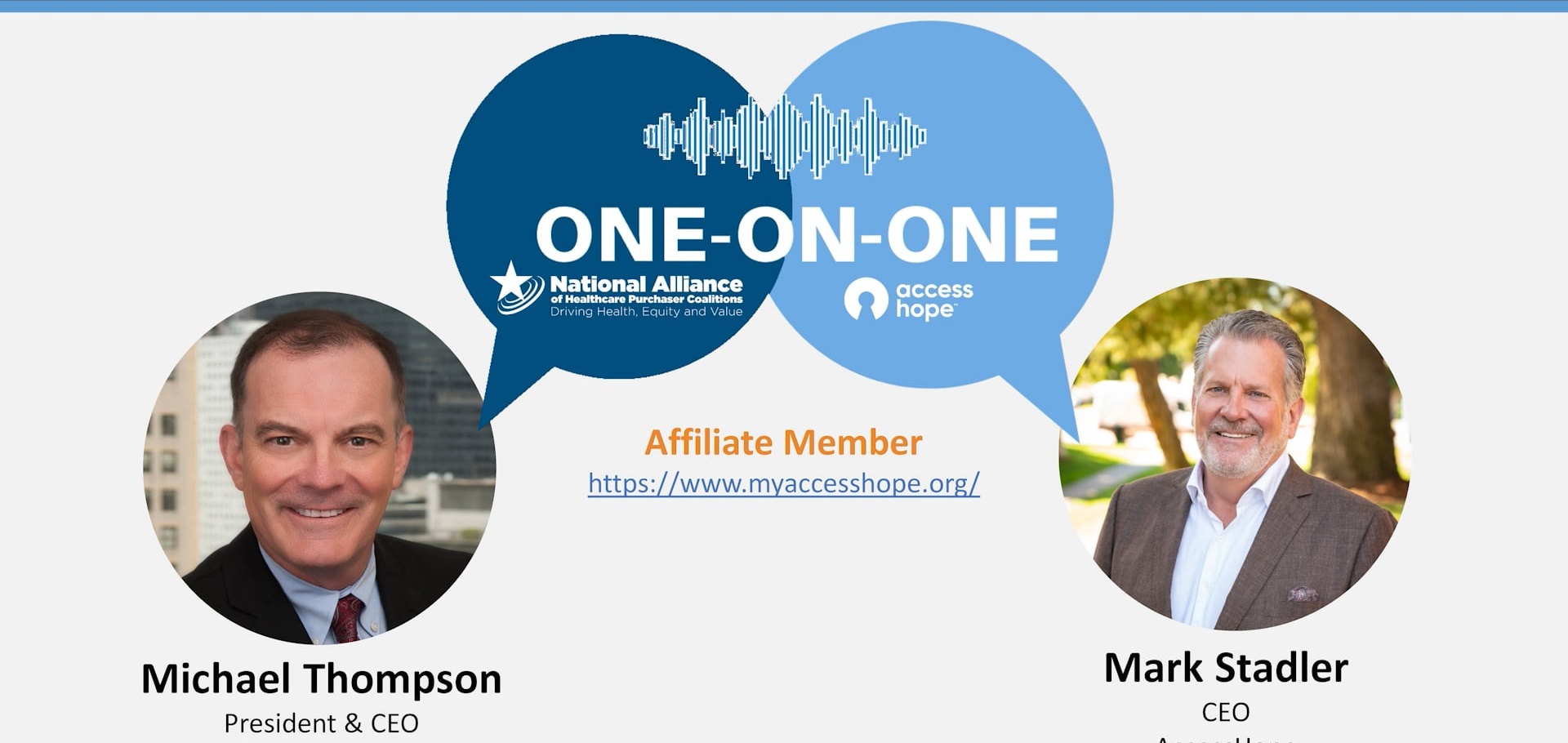
Stadler took the CEO role at AccessHope in 2020, joining a company founded by City of Hope. By November that year, it had signed up thirty-four large employers. That early number is useful because it gives the later company a recognizable starting scale.
In April 2024, AccessHope reported more than four hundred employers, including over sixty Fortune 500 companies. It also announced a $33 million Series B investment from City of Hope. Over four years, the founding CEO had led a company that was serving a much broader customer base.
The figures describe a company’s progress, with the work of its employees and partners inside them. They also locate Stadler’s contribution in time. He led the early business; the larger organization was preparing for another stage, with product and technology development and expansion into additional markets on its agenda.
Numbers are good at describing scale and less good at describing the daily labor that produces it. An employer relationship has people at both ends of it. Four hundred relationships bring four hundred sets of expectations. The management problem becomes how to keep promises as the list gets longer.
That question connects the AccessHope chapter with the single-page exercise at BridgeHealth. The businesses were different. The need for people to understand a common direction is a familiar one. Stadler’s career puts the commercial and organizational sides of growth close together.
The title changed. The assignment continued.
The April 2024 announcement also named Bradley Kreick as AccessHope’s new CEO. Stadler moved into the Chief Growth Officer role. The change put a new person in charge of the overall company while keeping its founding CEO involved in developing the business.
The new title fits a recurring part of Stadler’s working life. He had held growth responsibilities before, as well as senior marketing and sales positions. Moving from CEO to Chief Growth Officer returned an experienced operator to a task that had appeared repeatedly across his career.
A career told only through titles would make this look like a change in the order of boxes. Told through the work, it becomes a question of what an established business needs next. The early chief executive and the later growth executive can be the same person, with different responsibilities at different stages.
His public career now stretches across consulting, company integration, commercial leadership, and running businesses. The connecting thread is the work of getting organizations to move: finding clients, assembling colleagues, giving a team something it can agree to own.
The first change of direction was smaller and more personal. His father had a business. His brothers had joined it. College offered another route. The later career grew from that choice, one organization at a time, with a few people willing to come along again.