David Donatelli has spent much of his career around expensive boxes. Storage systems at EMC. Servers and networking at Hewlett-Packard. Engineered infrastructure and cloud at Oracle. Now, as Riverbed’s chief executive, he is interested in what happens between them. A business can buy capable equipment, subscribe to capable software, and still leave an employee staring at a screen that refuses to cooperate. The individual parts have impressive résumés. The working day remains unimpressed.
In May 2026, discussing Riverbed’s approach to autonomous IT operations, he offered a compact explanation: “Aggregation is the key.” Bringing information together, reducing handoffs and making operations simpler were central to his argument. It is a useful way into his career, too. Across different employers and successive fashions in enterprise computing, Donatelli has repeatedly worked on the difficulty of getting separate technologies to behave as a system.
His current ambition is prevention: identifying and resolving trouble before employees feel it. That is a demanding promise to sell. A problem that never interrupts a meeting has no dramatic rescue scene. Nobody applauds the perfectly ordinary Tuesday. Yet that ordinary Tuesday is increasingly the product Donatelli wants Riverbed to deliver. To understand how he arrived there, it helps to go back to the physical machinery.
Twenty-two years learning what companies buy
Donatelli’s long first chapter was EMC, where he spent 22 years before joining HP in 2009. His responsibilities ranged across management, operations, sales and marketing, and eventually included the presidency of the storage division. The breadth matters. Enterprise equipment must satisfy the people who operate it, the people who approve it and the people who must explain its cost. Those constituencies do not necessarily use the same vocabulary.
His formal education crossed a similar boundary between a product and its business case. He earned a bachelor’s degree in finance and marketing at Boston College and an MBA at Northwestern University’s Kellogg School of Management. This is a commercial education behind a career in technical businesses. In his later conversations about selling, the emphasis is on understanding what a purchase actually does for the customer.
In a December 2023 conversation with Randy Seidl on Tech Sales Insights, he discussed value, trust, differentiation and the work shared across a company in winning business. “Your reputation is built by honoring your commitments to your customers and exceeding what you promise them,” he said. The observation is plain enough to survive a conference slide. It also sets a test that continues long after the sales meeting ends.
That interview reached back to telemarketing and older approaches to enterprise sales, while considering how informed customers now approach vendors. His account placed the burden on the seller to understand business value and on the wider organization to deliver it. The thread connecting his early commercial roles and his present job is visible here: customers need a reason to buy, followed by a reason to remain convinced.
“Your reputation is built by honoring your commitments to your customers and exceeding what you promise them.”David Donatelli · Tech Sales Insights, 2023
HP, and the complications of putting things together
The move to HP in 2009 expanded his scope from storage into the broader infrastructure of corporate computing. It also produced an unusually awkward beginning. EMC challenged the move under his noncompete agreement. The resulting restrictions allowed him to work on HP’s servers and networking while keeping him away from its storage business for a year. An executive hired to help unite technologies began with one of them outside his remit.
The episode had a practical consequence beyond the courtroom: HP’s storage organization continued reporting separately during that period. For a business trying to combine servers, storage and networking, the arrangement was a conspicuous complication. Donatelli’s career includes this less tidy side of executive mobility. A new title can arrive before all the responsibilities attached to it.
By March 2012 he was leading HP’s Enterprise Group. His portfolio ultimately covered a division described as a $30 billion business, spanning servers, storage, networking and converged infrastructure. In a July 2013 interview, he described three forces shaping the data center: convergence, cloud computing and software-defined infrastructure. His argument for convergence was practical: design the parts to work together and make the resulting system easier to manage.
This was also the period of HP’s effort to enlarge its networking position. When HP announced its approximately $2.7 billion agreement to buy 3Com in November 2009, Donatelli explained the deal in terms of customer choice and a broader infrastructure strategy. The transaction linked a market argument with an engineering one. A more complete portfolio gave HP more to sell, while offering customers another way to assemble their networks.
The HP chapter also contained a reversal. In August 2013, Bill Veghte replaced him at the head of the Enterprise Group, and Donatelli moved to a role evaluating early technology companies. A career told only through promotions would omit this turn. His next substantial operating position would come at another company, alongside a former boss.
- EMC22 years · Storage, sales & operations
- 2009 / HPServers, storage & networking
- 2015 / OracleConverged infrastructure, then cloud
- 2023 / RiverbedAcceleration, observability & AI
A familiar boss, a different architecture
Oracle announced Donatelli’s appointment as executive vice president for converged infrastructure in June 2015. He reported to Mark Hurd, who had previously led HP. The remit included engineered systems, servers, storage, networking and tape, along with hardware for hybrid cloud environments. The company name had changed; the challenge of joining the pieces remained recognizable.
Oracle’s proposition put hardware and software together within an integrated stack. Donatelli’s appointment placed him at the point where that proposition had to become an enterprise purchase. His later role as executive vice president of Oracle’s Cloud Business Group extended the career from physical infrastructure into cloud business leadership. The sequence is useful context for Riverbed: he had seen several versions of the corporate technology estate before taking responsibility for observing it.
He also served as lead independent director at MarkLogic, the data management and integration company in Vector Capital’s portfolio. That connection preceded his arrival at Riverbed. John Theler, who had been MarkLogic’s CFO and had previously held the same job at Riverbed, joined the Riverbed leadership transition as finance chief. The change brought together people with overlapping experience rather than an entirely unfamiliar cast.
Riverbed offered a different kind of box problem
On July 11, 2023, Vector Capital completed its acquisition of Riverbed and named Donatelli CEO, succeeding Dan Smoot. His starting point was an established business with acceleration and observability portfolios. In his appointment statement, he spoke about investing in product development and growth, supported by an improved capital structure. The assignment involved making more of an existing collection of technologies.
Riverbed’s older identity was closely tied to getting applications and data across networks more efficiently. Observability added another question: what can the business see about the performance its users actually experience? Under Donatelli, those two lines of work became parts of a wider story about data, diagnosis and action. Moving information efficiently and understanding where it gets stuck are neighboring problems.
The platform launch in May 2024 gave that approach a concrete shape. Riverbed introduced a unified agent, mobile monitoring, a cloud-delivered network performance service and a new generation of its IQ automation technology. The unified agent addressed a particularly mundane form of accumulation: monitoring software itself can multiply across an organization’s devices. Adding visibility should not require endlessly adding separate agents.
By April 2025, Donatelli was describing engineering work with Intel that opened access to diagnostics for Thunderbolt and Wi-Fi connections. These are small details beside a sweeping AI presentation, but an employee’s experience can depend on precisely such details. The partnership extended Riverbed’s ability to inspect the path between a device and the work it was expected to perform.
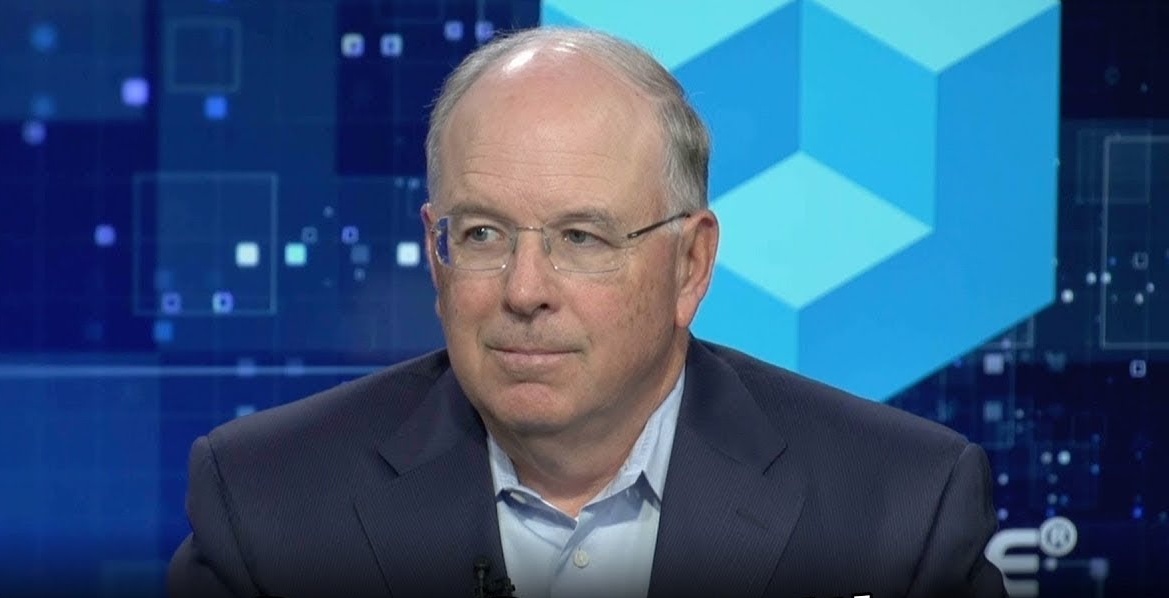
The appeal of a missing interruption
Donatelli’s examples tend to return to operational consequences. In an April 2025 interview, he described a large bank eliminating 75,000 help-desk calls a month and reducing its mean time to repair by 25%. These were his reported customer results, rather than a promise for every installation. They show the units in which he wants the technology judged: fewer demands on support teams and less time spent repairing problems.
There is an important distinction between collecting more signals and making those signals useful. His description of Riverbed’s architecture puts collected data into a shared store, applies intelligence and then supports automated responses. The commercial claim rests on the whole sequence. An alert, by itself, still leaves somebody with a job to do.
In May 2026, the ambition widened again with IQ 4.0 and conversational access to operational information. One revealing detail was entirely ordinary: Donatelli said he spends much of his day on Microsoft Teams. His point was that people should be able to reach useful information through the applications they already use. Even a chief executive promoting a new platform would prefer fewer places to go looking.
A June 2026 conversation about autonomous operations included governance, AI costs and the control enterprises need over their agents. Those subjects introduce limits and responsibilities alongside automation. An enterprise buyer needs to understand what an agent may do, what information it uses and how its activity can be supervised. The ambition to remove interruptions brings another management problem with it.
The next handoff belongs to AI
Riverbed’s October 2026 research supplied a useful measure of that tension. Among 1,200 respondents across seven countries, 90% wanted to use agentic AI to drive autonomous IT operations. Yet 77% said their organizations were hesitant to let AI make operational decisions without human approval. These are findings from a Riverbed survey, with the perspective and limits of commissioned research. Still, the pairing captures a recognizable buying problem: appetite for autonomy coexists with a wish to retain control.
The same month, Riverbed’s EMPOWEREDx customer series put prevention at the center of events across three continents. Its programme connected visibility, AI and automation with employee productivity. For Donatelli, this is the public direction of the business he now leads. His task is to make a collection of technical capabilities intelligible as something customers can operate and measure.
Seen across EMC, HP, Oracle and Riverbed, his career keeps returning to the space between a capable component and a useful system. Sometimes that space was organizational. Sometimes it was the network. Now it includes the decisions delegated to software. The equipment has changed considerably. The customer’s request remains wonderfully unglamorous: let the work continue.
Different questions, overlapping respondents. Riverbed survey of 1,200 people across seven countries.