A founder’s biography usually has room for a university, a previous employer, and the company that brought everyone to the page. David Benshoof Klein’s includes an art gallery. It is a small detail with a useful effect: suddenly, the career becomes harder to file. The co-founder and CEO of Click Therapeutics also helped found Eli Klein Gallery, known for its work with contemporary Chinese art. Finance, software, and a gallery wall make an unusual set of professional coordinates.
The combination invites a question about audiences. How do you persuade someone to spend time with something unfamiliar? An investor needs a reason to take the next meeting. A visitor needs a reason to stop in front of a work. A colleague needs a reason to join a company and stay. The answers differ, but the person asking for attention must eventually earn it.
Klein’s public career can be read through those introductions. He has worked as an investor and consultant, become a founder, taught as guest faculty, and maintained a connection to art. Each role puts him in a different relationship with other people’s judgment. It is a more interesting route into his story than lining up the titles and hoping they explain one another.
A company, with room for art
A native New Yorker, Klein has a bachelor’s degree from Brandeis University. His subsequent professional life has remained closely associated with New York. The city offers a fairly accommodating setting for a biography with several occupations: someone is always crossing town to become a slightly different version of themselves at the next appointment.
The gallery adds substance to that variety. Established in 2007, Eli Klein Gallery has introduced contemporary Asian art to New York audiences and worked with museums internationally. Its West Village premises are in a landmarked Federal-style rowhouse. A business associated with new work occupies a building with a considerable head start on it. New York occasionally supplies its own captions.
The gallery’s record includes exhibitions, publications, and museum loans. These are different ways of giving an artist’s work a longer public life. A show can end while a catalogue remains on a shelf; a museum loan can take a work beyond the audience that first encountered it. The institution has several methods of making an introduction last.
In 2022, its fifteenth-anniversary exhibition made a joke of the arithmetic. Called 1.5, the show invited ten groups of artists to contribute one and a half works apiece, making fifteen in total. Curator Janet Fong turned a corporate birthday into an artistic proposition. Anniversary celebrations rarely give the fractions such interesting employment.
These are achievements of a gallery and its artists, curators, and staff. They do not establish that Klein chose a particular work or devised an exhibition. His co-founder connection matters on its own terms: contemporary art belongs inside his professional biography, rather than being added as a decorative hobby after the serious work has been described.
Learning to answer the investor
Before Click, Klein served as managing director at Opus Point Partners. The firm’s work included creating, financing, and operating companies. His background also includes a senior consulting role at Pfizer and strategic advisory work. Taken together, those appointments placed him around the decisions that turn a proposition into an organization with money, people, and obligations.
Then, in 2012, he co-founded Click. Moving from investing into running a company changes the direction of the questions. An investor can examine an assumption and ask the founder to defend it. The founder has to return with an answer, make the decision, and carry the consequences into the next working day.
That difference makes the financing record more than a collection of dollar signs. In October 2021, Click closed a $52 million Series B, co-led by H.I.G. BioHealth Partners and Accelmed Partners. The round also brought new board members. Capital arrived with additional people around the table, expanding the group involved in the company’s next decisions.
A round describes a moment when several parties agree to proceed. It leaves the execution ahead. For a chief executive, the announcement starts another period of allocation: which work gets staff, which decisions require outside expertise, which promises can be kept within the available time. The photograph of the closing is generally easier to arrange than the work that follows.
Klein’s career has also attracted institutional recognition. Goldman Sachs selected him for its 2019 Builders + Innovators gathering in Santa Barbara. In October 2024, he was named to the PharmaVoice 100. “I don’t usually label myself or the company,” Klein said in March 2026, when asked whether Click was a pioneer in its field. His biography offers enough labels for others to choose from. The operating record keeps accumulating on ordinary working days.
A family argument for a wider table
One of Klein’s more personal public statements appeared on International Women’s Day in March 2024. He wrote about his mother, the human rights lawyer Janet Benshoof, and connected her influence to his own decisions as an employer. The argument concerned who should participate in shaping an organization, rather than simply who should be celebrated once a year.
He called on executives and investors to improve opportunities for women in workplaces and boardrooms, including hiring, advancement, development, and pay. His account locates a professional commitment in a family relationship. The important inheritance, in his telling, concerns what authority is for and who gets a fair opportunity to exercise it.
A chief executive has practical decisions available here. Recruitment determines who enters the room; promotion helps determine who eventually runs it. Klein’s essay asks leaders to take responsibility for both. It also gives his biography a personal center: someone known publicly for building a company has chosen to explain part of that work through his mother’s example.
“No Jerks”
One of Click’s published workplace principles
The company’s stated culture offers a more compact expression of its expectations. Among its principles is the two-word rule above. Other commitments concern integrity, accountability, and making work enjoyable. The language leaves little room for the familiar defense that a difficult colleague is simply too valuable to question.
A published principle is a declaration of intent. What makes it interesting is the expectation it creates. People can refer back to it when a meeting becomes unpleasant or a promised task remains unfinished. Short rules are easy to remember, which can be inconvenient for the people who wrote them. That is part of their usefulness.
The audience gets a vote
Klein has served as guest faculty at Columbia University’s biotechnology program, Columbia Business School, and NYU’s Stern School of Business. These roles add a classroom to the investment meeting, office, and gallery. Teaching gives professional experience another audience, one that may be encountering the assumptions behind a business for the first time.
There is a useful discipline in having to explain those assumptions. A title can secure an invitation; it cannot do the explaining. The speaker must decide what the audience already understands, which details matter, and where an example will help. A founder telling a company’s story has a similar responsibility whenever the conversation moves beyond familiar colleagues.
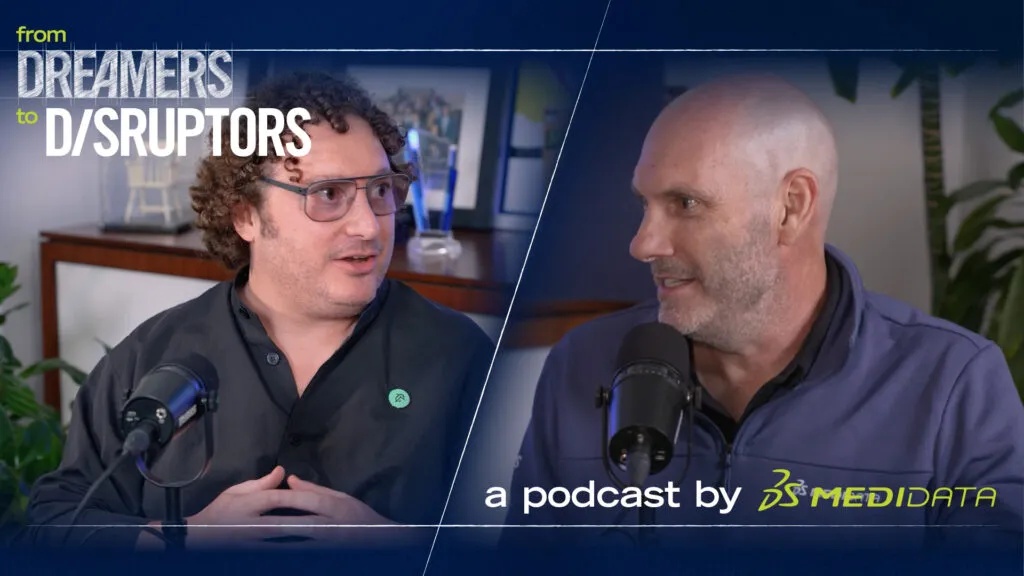
His public appearances span recorded conversations and conference interviews. In an early-2026 discussion, he emphasized the importance of engagement and personalization. The broader business question is easy to recognize: what makes an experience worth returning to? An organization can announce what it intends to offer. The audience still decides whether the experience merits another visit.
The gallery provides a useful parallel, with limits. Looking at art and using software are different activities. Both, however, depend on a person choosing to pay attention. The comparison makes Klein’s varied interests worth considering together. It suggests a question that travels between settings, even when the answers and responsibilities remain distinct.
The work after the announcement
Recent developments have added further business relationships to the picture. In March 2025, Dassault Systèmes and Medidata announced an investment in Click. In April 2026, Boehringer Ingelheim made a $50 million Series D strategic investment, alongside additional dedicated commercial funding. The agreement also transferred product responsibilities to Click. More capital came with a larger operating assignment.
These relationships give the founder a changing set of people to work with. An established company brings its own procedures, priorities, and expectations. A smaller organization has to understand those requirements while continuing to make decisions at home. The executive’s job includes making the collaboration function after the language of the announcement has been agreed.
Asked about an IPO in March 2026, Klein described it as ultimately a board decision and dependent on whether circumstances and markets made sense. His answer left room for preparation without declaring a date. Public ambition and an announced transaction are separate stages; treating them carefully gives the people involved space to make the actual decision.
That brings the story back to the people in the room. Klein’s career has put him among investors, colleagues, students, collaborators, and an art institution’s wider audience. The title on this page introduces the executive. The gallery, the classroom, and his account of his mother’s influence make the introduction more complete. They show how much of a working life can sit just outside its most familiar label.