Dave Evans had a question about a part. The machine could make it in two hours. Getting it into his hands could take eight weeks. Somewhere between those two clocks lay a business, although at first it looked more like an engineering irritation with an unusually long email trail.
He would later walk through the arithmetic: the request for a quote, the wait for an answer, the place in a supplier’s queue, the inspection, the shipping. A short spell of cutting material sat inside a much longer stretch of arranging for material to be cut. Evans wanted to know what happened to the rest of the time.
That question has followed him from Ford’s Silicon Valley lab to Fictiv, the manufacturing company he started with his brother Nate in 2013. In 2025, MISUMI agreed to buy Fictiv for $350 million. In 2026, Evans took responsibility for MISUMI Americas while continuing to oversee the company he co-founded. The impatient customer now has rather a lot of suppliers to think about.
A car runs on several clocks
Evans graduated from Stanford in 2011 with a bachelor’s degree in mechanical engineering. He became the first hire at Ford’s Silicon Valley Innovation Lab, working on infotainment systems. It was a particularly instructive place to discover that different industries have different definitions of soon.
A new vehicle platform could take four to six years. Consumer electronics moved through generations in months. A dashboard was expected to welcome technologies that might scarcely exist when the car’s development began. Getting the latest device into a vehicle meant reconciling schedules that seemed to have been issued by different planets.
Evans’s recollection of Ford contains an appealing reversal. At first, he could hardly understand why a vehicle took so long. Later, with a better view of the engineering involved, he wondered how anyone managed it in six years. Experience had made him more respectful of the work, even as he remained restless about the waiting.
There is a useful distinction in that change of mind. An engineer cannot wish away the complexity of a car. But a quote sitting unanswered is a different sort of problem. Evans’s opportunity lived among the administrative pauses surrounding the physical work, where better coordination might return useful days to a design team.
The kitchen had capacity
Nate brought a different education to the problem. He had studied at Stanford too, earning a master’s in Chinese, and worked in investment banking. Dave understood the inconvenience of needing a part. Nate had seen businesses use networks to connect available resources with demand. Together, they could ask whether manufacturing capacity might be coordinated more intelligently.
The first experiment was modest enough to fit at home: a MakerBot printer and a month in which to earn back its cost. The test gave the brothers something concrete to measure before they committed themselves to a much bigger proposition. They found customers, filled orders and made the experiment pay.
Deliveries had a personal touch. Dave rode a bright red scooter around town with parts. The future of industrial procurement briefly depended on a vehicle better suited to carrying lunch. The brothers had turned access, responsiveness and their own time into a service someone would buy.
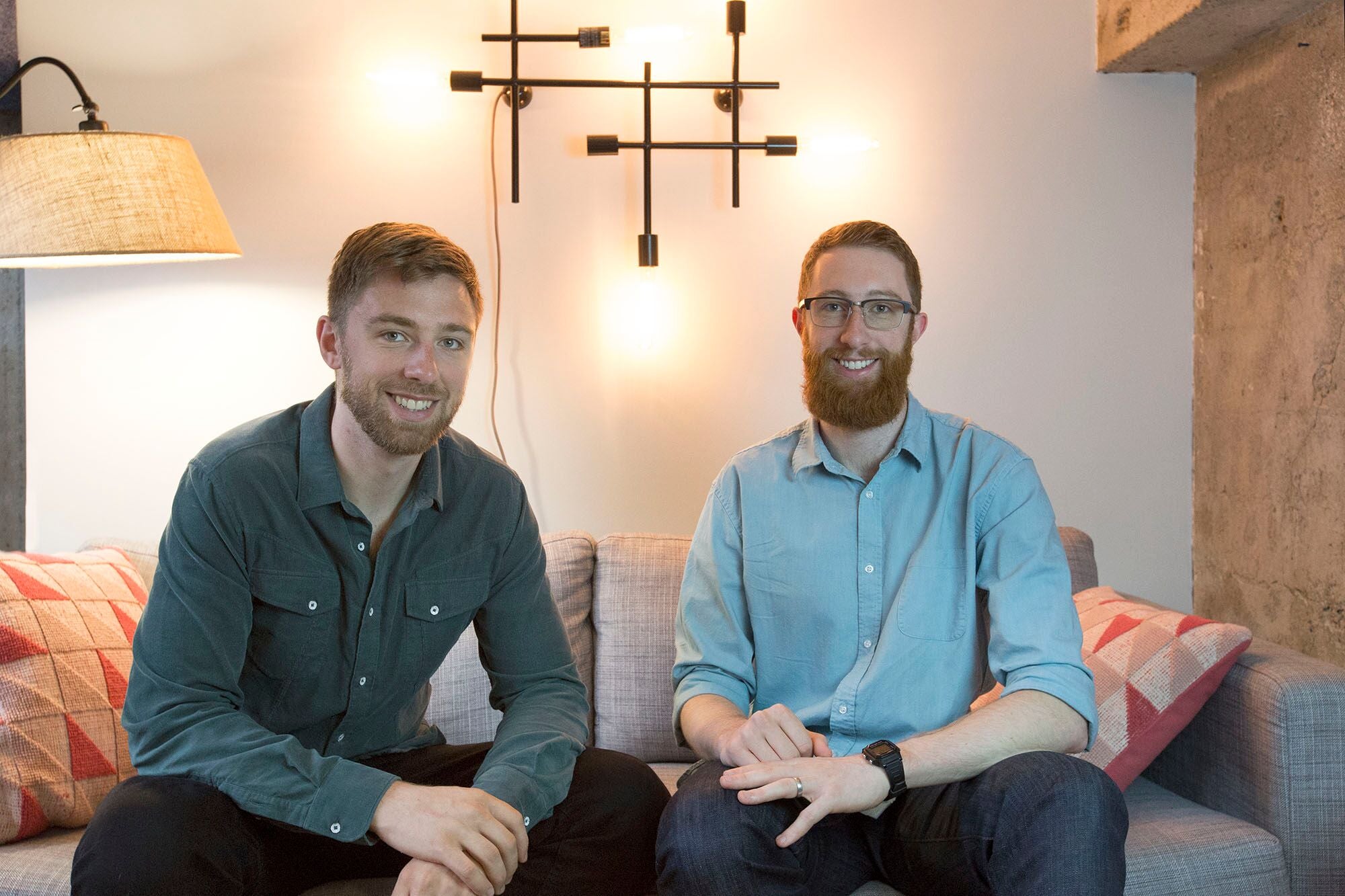
The domestic setting suited the scale of the operation. Dave handled coding and manufacturing; Nate took on business and design. “So life started in our kitchen,” Dave recalled. San Francisco had supplied the founders with ambition and customers while neglecting to supply the customary garage.
What began with a printer grew into access to other people’s equipment. By 2016, Evans was explaining why he preferred a network to owning a collection of machines. A specialist could concentrate on making parts; Fictiv could concentrate on the software and coordination that brought the right work to that specialist. A factory’s empty hours and an engineer’s wasted weeks could become each other’s solution.
“So life started in our kitchen.”Dave Evans, recalling Fictiv’s beginnings
He likes to look inside
Evans’s interest in the physical world predates his professional qualifications. As a child of about five, he took a hammer to his mother’s red Suburban, then announced: “Mom, I fixed your car.” The resulting dents gave his family a more nuanced assessment of the repair. His account of becoming an engineer begins with building and breaking.
That curiosity later found a more productive outlet in Fictiv’s teardowns. In a 2015 piece under his name, a Wilson connected basketball becomes an object of investigation. The team plays with it, opens it with a Dremel and examines how its electronics are held inside. Packaging, assembly and fastening choices receive the attention usually reserved for what a gadget does.
These are revealing subjects for someone selling access to manufacturing. The finished object hides the decisions that brought it into existence. Pulling it apart lets another designer see those decisions, borrow a useful trick or avoid an expensive mistake. Evans’s public work often returns to this exchange between having an idea and learning enough to build it.
His advice to beginners can be refreshingly inexpensive. In 2016, he recommended pen, paper and foam core to someone starting with a product idea. He also warned against the urge to make a first product look like something from Apple. A rough model can answer a question before anyone pays for an elegant answer to the wrong one.
The network gets a passport
The business gradually outgrew its early association with 3D printing. CNC machining broadened the materials and parts customers could order. Expansion into China increased the reach of the network. A $15 million funding round in 2018, led by Sinovation Ventures, brought total funding at that point to $25 million, with investors including Accel and Bill Gates.
Evans’s ambition was becoming wider than a quick prototype. A customer might need a nearby part urgently, then a different manufacturing arrangement as production grew. He wanted Fictiv to carry that transition, rather than force the customer to assemble a new set of supplier relationships at every stage.
He later described the company’s first chapter as engineering speed and its next, around 2019 and 2020, as globalization. The original question about elapsed time had expanded into questions about location, risk and continuity. Choosing where to make something could matter as much as choosing how.
Fictiv’s network developed across the United States, China, India and Mexico, supported by local teams as well as digital tools. Its current company page reports more than 42 million parts manufactured and more than 5,000 companies served. Those figures describe a long distance from personally carrying an order across San Francisco.
Parts manufactured through Fictiv, according to its company page accessed in October 2026.
An acquisition with more work attached
MISUMI’s April 2025 acquisition announcement put a price on that development: $350 million, subject to closing adjustments. Its account of Fictiv described approximately 400 employees and a network of about 250 manufacturing partners. The transaction closed on June 17, 2025, U.S. local time.
The pairing had a practical logic. Fictiv specialized in custom components. MISUMI supplied standard and configurable ones. A designer could need both for the same product, yet buy them through separate channels. Bringing the businesses together offered Evans a new version of his old problem: time lost at the boundaries between separate systems.
His appointment to lead MISUMI Americas was announced in January 2026, with the Japanese announcement specifying a March 1 effective date. He continued overseeing Fictiv. The role turned the acquisition into an operating assignment, with responsibility for aligning the businesses rather than simply celebrating the transaction.
In his announcement of the new chapter, Evans dwelt on the handoffs between buying standard parts, sourcing custom ones, prototyping and production. His stated aim was a simpler route from an idea to something manufactured. For someone whose business began with a question about waiting, the enlarged job description has a certain consistency.
Who gets to build the next thing?
By July 2026, Evans was talking about artificial intelligence in terms of faster decisions: comparing production locations, considering costs and responding to changing tariffs. He also acknowledged the uneven reality of factories, including workplaces without reliable Wi-Fi. Any useful technology has to fit the people and operations already there.
He has argued for hands-on education, apprenticeships and closer connections between manufacturing and schools. His own description of Fictiv’s student work includes helping Formula SAE teams obtain race-car components and understand how a design becomes a manufacturable part. The lesson requires both a screen and something you can pick up.
There is a personal pleasure running beneath these arguments about infrastructure. Working with customers gives Evans a view into satellites, fusion and robots before those projects become familiar products. “I feel like I’m living in a ‘Jetsons’ cartoon,” he said in 2026. The enthusiasm sounds like the child with the hammer, now equipped with a better understanding of tolerances.
His career has changed the size of the question without quite changing its character. A prototype, a production run and a regional sourcing business all depend on people being able to get the thing they need next. Evans keeps returning to the interval before it arrives. He has built much of his working life around giving some of that time back.
Keep following the parts
Conversations, writing and places to find Dave Evans.