A wedding website is a peculiar place to discover a marketing software company. Daniel P. Maloney and his co-founder, Alex Topiler, were trying to help people plan their weddings when Pinterest began sending visitors their way. The referrals grew. They built tools to understand what those visitors wanted. Friends heard about the tools and asked for versions they could use themselves. Somewhere between the wedding photographs and the traffic reports, a second business had introduced itself.
Maloney has a compact explanation for the beginning: “We were our own first customer.” It is an appealingly modest origin for Tailwind, the company he still leads from Oklahoma City. There was a problem, someone needed an answer, and the someone happened to be the founders. A wedding plan usually comes with seating arrangements. This one came with a change of industry.
The interesting part is how often the same pattern returns in his career. Maloney has worked inside Google, YouTube and AOL. He has built for people operating on a much smaller scale. Across those settings, the practical question keeps changing shape: what are people trying to accomplish, and where does the machinery get in their way?
A useful education in other people’s businesses
Before the large-company jobs, there was a college business reselling collectibles online. It helped him pay for college and gave him an early encounter with customers, prices and the work of making an enterprise function. His academic education crossed engineering and business; he graduated from the University of Pennsylvania in 2005, with degrees from its engineering school and Wharton.
He subsequently worked on new initiatives at Google Maps and YouTube, including Street View, local-business search, and early creator and monetization efforts. These are products in which an individual contribution can sit inside a vast system: a business listing, a video, a stretch of road. Maloney’s account of that period emphasizes the combination of scale and room to experiment. Large organizations had given him places to learn how products reach people.
Then came the video business at AOL after its separation from Time Warner. He describes the operation rising from thirteenth to second in U.S. video audience size during his tenure. That is an audience ranking, rather than a claim about company valuation or personal wealth. The distinction matters. His career had involved building inside institutions whose names were already familiar. A startup would make him responsible for finding the customers as well as serving them.
The wedding guests had somewhere else to go
BridesView, the wedding venture he built with Topiler, offered a visual way to collect ideas. Pinterest users were already doing something closely related. The founders investigated that overlap and developed tools around it. When other businesses wanted access, the audience had effectively supplied a new brief. The pair followed it into Pinterest marketing.
A pivot sounds tidy once it has acquired a successful company name. While it is happening, it asks founders to loosen their grip on something they have spent time trying to make work. BridesView offered a particularly sharp version of that bargain. The capability built to support the original company became the basis of the next one. Wedding inspiration had supplied the occasion; understanding demand supplied the business.
- 01BridesViewHelp people plan a wedding
- 02Pinterest trafficNotice where visitors arrive from
- 03Internal toolsUnderstand what interests them
- 04Outside demandBuild for other businesses
By December 2013, Maloney described an uneven early climb: roughly 200 brands after the first ten months of finding product-market fit, followed by more than 6,000 ten months later. Those figures belong to that early period. They show how slowly the useful thing can take shape before adoption starts moving faster. The founders had bootstrapped for about a year and a half before taking outside capital.
The customers bought the data. Then what?
A later obstacle was more revealing than an empty checkout page. People were paying for the analytics product without using it enough. Some lacked time to interpret the numbers; others needed help understanding what action to take. For an engineer, a functioning report can look like a completed assignment. For a shop owner with six other jobs waiting, it can be another assignment altogether.
This is the part of Maloney’s story that gives the product its human scale. A small business owner can recognize that marketing matters and still have no spare afternoon for mastering it. A dashboard has to earn its place alongside orders, suppliers, customers and the next bill. Selling access to information leaves a great deal of work on the buyer’s side of the screen.
Tailwind’s development moved toward making that work easier, with tools for scheduling and creating content alongside analytics. Topiler took the product and engineering side; Maloney took the chief executive, business development and marketing responsibilities. The division gave each founder a territory, while leaving the company free to change what it offered. Their users’ unfinished work kept providing directions.
“We were our own first customer.”
Danny Maloney, on Tailwind’s beginnings
A two-city company, with room in the middle
Oklahoma City became Maloney’s base while Topiler remained in New York. In a 2015 discussion of Oklahoma City’s startup scene, Maloney pointed to state support for innovation and the economics of keeping a headquarters there. The company’s geography made him part of a conversation about where technology businesses could grow, and where they could find the people to do the growing.
It is easy to turn a headquarters address into a business philosophy. An address also affects ordinary decisions: whom you meet, what an office costs, which potential colleagues are nearby. Tailwind was building across two cities with different reputations and resources. That arrangement gave Maloney a daily reason to think about the middle of the country as a place to operate a technology company.
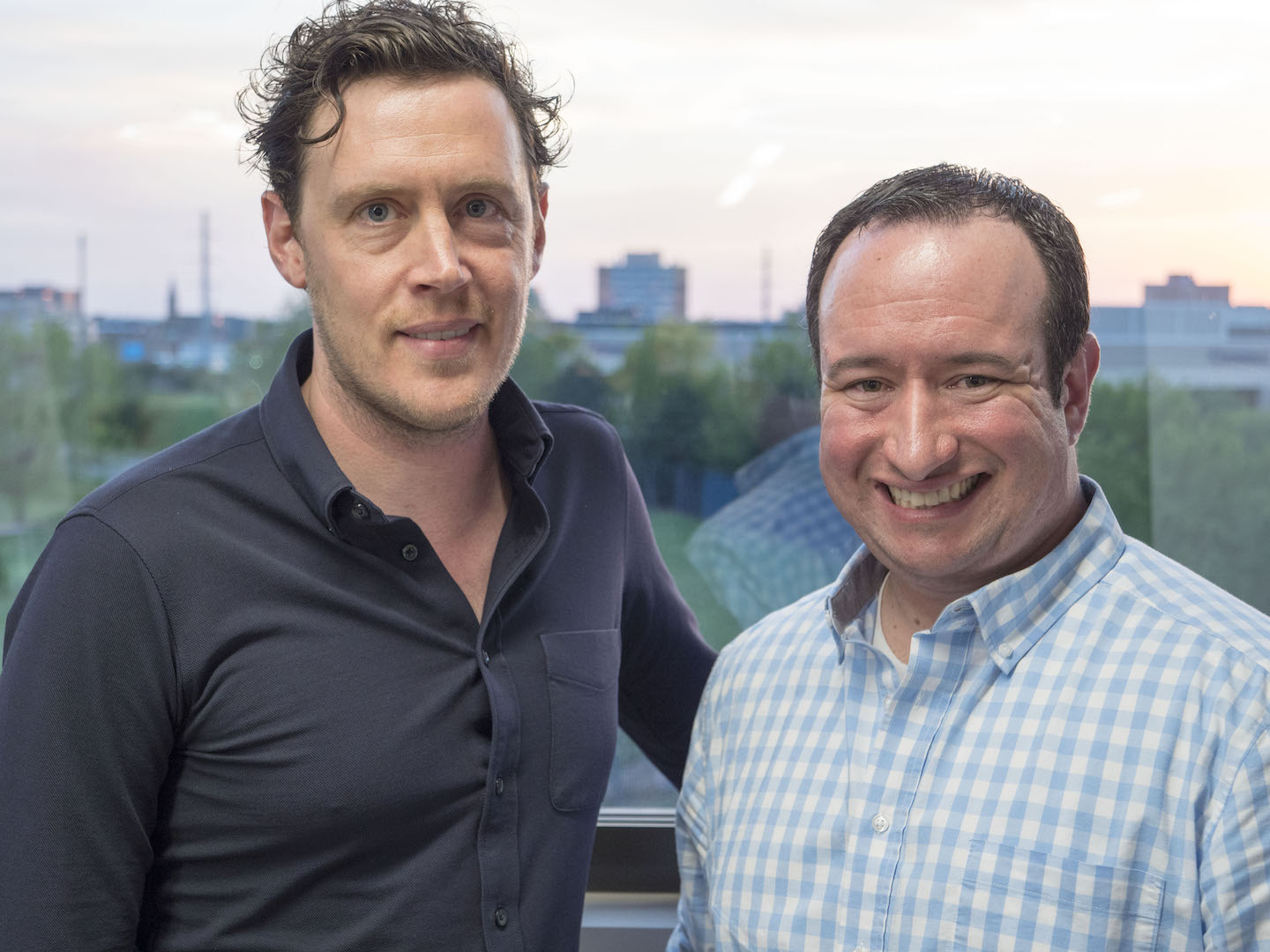
By May 2018 he was discussing the company’s coffee-shop beginnings at Startup Grind Oklahoma City’s inaugural local fireside chat. The conversation included his experience arriving as an outsider and balancing the two offices. There is something useful about that setting: a founder describing the workings of a company to people who may be trying to build one nearby. The distance between a speaker and a prospective colleague can be quite small.
The chief executive who helped someone leave
The more telling management anecdote concerns a departure. A former team member described Maloney coaching her through competing job offers as she prepared for a career change. Helping someone secure a better next job is a concrete expression of interest in their development. It also involves accepting that their next useful step may take them elsewhere.
Inside Tailwind, the founders let employees help define the company’s values when the team numbered roughly ten to fifteen. Growth, bravery, performance, inclusion, ownership and transparency became its stated set. The founders stepped out of that discussion rather than composing the whole thing themselves. The procedure fits the earlier product lesson: people who will use a system should have a meaningful say in how it works.
Thank-you messages in the company’s Slack channels acquired a food-based shorthand: colleagues “taco” one another. It is a small detail, and small details are often where workplace claims become legible. A list of values can be printed in an afternoon. The ways people acknowledge one another require repetition. Even the vocabulary has to become something colleagues actually use.
The next tool still has to earn its keep
Maloney’s later description of AI-assisted marketing covered four connected tasks: planning, visual design, copywriting and advertising. The ambition was to help a small team move through more of the work, from deciding what to do to getting content in front of an audience. Automation, in this account, has a fairly practical destination: a business owner with more tasks than available hands.
That ambition leaves an important test for the software. Producing another image or another paragraph is only helpful if the business can use it. The hard part remains deciding what belongs in the campaign, what sounds like the owner, and what deserves a customer’s attention. A system that adds output without reducing the burden of judgment may give its user a larger pile to sort.
In an August 2025 interview, Maloney discussed customer feedback, transparency and AI as an addition to human creativity. The accompanying company biography described Tailwind as serving more than two million sellers, creators and small businesses, and dated its Pinterest developer relationship to 2012. Those are company-reported measures of reach. They put a larger audience around the same underlying question of whether the tool helps someone get work done.
His writing in July 2026 returned to Pinterest search, keywords and the quality of the data behind keyword tools. After years of product expansion, he was still addressing the particulars of how a business gets found. The original subject had survived the changing product vocabulary: people have something to offer, and they need help reaching the people who might want it.
Asked what he enjoyed outside work, Maloney answered with fatherhood, describing the pleasure of playing and being goofy with his daughter. The answer gives an ordinary boundary to a career full of platforms and growth figures. There is work to do, and there is a life to return to. Tailwind began when its founders noticed that people were heading somewhere unexpected. Maloney’s job has kept requiring him to pay attention to where they want to go next.
Keep the conversation going
Meet Danny through his personal biography, LinkedIn, Twitter/X, Instagram and Pinterest. Explore Tailwind and his writing.
Watch the Oklahoma City conversation ↗The early years: Wharton interview
Building Tailwind: a conversation with Kate Ahl
Customer feedback and AI: Business Growth Spotlight
Marketing, technology and fatherhood: DataDriven