A strawberry is a small thing to reorganize a career around. Yet Danny Bernstein keeps returning to it. Watching a harvest crew, he came to appreciate how much judgment, speed and care fit inside a supermarket clamshell. The fruit looked familiar. The work behind it suddenly looked different. For someone who had spent years helping technology reach users, this was an unusually tangible lesson in what a user actually does.
Bernstein is the founder, CEO and managing partner of Reservoir. Its agricultural technology centers put startup development beside working crops. Its venture platform invests in young companies. The combination makes his central question physical: how can an engineer build something useful for a farm while remaining distant from the people, machinery and growing conditions that determine whether it works?
There is a pleasing indignity in taking a polished technical idea outdoors. A field has no obligation to admire it. Bernstein has chosen that setting for the next chapter of a career that previously ran through Meebo, Google and Microsoft. In Salinas, the theory gets an appointment with the dirt.
The partnership business, with soil under it
At Meebo, Bernstein worked in business development. Google acquired the startup in 2012, bringing him into a company where he would spend roughly a decade. He became a managing director in its Global Business Organization. Later, he served as a partner at Microsoft.
His Google responsibilities covered strategic partnerships and developer programs across products including Search, Assistant, Chrome, Google Identity and Firebase. At Microsoft, his work included leadership of Teams product lines. These were jobs concerned with the connections around a product: developers, partners and the organizations through which an idea becomes useful to other people.
That history helps explain the shape of Reservoir. Bernstein’s agricultural venture brings several participants into the same conversation. A robotics team needs somewhere to experiment. A grower needs a tool that fits an operation. An investor needs a credible route toward a business. A college needs meaningful opportunities for its students. Each sees a different part of the proposed machine.
Reservoir gives those interests a common address. The address matters because an introduction, however cordial, leaves plenty of room for misunderstanding. A working crop gives everyone something specific to discuss. An engineer can show a problem; a grower can point to a consequence. The conversation acquires a useful vocabulary.
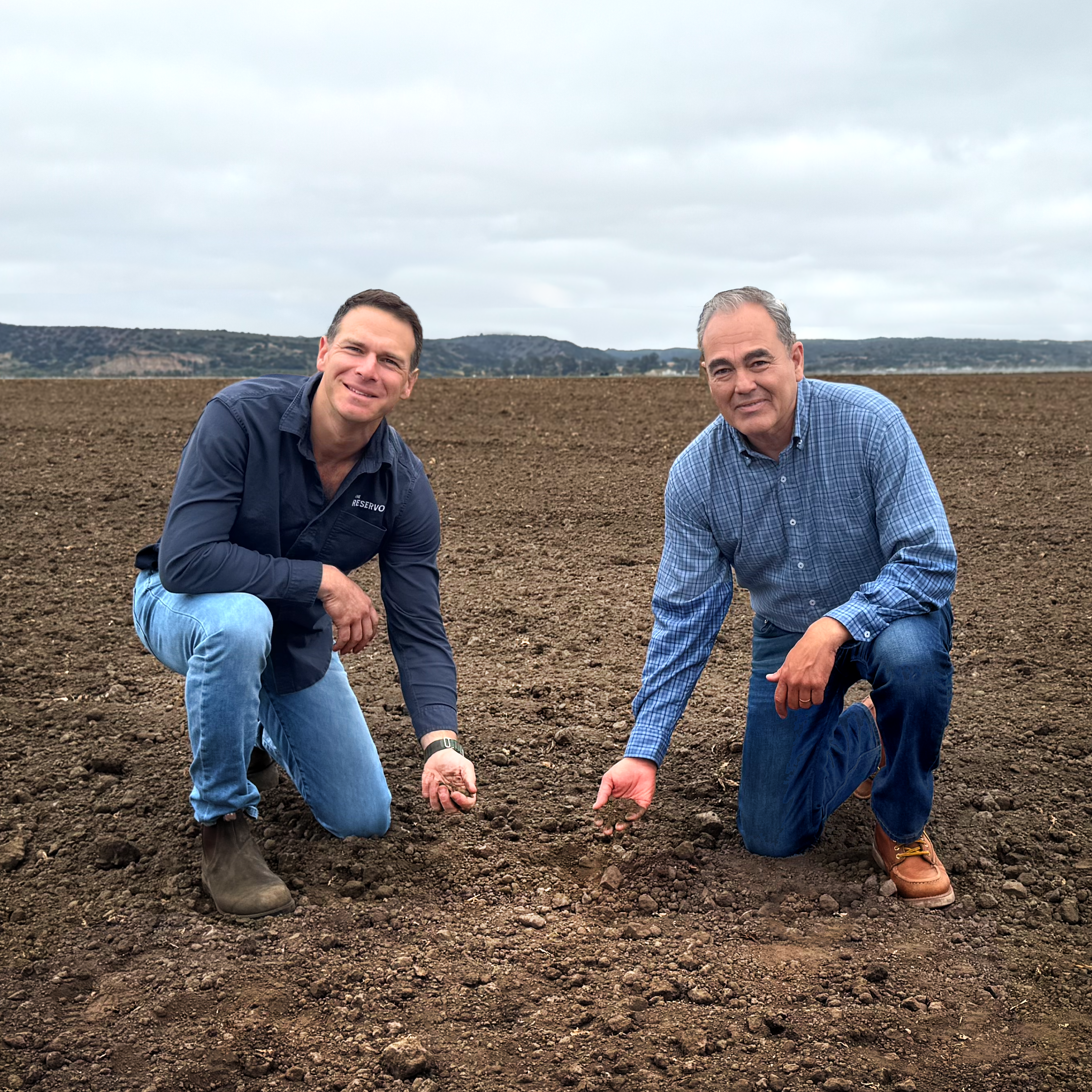
A tractor attachment, minus the tractor experience
Bernstein has described encountering teams developing farm sensors without engineers who had worked on a farm. He also encountered teams making tractor attachments without knowing how to drive a tractor. The examples have the dry comedy of a restaurant whose chef has only read about lunch. They also explain a practical weakness: knowledge of the setting arrives too late.
His answer is to make access to that setting part of the development process. Reservoir supplies working farmland and R&D facilities together. Startups can test with crops rather than repeatedly asking a commercial grower to accommodate a prototype. The grower’s business and the startup’s learning process have different needs; providing dedicated space gives the relationship somewhere to breathe.
Think of the change in the questions a founder can ask. A distant team asks whether a concept ought to work. A team with access to the field can ask where it failed, what changed between attempts, and what to try tomorrow. Neither question is glamorous. The second is more likely to produce a repair.
In his own writing, Bernstein treats grower participation as an early design requirement. The people who will operate the equipment belong in the discussion while choices are still changeable. That is a modest proposition with expensive implications for anyone who has already built the wrong thing.
For the founder of a robotics company, the arrangement also changes how a day can be spent. Time reserved for arranging access can become time spent examining a machine. A question about the crop can be asked while the crop is in front of everyone. A workshop nearby makes a revision easier to contemplate. Those are ordinary conveniences, which is precisely their value: they let a small team put more of its attention into the problem it came to solve.
Bernstein’s contribution is to organize those conveniences into an institution. It is patient work around a field of impatient questions. What will the machine cost? Who will use it? What will happen when it needs attention? The farm gives such questions a place to become specific.
The crop keeps the calendar
Bernstein earned a B.A. at UC Davis and completed the Stanford Executive Program. His current academic connections include agricultural advisory roles at UC Davis and Fresno State. He has been taking the questions of agricultural technology into forums where scientists, growers, executives and investors meet, including World Agri-Tech and FIRA USA.
In an August 2025 essay, he reflected on the difference between software development and open-air agriculture. Weather, changing light and crop biology complicate the tidy schedule on a product roadmap. His argument was that physical AI needs exposure to those conditions while it is being developed.
The distinction has consequences for how progress is judged. Shipping another software release is an event a team can put on a calendar. A crop has its own timing. A machine that performs beautifully under one set of conditions still has to earn confidence under another. The product’s surroundings become part of the test.
That gives Bernstein’s work an interesting tension. He brings the habits of a technology executive into a setting that resists some of them. Speed remains valuable, but speed without observation can send a company briskly in the wrong direction. Access to the field offers a way to learn sooner without pretending that the field is simpler than it is.
“agriculture is the show-me industry.”
Danny Bernstein, August 2025
Forty acres make the idea literal
Founded in 2024, Reservoir secured a long-term arrangement for 40 acres in Salinas through the Tanimura family and Tanimura & Antle. The initial plan set aside testing plots for strawberries, leafy greens and vegetables. The choice of crops placed the project inside the working specialty-crop economy surrounding it.
Reservoir broke ground on its Salinas innovation hub in August 2025. Its Salinas site became operational in March 2026; a Sonoma County site followed in April. The latter includes Pinot grape acreage. Bernstein’s proposed institution had moved from plans and partnerships into places where companies could build.
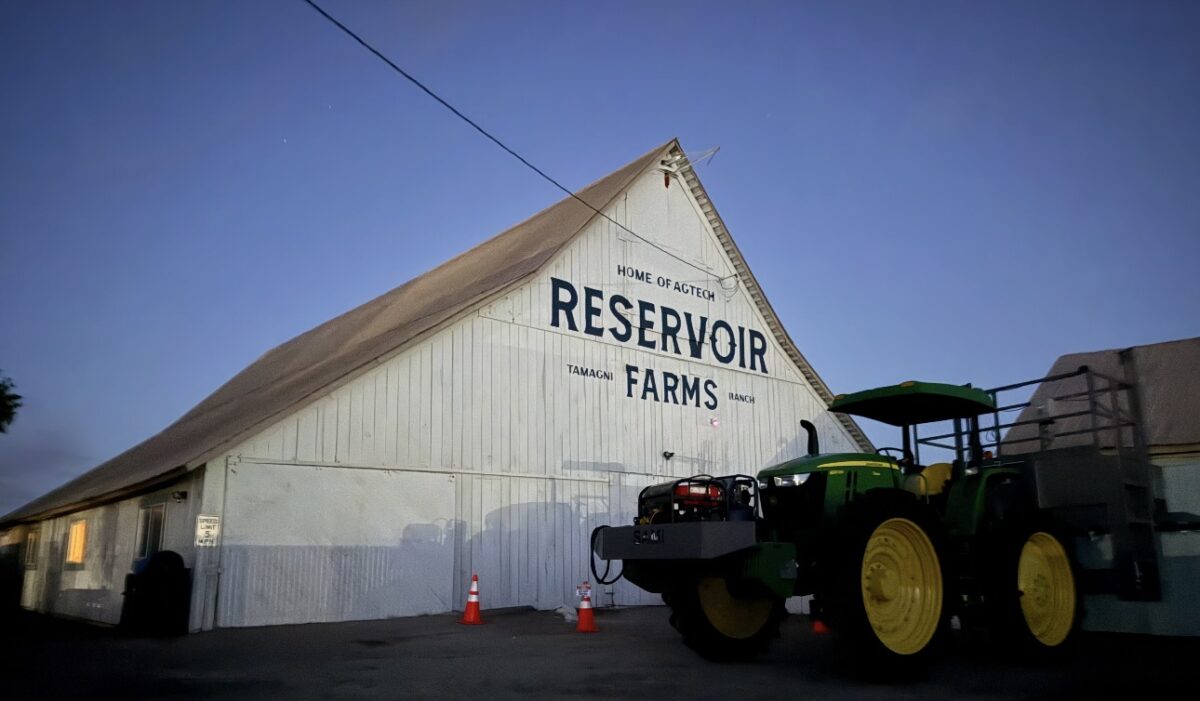
The sequence matters. Land access, construction and operating sites are different milestones. Bernstein’s venture needed all three, as well as companies willing to use the facilities. By August 2026, Reservoir said its first two sites had welcomed more than 20 startups.
A shared farm is also an exercise in organization. Someone must connect the testing opportunity to the company that needs it. Someone must keep industry relationships useful. Bernstein’s role sits among those tasks. The infrastructure makes experimentation possible; the relationships help make the experiment relevant.
Capital gets a field assignment
In June 2026, Reservoir announced the acquisition of Contain, expanding its venture platform. Bernstein described bringing Nicola Kerslake into the organization as a general partner and launching a second fund. His interest in field testing has remained connected to the financing of young companies.
Those two activities ask related questions from different directions. Testing asks whether a tool can do its job. Investment asks whether the company can develop, sell and support it. Keeping the questions close makes the gap between them easier to see. A promising trial is encouraging; a durable business requires further work.
At the inaugural Ruggedize conference in August 2026, Reservoir announced a $10 million, three-year R&D partnership with John Deere. The commitment is intended to subsidize startup participation and extend access to Reservoir’s infrastructure and industry relationships. Western Growers had separately announced a three-year partnership worth $1.5 million in May.
John Deere’s three-year R&D partnership with Reservoir, announced August 2026.
These commitments buy time and access for experimentation. They do not establish that every machine will succeed. Their significance is more concrete: early teams can reach the conditions and people they need to make an informed attempt. Bernstein is assembling support around that stage of the work.
A place to build, and a reason to stay
The rural community is part of Bernstein’s ambition. In interviews, he has questioned an economic pattern in which talented students leave agricultural regions for urban technology jobs. Reservoir works with educational partners, including community colleges, around workforce development. He wants technical opportunity to have a local home.
In September 2026, the organization appointed Christine Birdsong head of external affairs. Bernstein described an agenda spanning community colleges, universities, government and international collaborators. The appointment reflects how much of this undertaking depends on institutions beyond the startup itself.
There is a human scale to his own life: he lives in Carmel Valley with his wife and two children. His professional subject is much larger, but its questions keep returning to individuals. Can an engineer get access to a crop? Can a grower influence a design? Can someone already living in the region find a future in the technical work arriving there?
For Bernstein, the next chapter depends on making those encounters routine. The strawberry remains a useful reminder. Before anyone can automate the work, they have to notice what the work contains. At Reservoir, he is giving people a place to look closely, ask better questions and try again.