A seed bag is a modest thing to build a career around. It has no screen, no subscription reminder, no ambition to interrupt your afternoon. Yet behind it sits a complicated arrangement of research, distribution, regional knowledge and money. Collin Phillip has spent much of his working life dealing with that arrangement. His move into venture capital puts him farther upstream, where businesses are financed, while keeping him close to the practical question that follows every agricultural invention: who can actually use it?
The seed bag has a customer
In October 2018, Phillip was explaining a reorganization of seed brands at Canada's Outdoor Farm Show. As Corteva Agriscience's eastern area leader, he described two routes to customers. Pioneer would continue through farmer-dealers. Brevant would sell through agricultural retailers. The distinction mattered because a merger had brought different brands and distribution systems under one roof. A corporate chart might make that look tidy. For a farmer deciding where to buy next season's seed, it needed a more useful explanation.
Phillip discussed the difference in the ranges themselves. Pioneer had a broad selection requiring detailed local knowledge. Brevant offered a more focused assortment adapted to a region. His subject was the small, consequential work of making a combined business intelligible to its customers. The bags still had to mean something different. Research could be combined; the products in the two brands would remain distinct.
By December, he was also talking about simplifying the retailer's job. A narrower regional offering could give suppliers more time to help customers choose inputs. His stated aim was plain: “Our intent is to make it easy to do business with us”. In an industry fluent in technical detail, that is a useful sentence to keep within reach. It gives the science a destination and the sales organization a task.
The emphasis offers a way to read his subsequent career. Across seeds, trees and plant propagation, his responsibilities repeatedly concerned the connection between what a business produces and the people who depend on it. The categories changed. The need to turn a product offering into a workable customer relationship kept showing up.
- 2018Corteva
Eastern area leader - 2023PRT
Chief commercial officer - 2024Ontario Plants
Director of sales - 2025Verdex Capital
Chief executive
Trees bring a different timetable
In January 2023, PRT Growing Services announced Phillip as its chief commercial officer, alongside the appointment of Marlene Higgins as chief people officer. The business produced container-grown forest seedlings across Canada and the United States. At the time, PRT described a network of 21 facilities and annual production of more than 300 million seedlings. These were company operating figures, rather than achievements to put beside one executive's name.
The scale provides context for the role. A seedling business connects nursery production with customers planning forests. Phillip's appointment announcement emphasized his earlier sales and supply-chain work at Corteva and Monsanto. He spoke about partnering with customers and helping organizations navigate their environmental, social and governance objectives. The commercial offering sat within a longer chain of activities; a tree's life is rather less impressed by quarterly reporting than a spreadsheet would prefer.
That February, he appeared on the program for a Forests Ontario conference panel about Canada's 2 Billion Trees initiative and climate action. The session brought together participants from different parts of the tree-planting supply chain, including conservation, reforestation and government. Its organizing question concerned integration: how the pieces could work together to support the program's goals. It is a concrete example of the kinds of connections surrounding his forestry role.
The two public appearances place him in related settings. One concerned the commercial growth of a nursery business. The other concerned coordination across a larger planting effort. Neither works in isolation from the people further along the chain. That relationship between a company's offering and the system receiving it would become increasingly relevant when his job turned to financing agricultural ventures.
A promising product still has to find its place in somebody else’s business.
The commercial thread
A greenhouse appointment, then Calgary
Ontario Plants announced Phillip as director of sales in 2024. Founder Tim Vanderkooy was stepping away from day-to-day management while remaining a strategic adviser. Phillip's brief was to strengthen relationships with North American growers as the company prepared for a second site in Glencoe, Ontario. This was another commercial role at a business supplying the beginnings of production: young plants, rather than the finished crop.
Chief executive Mathieu van de Sande emphasized customer service and Phillip's commercial experience in explaining the appointment. Phillip, in turn, described the team's energy and ambition. The circumstances are worth lingering over. He was joining during a founder succession and a planned expansion, with an established operation already serving customers. Growing a sales function under those conditions involves carrying existing relationships into the next stage of a business.
His next publicly announced destination was Calgary's Verdex Capital. The firm appointed him chief executive effective September 2, 2025. It brought his agricultural operating background into a business whose work is to invest in the sector. The move connected two sides of commercialization: running the organizations that sell and deliver products, and supporting the companies trying to establish themselves.
His academic background spans business and marketing: a Bachelor of Commerce from Royal Roads University, an MBA from Simon Fraser University and a Master of Marketing from the University of Melbourne. The combination fits the subjects visible in his public work, from distribution choices to customer relationships. Education supplies part of the background; the career supplies examples of where those questions became operating decisions.
Two doors for agricultural ideas
Verdex's institutional history stretches back to AVAC Ltd., established in 1997 to invest in Alberta agriculture. Its mandate subsequently expanded into information and communications technology and investments in venture funds. During its AVAC Group period, it managed Accelerate Fund I and launched Carrot Ventures. Phillip joined an existing organization with an accumulated history. The venture studio was already operating before he became chief executive.
Today, the firm directs owners of agricultural technology intellectual property toward Carrot Ventures and existing agricultural technology companies toward Verdex AgriFund. The distinction makes room for two different starting points. One applicant may have technology with commercial promise but need a company built around it. Another may already have a business and need investment to take its next steps.
Carrot's original $15 million fund was announced in May 2021, backed by AVAC and Farm Credit Canada. Its model involved identifying and assessing technologies, recruiting experienced leadership, forming companies and leading their initial financing. The sequence matters: the organization of a venture is part of the work, alongside the technical idea. A promising invention arrives with questions about leadership, structure and a market willing to pay.
For an executive whose earlier work included distribution and commercial operations, this setting creates a recognizable set of problems at an earlier point in company development. Product and customer still have to meet. A venture studio takes responsibility for arranging more of the steps between them. AgriFund provides another route for companies that already exist. Neither route makes the customer's eventual decision disappear.
The money before the machinery
An August 2026 investment brought the financing question into particularly clear view. Verdex AgriFund backed Invest In Farmers, or IIF, as the Australian platform prepared to expand into Canada. Verdex's announcement identified AgFunder as the round's lead. IIF connects consumers with defined agricultural production opportunities, including livestock, crops and aquaculture, and allows them to share in the financial outcomes of those cycles.
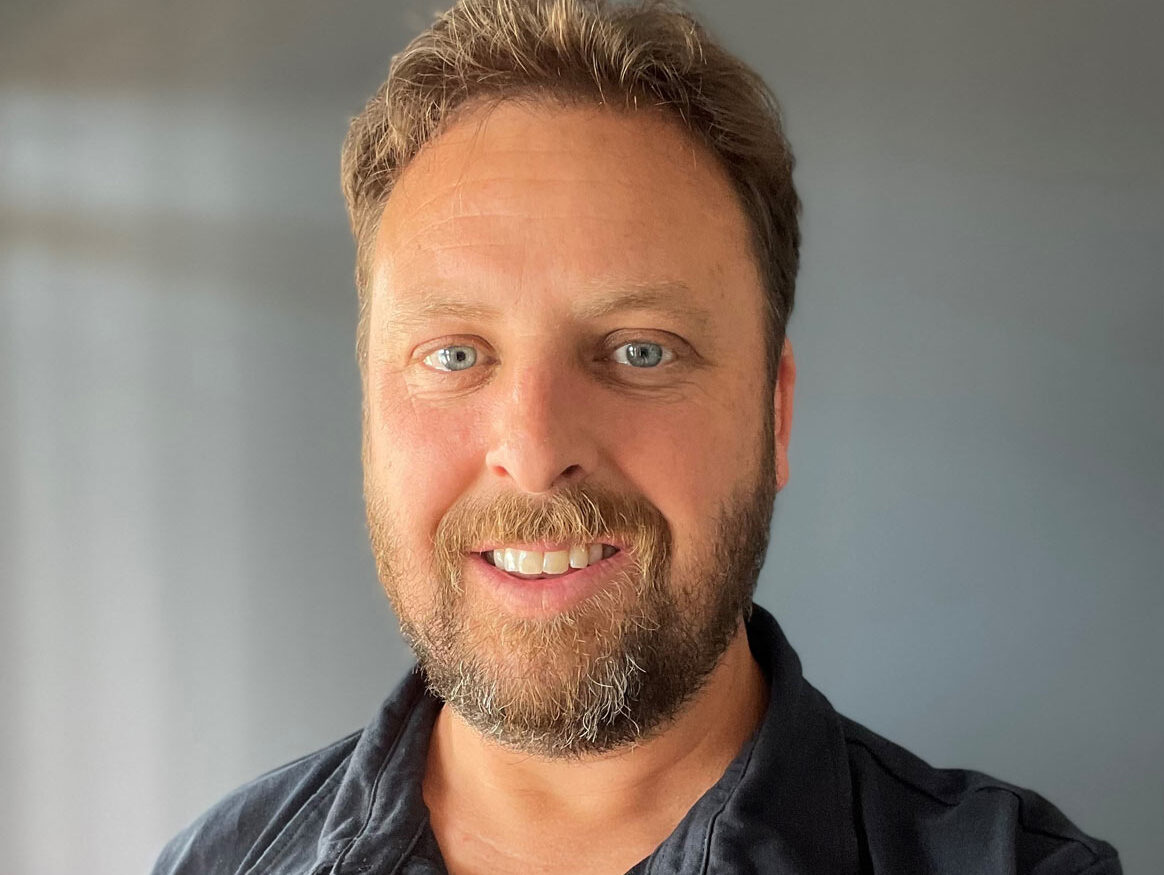
Nathan MacPhee, founder and CEO of IIF, the agricultural investment platform backed by Verdex. The farm can stay on the farm; its production opportunities can travel by app. Photo: IIF.
The proposition gives people a way to participate in production without buying a farm. For producers, it offers capital tied to what they grow. The platform's Canadian expansion put Phillip in conversation with founder Nathan MacPhee, who relocated to Calgary to work on it. Agriculture's financing arrangements had become the product under discussion, with the same underlying concern about whether a business model could serve its intended customers.
Phillip connected available capital to adoption of agricultural technology. An innovation might help a farmer improve efficiency, but using it still requires the resources to invest. He also argued for treating Canada as a deliberate destination for expansion. His phrase was “an intentional expansion to help Canadian producers”. That places the Canadian customer inside the plan from the beginning, with requirements to consider before the product travels farther.
In a September 2026 interview, he explained Verdex's interest through the team's experience, its operating record in Australia and the relevance of its model to Canada. He described success in terms of commercial performance, farmer adoption and new capital reaching agriculture. These are useful measures because they keep the discussion attached to use. An investment announcement is a beginning; adoption and a sustainable business are outcomes to work toward.
Seen beside the 2018 seed-brand explanations, the continuity is striking. Then, Phillip was discussing how a farmer would find the right product through the right sales channel. Now, he is discussing how a farmer could obtain capital for a production opportunity or a technology purchase. Both conversations concern access, with a business standing between an offering and the person who needs it.
His career gives that question several physical forms: a seed bag, a forest seedling, a young greenhouse plant. Venture capital adds the company that may produce the next one. The distance between invention and use can contain a surprising amount of ordinary work. Phillip's public record keeps returning to that work, where the customer relationship, the distribution plan and the financing arrangement determine whether an idea gets any farther than its introduction.