Thirty-seven triathlons is an unusual detail to find beneath a venture capitalist’s financial credentials. Tom Espiard-Cignaco’s biography gives it a place alongside his McGill MBA and the billions of dollars in portfolios he has overseen. He has also represented Canada at international triathlon championships in his age group. The investment banker has, quite literally, another set of transitions to manage.
There is a temptation to turn that into a tidy explanation of his career: swimming teaches patience, cycling teaches endurance, running teaches perseverance. It would make a handsome motivational poster. His actual professional record offers something more interesting. Across Canada and France, he has worked with technology companies, large pools of institutional capital and, now, businesses attempting to change how agriculture and food production work.
At Capagro, where he joined the leadership in 2018, the distance between a promising technology and a paying customer is central to the job. An agricultural invention has to leave the presentation room and enter somebody’s working day. A farmer, distributor or industrial buyer eventually has to decide whether to use it. That is where his story becomes less about the glamour of venture capital and more about the machinery of adoption.
A Canadian education in the movement of money
Espiard-Cignaco studied at HEC Montréal, earning a bachelor’s degree in business administration, and at McGill University, earning an MBA. His professional history includes BMO Nesbitt Burns, Merrill Lynch and National Bank Financial. Before his work managing investment portfolios, he spent a decade in Canadian investment banking, principally working with information and communications technology companies.
The transactions were substantial. His investment banking work involved more than C$800 million in equity financings and C$7.6 billion in mergers and acquisitions during that banking period. These are different kinds of work: raising money gives a company resources; an acquisition changes ownership, structure or scale. Both demand attention to what a business can do after the announcement has been made.
He subsequently worked at Caisse de dépôt et placement du Québec and France’s Caisse des Dépôts, before a period with Greensoil’s building innovation investment business. The geography shifted between Montréal, Paris and the Toronto area. So did the size and purpose of the capital under his care. His experience extended from individual growth investments to portfolios held by major institutions.
Since 2006, he has deployed more than C$750 million into growth equity companies and overseen private capital portfolios totalling more than US$10 billion. The currencies deserve their full names. These figures describe separate activities across a career, rather than a single pot of money. They also explain why his arrival at a specialist agricultural technology fund brought a background broader than agriculture alone.
The move from technology to the field
Capagro had been investing since 2014 when Espiard-Cignaco joined in 2018 as president and managing partner. He took responsibility for the general partner’s operations. His work also includes board roles at Naïo Technologies, Combagroup and Cellucomp. Those responsibilities put him close to the operating companies as well as the fund that backed them.
The names suggest how wide the agricultural brief can become. Naïo brings robotics into farming. Combagroup belongs to the world of cultivation technology. Cellucomp works with materials. An investor in this territory can move between a field, a growing system and a material application without leaving the broader agricultural economy. The common question is how a technology becomes commercially useful.
His June 2021 letter laid out that breadth explicitly. Agricultural robotics, cultivation systems, food products, distribution models and grain technology all appeared in his account of the portfolio. He treated the chain from production to consumption as a connected investment space. A change in how something is grown may need a change in how it is processed, sold or delivered before the full benefit reaches a customer.
The same letter put established businesses inside the story. Espiard-Cignaco argued that companies able to integrate and deploy innovation could improve their competitive position. His emphasis was on deployment as well as invention. A clever device waiting for a purchaser has a rather different economic life from one already built into a production process.
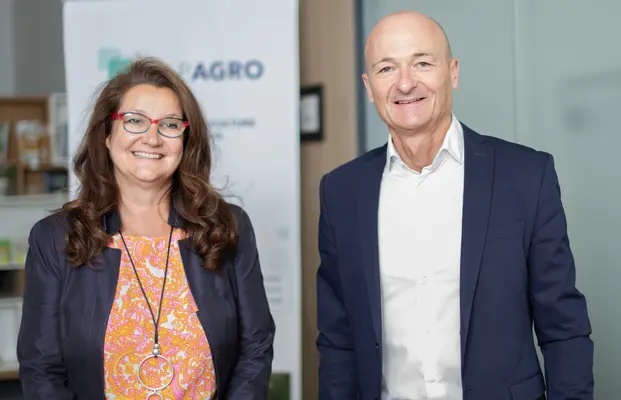
The customer gets a vote
In 2022, describing the next phase of Capagro’s investing, Espiard-Cignaco favoured companies that already had commercial traction, organised teams and technology or know-how that competitors could not easily reproduce. The fund’s selection criteria, he explained, had followed that direction since 2018. His arrival and that date coincide, although the strategy belongs to the firm and its investment team.
That preference gives the profile its practical centre. The founder needs evidence that someone wants the product. The team needs enough structure to carry a growing business. The technology needs a reason to retain value when other companies notice the opportunity. These are questions about the next stage of a company’s life, when an idea has begun to acquire obligations.
Capagro’s public investment thesis similarly describes early-growth businesses with significant revenues and ambitions to expand commercially. That is a particular moment in entrepreneurship. There is enough activity to examine, but still much to build. Sales, execution and access to an industry network become part of the investment discussion alongside the technical proposition.
Espiard-Cignaco also drew a boundary around excessively large opening rounds in his 2022 interview. A company seeking roughly €100 million at its first financing would fall outside the approach he described. The point was proportion: the amount committed should suit the stage of the business and its path towards economic viability. Even in venture capital, the size of the cheque is allowed to be a question rather than a boast.
“Nos souscripteurs ne participent pas aux décisions d’investissements.”TOM ESPIARD-CIGNACO · 2022
A network with a rule at the door
Capagro’s partners include agricultural and food businesses, cooperatives and financial institutions. Its public partner list includes Avril, Bel, Terrena, LSDH, Crédit Agricole and Bpifrance. For a young company, that brings the possibility of contact with organisations that understand how an agricultural or food market actually operates.
Espiard-Cignaco has described continuing interaction with industrial partners and cooperatives through Capagro’s open innovation platform. The conversations cover sector conditions, technological maturity and opportunities for collaboration. In his 2021 letter, he presented the fund as one component of its partners’ own innovation strategies, offering market observation and access to potential solutions.
There is a governance boundary. In the 2022 interview, he said the fund’s subscribers did not participate in investment decisions. The distinction matters to the arrangement: commercial knowledge can help a fund understand a market while investment authority stays with the independent manager. A useful introduction should not quietly become an instruction.
His involvement with BoMill offers a concrete example of portfolio governance. In October 2021, Capagro announced that Pierre Kiener would become its co-opted representative on BoMill’s board and Espiard-Cignaco would serve as an observer until the following annual meeting. BoMill develops grain-sorting technology. Here, his role was attached to an existing company, a named colleague and a defined governance arrangement.
The second fund, counted properly
The next chapter has a number attached, and it needs a date attached too. Capagro II was introduced in 2022 with a €200 million fundraising ambition. By December 2025, the fund had completed its fundraising at €137 million. The final amount was announced in April 2026, with a €15 million commitment from Banque des Territoires through France 2030’s Entrepreneurs du Vivant programme.
That announcement described six investments already made and initial investments of €3 million to €10 million, mainly as lead or co-lead investor. For Espiard-Cignaco, the fund’s continuation also extended the partnership model he had described years earlier. Public capital, sector relationships and young companies were being brought into the same investment structure.
CAPAGRO II / TWO DIFFERENT MILESTONES
Final close announced April 2026. A target and a completed fundraising are separate facts.
In December 2025, Capagro also joined the announced Plymag transaction as a minority investor alongside Sofiprotéol, with Ardabelle taking the majority position. Plymag develops agricultural solutions based on algae and has a commercial presence in more than 30 countries. Espiard-Cignaco welcomed the opportunity to support its next growth phase and connect it with Capagro’s agricultural partners.
What survives the presentation
Capagro classifies its second fund under SFDR Article 9 and publishes impact reports. Its stated approach includes measuring extra-financial performance over the investment period alongside conventional financial performance. Sustainable production, climate action and biodiversity are among the areas it identifies. Those commitments give its agricultural brief a measurement task as well as a financing task.
Espiard-Cignaco’s public life also includes discussion with the wider sector. At the 2025 Time to Change forum in Deauville, he joined a round table with investors and agricultural industry representatives, including Eric Marty, Karima Kaci and Romain Faroux. The discussion addressed innovation, sustainable profitability and food sovereignty. It was another setting for the finance-and-industry conversation that runs through his work.
Then there is the triathlete again. Thirty-seven races bring a human scale to a career otherwise expressed in millions and billions. The sport supplies an appealing image of successive stages. His professional record supplies the substance: education in Montréal, banking in Canada, institutional investing across the Atlantic and a leadership role financing agricultural businesses.
The distance that matters in this story is the one an innovation travels before somebody uses it. Espiard-Cignaco has spent years working on the financing, governance and relationships along that route. For a field robot, a grain-sorting system or an agricultural biosolution, the destination is wonderfully unceremonious: a customer deciding that it earns its place in the working day.