A brand activation has two lives. The first is brief and physical: doors open, guests arrive, a room fills, and somebody discovers that the lighting looked kinder in the rendering. The second begins after everyone leaves. It lives in photographs, retellings, social posts and the stubborn little detail that follows a guest home. Daniela Guzman works on both lives at once.
Guzman is the founder and CEO of First Move, a Miami experiential production and creative agency. Its offer joins work that companies often scatter among separate teams: creative direction, live production, content, social strategy, partnerships and influencer marketing. On a spreadsheet these are service lines. In a room they are inseparable. The invitation has already told a story before the guest sees the set. The partner list alters the meaning of the event. The useful photograph depends on a physical moment worth photographing.
Her phrase for the approach is “execution-first.” It sounds less romantic than “visionary,” which is part of its charm. Plenty of handsome ideas have expired somewhere between the concept deck and the loading dock. Guzman has built her company around what survives that journey.
The work before the company
Before launching First Move, Guzman worked directly with brands as a consultant and creative lead. She shaped campaigns, content systems and brand narratives for businesses in hospitality, lifestyle and beauty. The biography is compact, but the sequence explains the company she later built. Consulting puts a person close to the question; leading the creative puts her close to the choices; running the production puts her close to the consequences.
She attended Florida International University from 2017 to 2019. Her public profile does not turn the educational line into a grand origin myth. The visible through-line begins in practice: years spent helping brands refine a voice, elevate a presence and make a campaign perform over time. First Move is the institutional version of that hands-on role.
The agency was formally incorporated in Florida in January 2026, with Guzman listed as its authorized member. By then, its public work was already presenting a clear point of view. Strategy and creativity belong in the same conversation. A partnership should feel like an extension of the client's team. Every move should have a reason.
A racetrack, a rack and a wall
The Pickle Pit-Stop offers a useful view of the machinery. Built around Miami's Formula 1 weekend, the pop-up for fashion rental platform Pickle began with a familiar event brief: create a moment people would want to enter. First Move turned it into a sequence.
Invited creators received VIP passes. Inside, styled clothing racks made the product tangible. A moodboard wall gave visitors a visual action rather than a logo to stand beside. Brand partners supplied activations throughout the space. An influencer preview led into lunch. The details carried the automotive wink without turning the room into a costume party.
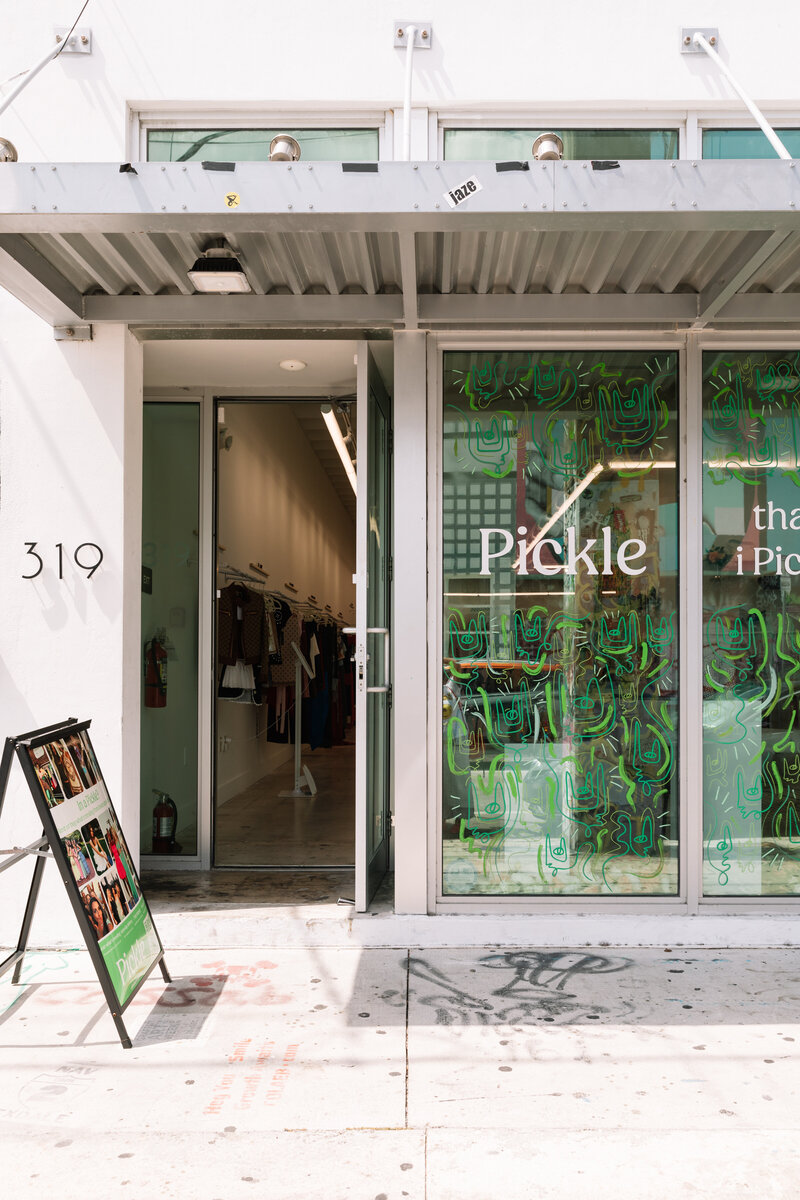
Guzman described it as “one of those projects that reminds me why I love what I do.” The comment is personal without being theatrical. Creative production is a peculiar satisfaction: the work is intensely material, yet its result is a feeling. You arrange racks, passes, lunches and walls so that a guest experiences one coherent thing.
Coherence is the product
First Move's most interesting product may be neither the pop-up nor the post. It is coherence. The agency's three main disciplines form a loop. Experiential production gives the brand a physical moment. Content and social strategy let that moment travel. Partnerships and influencer work give it a network. Each discipline improves the others when they share one brief.
This is an operator's solution to a creative problem. Handoffs create tiny opportunities for the idea to drift. A venue interprets one deck, a content team another, and a partner receives a third. By the time the public encounters the work, every element may be individually competent while the whole feels strangely unacquainted with itself. Guzman's model reduces those gaps by keeping responsibility close.
Before adding another element to a campaign, ask whether it strengthens the central story in the room, in the camera and in the retelling. If it helps only one, it may be decoration rather than design.
Her public vocabulary returns to the same four ideas: intentionality, clarity, precision and transparency. These can sound like polished agency nouns until they are translated into choices. Intentionality decides what belongs. Clarity lets collaborators understand why. Precision carries the choice into production. Transparency keeps the client oriented while dozens of moving parts become one visible result.
For a production for clothing brand Waawees, Guzman described a softer, more natural visual direction. The aim was imagery that felt warm, effortless and aligned with the brand's everyday aesthetic. The operative word is aligned. A beautiful image may win attention. An aligned image teaches the audience what the brand is.
Miami as a working surface
Miami is not mere scenery in this story. Guzman's recent work moves through the city's overlapping hospitality, fashion and creator circles. A Formula 1 weekend activation for Pickle, a Swim Week dinner at Delilah and the Creator Gifting Club all use the city's calendar as a working surface. People are already gathering. Attention is already moving. The agency designs a reason for some of it to gather around a client.
The Creator Gifting Club shows a different scale of the same logic. First Move gathered more than ten brands with Miami creators for an intimate dinner and gifting experience. The agency handled planning and production, venue work, guest curation, partnerships, design and creative direction. Drinks, floral arrangements, a Polaroid station and curated tote bags turned the plan into a progression of small encounters.
The format also reveals Guzman's preference for intimacy over spectacle. A guest can hold a product, meet its people, take a photograph and leave with an object. Nothing needs to shout when every detail is doing conversational work.
There is practical intelligence in using the calendar this way. Formula 1 and Swim Week bring their own urgency, visitors and visual language. A creative agency does not have to manufacture attention from silence. It can give existing attention a precise place to land. First Move's job is then to make the gathering specific enough that it belongs to the client, rather than feeling like another room borrowing the name of the weekend.
That specificity comes from sequencing. A guest does not experience a project as a list of deliverables. She encounters a threshold, a welcome, an activity, a conversation, a meal, a gift and an image. Production is the art of deciding which beat should carry which piece of the story. A partner belongs where it adds to the rhythm. A photograph works when the moment feels earned. The tote bag arrives at the end because it is a souvenir, not an opening argument.
Guzman's public projects repeatedly move from invitation to participation to remembrance. The order turns a collection of branded details into an experience with a beginning, middle and afterlife.
The founder in the details
Guzman describes herself through the projects more often than through biography. Her public posts notice the creative process, the partners who made an event possible and the satisfaction of bringing an idea to life. She writes in English, lists Spanish at the same native or bilingual level, and presents the work with an easy gratitude that is useful in a business built on temporary teams.
The founder's hand is visible in First Move's promise to behave like an extension of the client's team. An agency can sell distance as perspective. Guzman sells closeness as ownership. It means caring about the idea at the glamorous beginning and the unglamorous middle, when venue negotiations, guest confirmations and production schedules begin making demands.
Her bilingual fluency also fits the city and the work without requiring a slogan. Guzman lists English and Spanish at native or bilingual proficiency. In Miami, where brands, guests and collaborators regularly move between both, language is another layer of hospitality. It can determine whether a partnership feels translated after the fact or considered from the beginning.
There is an aspiration inside that stance: make creative work durable. The agency says its partnerships should support sustainable growth, not merely a burst of attention. For an event business, this is a useful paradox. The room disappears. The system for creating it remains. Each project can sharpen the judgment, relationships and repeatable process behind the next.
First Move is still a young company. Its public record is a set of projects rather than a long mythology, which gives Guzman's choices unusual visibility. The values have not yet had time to become museum labels. They are active instructions: simplify the complex, communicate clearly, plan carefully, execute with intention.
A moodboard can suggest a world. Guzman's work begins when that world needs a door, a guest list, a schedule and someone willing to notice that the flowers are late. Brand strategy becomes memorable when people can move through it. First Move is her effort to build the passage.